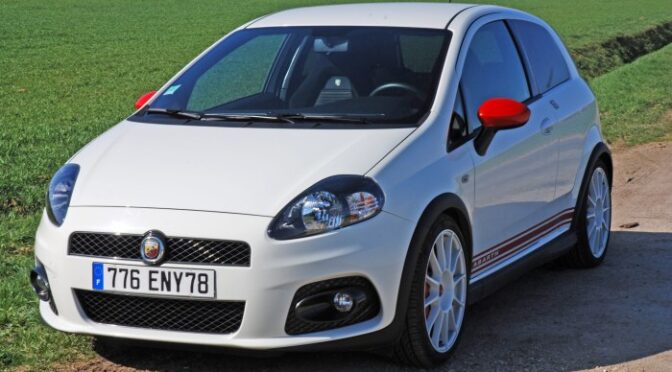
Embark on a journey through the captivating history of the Fiat Punto, a compact car that has left an indelible mark on the automotive world. This exploration delves into the Punto’s origins, tracing its evolution from a groundbreaking debut to its status as a beloved icon. We’ll uncover the design philosophies, technological advancements, and marketing strategies that shaped each generation, revealing the Punto’s enduring appeal.
From its initial launch, the Punto quickly garnered attention for its innovative design and affordability, becoming a popular choice for drivers seeking a stylish and practical vehicle. This exploration will cover the evolution of each generation, examining the different trim levels, engine options, and technological innovations that set each iteration apart. We’ll explore the Punto’s involvement in motorsport, the special editions, and the enduring legacy of a car that has touched the lives of millions.
The Fiat Punto’s Genesis
The Fiat Punto, a name synonymous with accessible and stylish motoring, burst onto the scene in the early 1990s, offering a fresh perspective on the compact car segment. Its introduction marked a significant moment for Fiat, signaling a commitment to innovation and a desire to recapture market share. The context of the automotive market at the time was one of increasing competition, with manufacturers vying for dominance in a segment rapidly gaining popularity, especially in Europe.
The Punto aimed to stand out from the crowd, not just in terms of functionality, but also in its design and overall appeal.
Initial Launch and Market Context
The Fiat Punto was officially launched in late 1993, specifically targeting the European market, where the compact car segment was particularly competitive. At the time, the automotive industry was undergoing a period of significant technological advancements and shifting consumer preferences. Safety features were becoming increasingly important, as was fuel efficiency and overall vehicle design. Fiat faced challenges from established players like Volkswagen with the Polo and Opel/Vauxhall with the Corsa, along with other rising brands.
The Punto’s success would depend on its ability to offer a compelling package that addressed these evolving consumer demands.
Design Philosophy and Key Individuals
The design of the first-generation Punto was a crucial element in its success. The design was spearheaded by Giorgetto Giugiaro, a renowned Italian car designer, known for his ability to blend aesthetics and functionality. Giugiaro’s design philosophy emphasized clean lines, a modern aesthetic, and a focus on maximizing interior space within a compact footprint. The Punto’s design was a departure from some of Fiat’s previous offerings, embracing a more rounded and contemporary look.
The car featured distinct, yet appealing, curves and a focus on aerodynamics.
Immediate Impact and Reception
Upon its release, the Fiat Punto was met with widespread acclaim. Its stylish design, practical features, and competitive pricing quickly resonated with consumers. The car was immediately recognized for its value for money and its appealing aesthetics. It wasn’t just a pretty face; the Punto offered a range of engines, making it accessible to a wide audience.The Punto received several prestigious awards shortly after its launch, solidifying its position in the market:
- European Car of the Year: The Punto won the coveted European Car of the Year award in 1995, a testament to its design, engineering, and overall impact. This award helped to increase sales and enhance its reputation across Europe.
- Critical Acclaim: Automotive journalists and critics praised the Punto for its ride quality, handling, and overall refinement, particularly considering its price point. Reviews highlighted its comfortable interior and user-friendly features.
- Sales Success: The Punto quickly became a sales success, significantly boosting Fiat’s market share and establishing the car as a major player in the compact car segment. Its popularity contributed to the overall revitalization of the Fiat brand.
The Punto’s immediate success demonstrated that Fiat had correctly identified the needs and desires of the market.
Generation 1 (1993-1999)
The first generation Fiat Punto, launched in 1993, marked a significant step for the Italian automaker, introducing a compact car that aimed to blend practicality with style. Designed by Giorgetto Giugiaro, the Punto’s distinctive design and competitive pricing quickly made it a popular choice across Europe and beyond. This generation established the Punto as a major player in the small car segment, setting the stage for future iterations.The initial Punto was a departure from its predecessors, offering a modern design and a range of engine options to cater to various driving needs.
Its success was not only in its aesthetics but also in its innovative features and the driving experience it provided.
Trim Levels and Engine Options
The first-generation Punto offered a diverse range of trim levels and engine options to suit a variety of budgets and driving preferences. This allowed Fiat to target a broad customer base, from those seeking basic transportation to those desiring a more sporty experience.
- Trim Levels: The Punto was available in various trim levels, each offering a different set of features and equipment. These typically included:
- Base models: These provided essential features, focusing on affordability.
- S models: Often included upgraded upholstery and minor cosmetic enhancements.
- SX/ELX models: Offered more features such as central locking, electric windows, and improved sound systems.
- GT models: These were the performance-oriented versions, equipped with turbocharged engines and sportier styling.
- Engine Options: A wide selection of engines was available, catering to different performance needs and fuel efficiency requirements:
- Petrol Engines: Ranging from small, economical engines to more powerful options for spirited driving. Common engines included 1.1L, 1.2L, 1.4L, and 1.6L units. The 1.4L engine, for example, was a popular choice for its balance of performance and fuel economy.
- Diesel Engines: Fiat also offered diesel engines for improved fuel economy, particularly important in European markets. The 1.7L diesel engine was a notable option.
Technological Innovations and Features
The first-generation Punto incorporated several technological innovations and features that set it apart from its competitors. These advancements enhanced both the driving experience and the overall appeal of the car.
- Design and Aerodynamics: The Punto’s design, penned by Giorgetto Giugiaro, was not only stylish but also contributed to its aerodynamic efficiency. The smooth lines and carefully considered angles helped reduce drag, improving fuel economy and stability at higher speeds.
- Safety Features: While safety standards were evolving in the early 1990s, the Punto offered some advanced safety features for its class. These included:
- Front Disc Brakes: Providing improved stopping power compared to drum brakes often found on other cars in its class.
- Optional Airbags: Offering an additional layer of protection for the driver and passengers.
- Reinforced Body Structure: Designed to absorb impact energy in the event of a collision.
- Comfort and Convenience: The Punto aimed to provide a comfortable and convenient driving experience.
- Power Steering: Many models featured power steering, making the car easier to maneuver, especially at low speeds.
- Electric Windows and Central Locking: These features, available on higher trim levels, added to the convenience and luxury of the car.
- Ergonomic Interior Design: The dashboard and controls were designed to be easily accessible and user-friendly.
Common Problems and Recalls
Like any car, the first-generation Fiat Punto experienced some common problems and recalls. These issues were typical for vehicles of that era and helped Fiat improve future models.
- Rust: One of the most common issues was rust, particularly in areas prone to moisture, such as the wheel arches and sills. This was a widespread problem for many cars of the time due to the manufacturing processes and the use of materials.
- Electrical Issues: Some owners reported electrical problems, including issues with the wiring, sensors, and the central locking system. These issues could sometimes be difficult to diagnose.
- Engine Problems: Some engines, especially the earlier versions, experienced issues like oil leaks or problems with the cooling system. Regular maintenance was crucial to prevent or mitigate these issues.
- Recalls: Fiat issued recalls for specific issues, such as faulty brakes or potential problems with the fuel system. These recalls were important for ensuring the safety of the vehicles.
Sales Figures and Market Share
The first-generation Fiat Punto achieved considerable sales success, establishing a strong presence in key markets. The car’s popularity was reflected in its sales figures and market share, demonstrating its impact on the automotive industry.
| Year | Sales Figures | Market | Notes |
|---|---|---|---|
| 1993-1994 | Approximately 500,000 units | Europe | Strong initial sales, particularly in Italy and other European countries. The Punto quickly became a best-seller. |
| 1995-1996 | Around 600,000 units | Europe | Continued strong sales, maintaining a significant market share in the compact car segment. |
| 1997-1998 | Approximately 550,000 units | Europe | Sales remained steady, although competition in the compact car market intensified. |
| 1999 | Approximately 400,000 units | Europe | Sales began to decline as the first generation neared the end of its production run. |
Generation 2 (1999-2005)
Source: cars-of-the-legend.com
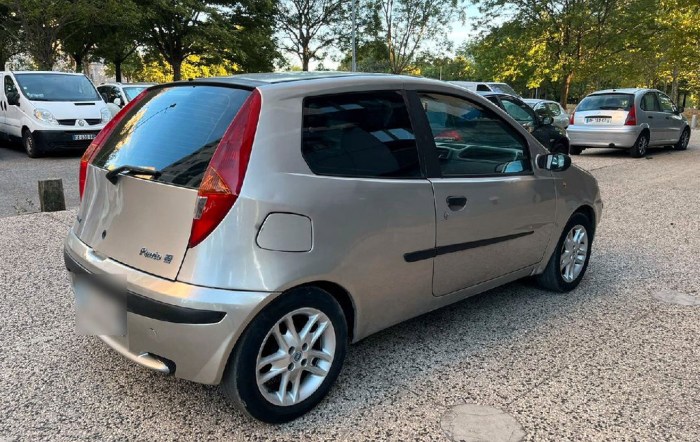
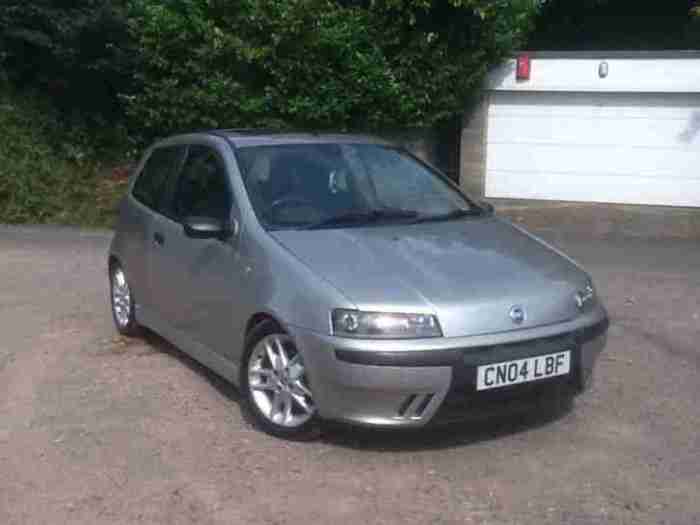
The second generation of the Fiat Punto, launched in 1999, represented a significant evolution of the model, building upon the success of its predecessor. It brought forth a host of changes, from a redesigned exterior and interior to advancements in safety and a refined driving experience. This generation aimed to solidify the Punto’s position in the competitive compact car market.
Significant Design Changes and Improvements
The second-generation Punto received a comprehensive redesign, moving away from the rounded aesthetic of the first generation. This update included a more angular and modern look.
- Exterior: The car featured a new front fascia with sharper headlights and a redesigned grille. The overall body shape became more streamlined, giving the Punto a more contemporary appearance. The rear also saw significant changes, with new taillights and a revised bumper. The three-door and five-door versions retained distinct styling cues.
- Interior: The interior was completely revamped, with a focus on improved ergonomics and a more stylish design. The dashboard and center console were redesigned, using higher-quality materials and offering a more integrated look. New seats and updated trim options provided a more comfortable and appealing cabin.
- Mechanical: Engine options were updated, offering a range of petrol and diesel engines with improved fuel efficiency and performance. The suspension and steering were also refined, contributing to an improved driving experience. The introduction of the ‘Dualogic’ automated manual transmission was a notable technological advancement.
Safety Enhancements and Advancements
Fiat prioritized safety improvements in the second-generation Punto to meet the evolving safety standards of the time. The upgrades aimed to provide better protection for occupants in the event of a collision.
- Structural Improvements: The car’s body structure was reinforced to improve crashworthiness. This included the use of stronger materials and a more robust design to absorb impact energy.
- Airbags: The availability of airbags was expanded. The second-generation Punto offered front airbags as standard, with side airbags becoming an optional extra, providing enhanced protection for occupants in side-impact collisions.
- Anti-lock Braking System (ABS): ABS became standard or was offered as an option across the range, enhancing braking performance and helping drivers maintain control during emergency stops.
- Other Safety Features: Further additions included pre-tensioners on the front seat belts and, in later models, electronic stability control (ESC) systems, enhancing the car’s active safety features.
Comparison of the Driving Experience: Generation 2 vs. Generation 1
The second generation Punto offered a noticeably different driving experience compared to its predecessor, reflecting the advancements in automotive technology and design. These improvements enhanced the overall feel and handling of the vehicle.
- Ride and Handling: The second generation offered a more refined ride. Improvements to the suspension and steering systems provided better handling and stability, particularly at higher speeds. The first generation was considered competent, but the second generation provided a more composed driving experience.
- Engine Performance: The updated engine range in the second generation provided improved performance and fuel efficiency. The availability of more powerful engine options and the Dualogic transmission gave drivers a wider choice to suit their driving preferences.
- Comfort and Refinement: The redesigned interior of the second generation Punto was significantly more comfortable and refined. The improved seating, reduced noise levels, and higher-quality materials contributed to a more pleasant driving experience, especially on longer journeys.
- Overall Feel: The second generation Punto felt more modern and upmarket than the first generation. The enhanced design, improved technology, and increased safety features contributed to a more confident and enjoyable driving experience.
Marketing Campaigns for the Second-Generation Punto
The marketing campaigns for the second-generation Punto focused on highlighting its improved design, enhanced safety features, and overall appeal to a broader audience. Fiat employed various strategies to promote the car’s key strengths.
- Emphasis on Design: Marketing materials prominently featured the Punto’s updated exterior and interior design. Advertising campaigns showcased the car’s stylish appearance and its appeal to a younger, more style-conscious demographic.
- Highlighting Safety: Safety features, such as airbags and ABS, were central to the marketing message. Advertisements emphasized the Punto’s commitment to safety, appealing to buyers who prioritized occupant protection.
- Targeting a Broader Audience: Fiat aimed to expand the Punto’s appeal beyond its traditional customer base. Marketing campaigns targeted a wider range of potential buyers, including families, young professionals, and those seeking a stylish and practical compact car.
- Sponsorships and Partnerships: Fiat often utilized sponsorships and partnerships to increase brand visibility. These included sponsoring sporting events or collaborating with fashion brands to align the Punto with a lifestyle image.
Generation 3 (2005-2018)
The third generation of the Fiat Punto marked a significant shift in design and technology. This period saw the introduction of two distinct models: the Grande Punto, which debuted in 2005, and the Punto Evo, which arrived in 2009. These models built upon the legacy of their predecessors while introducing new styling, improved engines, and advanced features. The third generation aimed to broaden the Punto’s appeal and maintain its position in the competitive supermini segment.
Design Evolution: Grande Punto and Punto Evo
The transition from the second to the third generation was a major design overhaul. The Grande Punto, as its name suggests, was noticeably larger than the previous generation, offering more interior space and a more mature aesthetic. The design was penned by Giorgetto Giugiaro, known for his work on numerous iconic cars. The Grande Punto featured a more rounded and muscular appearance, with a prominent front grille and sweeping headlights.
The rear design incorporated a high-mounted taillight arrangement. The Punto Evo, a facelift of the Grande Punto, further refined the design.The Punto Evo received updated styling, including revised headlights, taillights, and bumpers. The Evo’s design incorporated a more modern look, with a focus on sportiness and elegance. The front fascia was redesigned to give it a more aggressive stance, while the rear received a new bumper design and updated taillights.
The Punto Evo aimed to enhance the appeal of the model while retaining its core characteristics.
Engine Options and Performance
The third generation of the Fiat Punto offered a wide array of engine options to cater to various driving preferences and needs. These engines provided a balance of performance and fuel efficiency.
- Petrol Engines: The petrol engine range included a variety of options, from smaller, fuel-efficient units to more powerful engines.
- A 1.2-liter engine was available, providing a balance of performance and economy, ideal for city driving.
- A 1.4-liter engine offered more power, suitable for both urban and highway driving.
- A turbocharged 1.4-liter engine, found in some sportier versions, delivered enhanced performance and acceleration.
- Diesel Engines: Fiat was known for its diesel engines, and the Punto was no exception. The diesel engine options were renowned for their fuel efficiency and torque.
- The 1.3-liter MultiJet diesel engine was a popular choice, providing excellent fuel economy and responsive performance.
- Larger diesel engines were available, offering increased power and torque for highway driving and heavier loads.
- Performance Characteristics: Performance varied depending on the engine choice. The smaller petrol engines offered adequate performance for city driving, while the turbocharged and larger diesel engines provided more spirited performance. Acceleration times and top speeds varied based on engine specifications, with the sportier versions of the Punto offering a more engaging driving experience. Fuel efficiency was a strong point across the range, with diesel models achieving impressive miles per gallon figures.
Introduction of New Technologies and Features
The third generation Punto saw the introduction of several new technologies and features aimed at enhancing the driving experience and increasing safety. These included advancements in infotainment, driver assistance systems, and other convenience features.
- Infotainment Systems: The Grande Punto and Punto Evo featured updated infotainment systems. These systems provided access to various features, including audio playback, navigation, and connectivity options. Early models included basic radio and CD player setups, with later models featuring more advanced systems.
- Later models included touchscreen displays, allowing for easier control of various functions.
- Bluetooth connectivity became standard on many models, enabling hands-free calling and audio streaming.
- Navigation systems were integrated into some models, providing turn-by-turn directions.
- Driver-Assistance Systems: Driver-assistance systems were introduced to enhance safety and convenience.
- ABS (Anti-lock Braking System) and EBD (Electronic Brakeforce Distribution) were standard, enhancing braking performance and stability.
- ESP (Electronic Stability Program) was available on some models, helping to prevent skidding and loss of control.
- Parking sensors were offered, assisting drivers with maneuvering in tight spaces.
- Other Features: The third-generation Punto also included other convenience features.
- Automatic climate control was available on higher trim levels, enhancing comfort.
- Cruise control was offered, making highway driving more relaxed.
- Various safety features, such as airbags and reinforced body structures, were incorporated to protect occupants.
The interior of the Grande Punto featured a modern and functional design. The dashboard was well-laid-out, with easy-to-read gauges and user-friendly controls. The materials used varied depending on the trim level, but generally included a combination of hard plastics and fabric upholstery. Higher trim levels often featured more premium materials, such as soft-touch surfaces and leather accents. The seats were designed to provide adequate comfort and support, with adjustable features for the driver. The Grande Punto offered a good level of interior space for its class, with ample legroom and headroom for front-seat occupants. The rear seats were also reasonably spacious, making it suitable for carrying passengers. The car provided a decent amount of storage space, including a glove compartment, door pockets, and a center console.
Special Editions and Variants
Source: bay2car.com
The Fiat Punto, throughout its lifespan, saw a number of special editions and performance-oriented variants that aimed to capture different segments of the market and enhance its appeal. These models often featured unique styling cues, upgraded equipment, and, in some cases, significantly improved performance. Let’s delve into the notable special editions and performance variants of the Fiat Punto.
Special Edition Models
Fiat released several special edition Punto models to offer consumers unique styling and features. These editions often built upon existing trim levels, adding distinctive touches to enhance the car’s aesthetic appeal and value proposition.
- Punto Sporting: This trim level usually offered a sportier appearance, with features like unique alloy wheels, body-colored bumpers, and often, a sport-tuned suspension. The interior might have included sport seats and upgraded trim.
- Punto Abarth (discussed further below): This was the performance flagship, carrying the Abarth badge and offering significantly enhanced performance and handling.
- Various “Limited Edition” models: Throughout the Punto’s production run, Fiat released numerous limited-edition models with specific features, often including unique paint colors, interior trim, and additional equipment packages. Examples include the “Black” and “White” editions, and models named after popular Italian locations or brands. These editions aimed to provide a more exclusive ownership experience.
Performance Variants
The Punto also had performance-focused versions that catered to drivers seeking more spirited driving experiences. These models received engine upgrades, chassis enhancements, and sportier styling.
- Punto GT (Generation 1 and 2): The Punto GT was a performance-oriented variant, known for its turbocharged engine. It offered brisk acceleration and a more engaging driving experience than the standard models.
- Punto Abarth (Generation 3): This was the ultimate performance version, with a more powerful engine, sport suspension, upgraded brakes, and distinctive styling. The Abarth versions were designed to compete in the hot hatch segment.
Comparing Performance Figures
The performance figures of the sportier Punto variants significantly differed from the standard models. The GT and Abarth versions, in particular, offered substantial improvements in acceleration and top speed.
- Punto GT (Generation 1): The 1.4L turbocharged engine delivered around 136 bhp, allowing for 0-100 km/h acceleration in approximately 7.9 seconds.
- Punto GT (Generation 2): The 1.9L turbocharged engine delivered around 85 bhp, allowing for 0-100 km/h acceleration in approximately 10.5 seconds.
- Punto Abarth (Generation 3): Depending on the specific version, the 1.4L turbocharged engine produced between 135 and 180 bhp. Acceleration from 0-100 km/h could be achieved in as little as 7.9 seconds (135 bhp) or even faster in the higher-power versions.
- Standard Punto (various engines): Standard Punto models with smaller engines typically had 0-100 km/h acceleration times ranging from 12 to 18 seconds, depending on the engine size and specification.
Detailed Description of a Punto Abarth Image
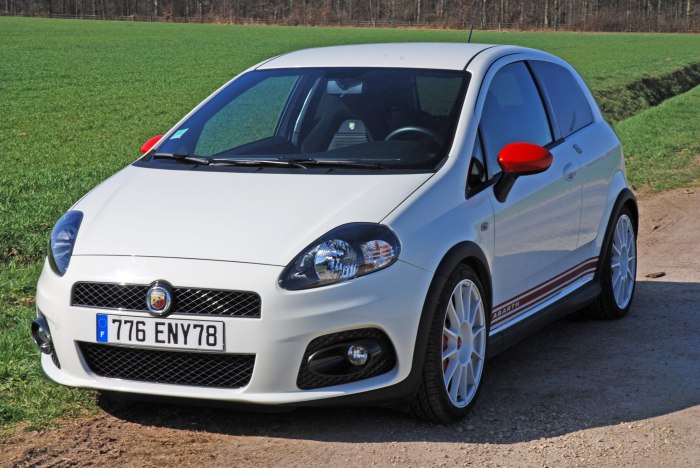
The Fiat Punto Abarth is immediately recognizable due to its aggressive and sporty design. Imagine a bright red Punto Abarth, parked on a winding mountain road.The exterior features include:
- Aggressive front bumper: The front end boasts a deep front bumper with a large air intake and integrated fog lights, giving the car a purposeful stance.
- Side skirts: Sporty side skirts run along the lower sills, visually lowering the car and enhancing its dynamic appearance.
- Rear spoiler: A subtle rear spoiler sits atop the tailgate, improving aerodynamics and adding to the sporty look.
- Abarth badges: The iconic Abarth scorpion badge is prominently displayed on the front grille, the rear tailgate, and the wheels, signifying the car’s performance credentials.
- Unique paint finishes: Often, the Abarth versions are available in exclusive paint colors, such as a vibrant red or a deep metallic grey.
The wheels are a key feature:
- Alloy wheels: The car is fitted with distinctive alloy wheels, typically 17 or 18 inches in diameter. The wheels have a multi-spoke design and are finished in a dark grey or black color, which complements the car’s overall sporty aesthetic.
- Low-profile tires: The wheels are shod with low-profile performance tires, which enhance handling and grip.
The interior features include:
- Sport seats: The seats are heavily bolstered sport seats, providing excellent support during spirited driving. They are often trimmed in leather or a combination of leather and Alcantara.
- Abarth steering wheel: The steering wheel is a sporty, flat-bottomed design, with a thick rim and Abarth badging.
- Aluminum pedals: Aluminum pedals add to the sporty feel and visual appeal of the interior.
- Unique instrument cluster: The instrument cluster features unique graphics and gauges, including a turbo boost gauge, to provide the driver with performance-related information.
- Upgraded trim: The dashboard and door panels are often finished in high-quality materials, such as carbon fiber or brushed aluminum, to create a premium and sporty ambiance.
Motorsport Involvement
The Fiat Punto, beyond its role as a practical and stylish city car, also saw a degree of success in the world of motorsport. While not achieving the same level of prominence as some rally legends, the Punto nonetheless left its mark, showcasing its potential for performance and agility. Its participation provided valuable experience and development for both the car and its drivers.
Rally and Other Racing Events
The Fiat Punto’s involvement in motorsport primarily centered around rally events, with some appearances in circuit racing. Its compact size, nimble handling, and relatively lightweight construction made it a suitable platform for rallying, particularly in the lower classes.
- Rallying: The Punto competed in various national and international rally championships. It was often seen in the lower categories, allowing aspiring drivers to hone their skills. The car’s agility and responsiveness made it well-suited to the challenging conditions of rally stages.
- Circuit Racing: While less common, the Punto also saw limited participation in circuit racing events, primarily in smaller, regional championships. This provided opportunities to test the car’s performance in a different environment, highlighting its versatility.
Modifications and Performance Upgrades for Racing Purposes
To compete effectively in motorsport, the Fiat Punto underwent significant modifications and performance upgrades. These changes focused on enhancing engine power, improving handling, and increasing overall durability.
- Engine Modifications: Engine tuning was a crucial aspect of preparing the Punto for racing. This often involved modifications to the engine management system, camshafts, and exhaust systems to increase horsepower and torque. Turbocharging was sometimes employed to further boost performance, especially in higher-spec rally cars.
- Suspension Upgrades: The suspension was upgraded to handle the stresses of rally and circuit racing. This included the installation of stiffer springs, adjustable dampers, and upgraded anti-roll bars. These modifications improved the car’s handling and allowed it to cope with rough terrain.
- Brake Upgrades: Upgraded brakes were essential for providing sufficient stopping power, particularly when racing at high speeds. Larger brake discs, performance brake pads, and braided brake lines were commonly used.
- Safety Features: Safety was paramount. Roll cages, racing seats with harnesses, and fire suppression systems were installed to protect the driver and co-driver in the event of an accident.
- Weight Reduction: Reducing weight was a key strategy for improving performance. This involved removing unnecessary components from the interior and using lightweight materials where possible.
Successes and Notable Achievements in Motorsport
The Fiat Punto achieved various successes in motorsport, particularly in the rally arena, showcasing its capabilities and the dedication of the teams involved. While it may not have dominated the top tiers of international rally competition, it consistently proved to be a competitive and reliable car in its class.
- Class Victories: The Punto frequently secured class victories in national and regional rally championships. These wins demonstrated the car’s performance potential and the skill of the drivers and teams.
- Reliability Awards: The Punto often earned recognition for its reliability and durability, particularly in grueling rally events. This was a testament to the quality of the car and the effectiveness of the modifications and preparation.
- Driver Development: The Punto served as a platform for developing the skills of aspiring rally drivers. Many drivers gained valuable experience behind the wheel of a Punto, honing their skills and preparing for future challenges.
Illustration of a Fiat Punto Rally Car
Imagine a Fiat Punto rally car from the late 1990s or early 2000s, based on the second generation model. This car is ready to tackle a gravel rally stage, with its aggressive stance and purposeful modifications.
- Color Scheme: The car is painted in a vibrant livery, predominantly a deep blue, contrasted with bold yellow and white accents. Large sponsor logos, including those of tire manufacturers and performance parts suppliers, adorn the sides and hood. The roof might be white for better visibility.
- Sponsors: Prominent sponsor logos are strategically placed on the doors, hood, and rear quarter panels. These include tire brands like Pirelli or Michelin, and performance parts manufacturers like Brembo (brakes) or Sparco (seats).
- Modifications: The car has a significantly modified appearance compared to the road-going version. The ride height is raised to provide ground clearance, and the wheels are fitted with chunky rally tires designed for gravel or tarmac. The front bumper features additional driving lights, and the rear wing is larger to generate downforce. The interior is stripped out, with a full roll cage, racing seats, and a digital dashboard.
- Details: The car’s windows are tinted, and it has a distinctive exhaust system. The driver and co-driver are wearing their helmets and race suits, ready to start the stage. The car’s number, prominently displayed on the doors and roof, adds a final touch of racing authenticity.
The Punto’s Legacy and Impact
The Fiat Punto, a compact car that graced roads for over two decades, left an indelible mark on the automotive landscape. Its success wasn’t just measured in sales figures; it redefined Fiat’s position, influenced design trends, and continues to hold a place in the hearts of drivers. This section delves into the lasting impact of the Punto.
Contribution to Fiat’s Success and Industry Standing
The Punto was a cornerstone of Fiat’s revival in the 1990s and 2000s. It provided a competitive offering in the crucial small car segment, a segment traditionally dominated by European manufacturers. The Punto’s sales helped stabilize Fiat’s financial situation and provided resources for the development of other models. The car’s popularity bolstered Fiat’s image, proving the brand could produce stylish, reliable, and affordable vehicles.
Lasting Impact on Automotive Design and Technology
The Punto introduced several innovations that became commonplace in the automotive industry. It was among the first in its class to offer features like:
- Advanced safety features, including airbags and ABS (Anti-lock Braking System), which significantly improved passenger safety.
- Sophisticated engine technology, particularly in its diesel variants, contributing to fuel efficiency and reduced emissions.
- A focus on interior design and ergonomics, creating a more comfortable and user-friendly driving experience.
These features helped to raise the standards for the small car segment, influencing other manufacturers to adopt similar technologies and design philosophies. The Punto’s success demonstrated the importance of prioritizing safety, efficiency, and driver comfort, influencing the evolution of car design.
Influence on Other Car Models
The Punto’s design and engineering influenced numerous other vehicles, both within and outside the Fiat group. For example:
- The styling cues of the first-generation Punto, with its clean lines and integrated bumpers, were echoed in later Fiat models like the Bravo/Brava.
- The platform and mechanical components of the Punto were utilized in various other Fiat and Lancia models, demonstrating its versatility and reliability.
- Competitors, such as the Opel Corsa and Renault Clio, adapted their designs to compete with the Punto’s combination of affordability, practicality, and style.
The Punto’s influence extended beyond direct design imitation. Its success prompted competitors to focus on similar features and price points, shaping the overall market.
Current Market Status, Availability, and Value
The Punto’s production ceased in 2018. However, it remains a popular choice in the used car market. Its value varies depending on the generation, condition, and mileage, but it generally offers excellent value for money.The car’s availability differs by region. In some markets, particularly in Europe, used Puntos are still readily available through dealerships and private sellers. Their affordability makes them a popular choice for budget-conscious buyers, young drivers, and those seeking a reliable and economical runabout.The Punto’s legacy extends beyond its time on the production line.
Its impact on Fiat’s fortunes, its contribution to automotive technology, and its influence on other models cement its place as a significant vehicle in automotive history.
Closing Notes
Source: motorlegend.com
The Fiat Punto’s journey, from its humble beginnings to its current status, is a testament to its enduring appeal and innovative spirit. The Punto’s story highlights the car’s ability to adapt and evolve, while still maintaining its core values of practicality, affordability, and style. The Punto’s impact on the automotive industry, and its lasting legacy, is clear, solidifying its place as a true legend in the world of compact cars.
Questions and Answers
What is the origin of the name “Punto”?
The name “Punto” (Italian for “point” or “dot”) was chosen to represent the car’s position as a new starting point for Fiat in the compact car segment.
What were the main competitors of the Fiat Punto?
The Punto competed with other popular compact cars of its time, including the Volkswagen Golf, Opel/Vauxhall Astra, Ford Fiesta, and Renault Clio.
Where was the Fiat Punto primarily manufactured?
The Fiat Punto was primarily manufactured in Italy, but it was also produced in various other countries, including Brazil, Poland, and India.
What is the most reliable generation of the Fiat Punto?
Generally, the second generation (1999-2005) is often considered the most reliable, thanks to improvements in build quality and mechanical reliability compared to the first generation.
Why did the Fiat Punto Evo replace the Grande Punto?
The Punto Evo was a facelift of the Grande Punto, incorporating design updates and technological improvements to keep the model competitive in the market.