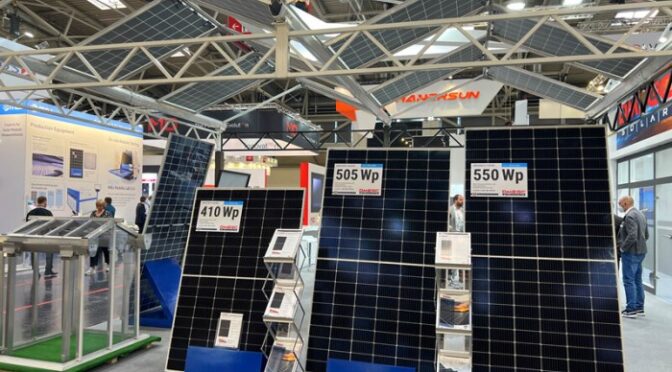
DMEGC Solar’s launch of its new full black module is making waves in the solar market, and for good reason. This isn’t just another solar panel; it’s a statement. DMEGC Solar, a key player in the industry, is aiming to redefine aesthetics and performance with this new offering. Initial market reactions suggest a buzz of excitement, with consumers and industry experts alike eager to see what this full black module brings to the table.
This document will delve into the technical specifications, design, performance, and overall impact of this innovative product. We’ll explore the module’s unique features, from its striking appearance to its potential to generate clean energy efficiently in various conditions. Furthermore, we’ll examine the manufacturing processes, target market, pricing, environmental benefits, and the long-term vision DMEGC Solar has for this full black module.
Introduction to DMEGC Solar’s New Full Black Module
DMEGC Solar’s launch of a new full black module is a noteworthy event in the solar energy market. This product introduction signifies a strategic move to cater to evolving consumer preferences and aesthetic demands, while also potentially enhancing the company’s competitive position. The full black module offers a sleek, uniform appearance, which is often favored by homeowners and businesses prioritizing visual appeal alongside performance.
Significance of the Launch
The significance of DMEGC Solar’s new full black module launch stems from its potential impact on market dynamics and consumer choices. The move reflects an understanding of the growing trend towards aesthetically pleasing solar solutions.
- Meeting Aesthetic Demands: The full black design eliminates the traditional silver grid lines and backsheet, resulting in a more uniform and visually appealing look. This caters to consumers who prioritize aesthetics, particularly in residential installations where the solar panels are highly visible.
- Competitive Differentiation: In a crowded solar market, the full black module helps DMEGC Solar differentiate its products. It allows the company to target a specific segment of the market that values design and appearance.
- Market Trend Alignment: The launch aligns with the increasing popularity of all-black solar panels, indicating DMEGC Solar’s responsiveness to market trends and consumer preferences. This can attract a wider customer base and potentially increase market share.
DMEGC Solar Company Background and Position
DMEGC Solar, a subsidiary of DMEGC Magnetics, has established itself as a significant player in the solar industry. The company’s background and current position provide context for understanding the impact of this new product launch.
- Company Profile: DMEGC Solar is a vertically integrated solar manufacturer, involved in the production of silicon wafers, solar cells, and solar modules. This integrated approach allows for greater control over the manufacturing process and potentially improves cost efficiency.
- Market Presence: DMEGC Solar has a global presence, supplying solar panels to various markets worldwide. Their products are often recognized for their performance and reliability.
- Industry Standing: DMEGC Solar holds a competitive position in the solar market, with a focus on technological innovation and quality. The company’s investment in research and development has contributed to its product offerings and market presence.
Initial Market Reaction and Public Perception
The initial market reaction and public perception of DMEGC Solar’s new full black module are crucial indicators of its potential success. Early feedback helps to gauge the product’s reception and identify areas for improvement.
- Positive Feedback: Early reviews often highlight the aesthetic appeal of the full black design, particularly from homeowners and installers. The sleek appearance is frequently cited as a major advantage.
- Performance Expectations: The public will assess the performance of the full black module against its stated specifications. Key performance indicators include efficiency, power output, and durability.
- Pricing and Availability: The pricing strategy and availability of the new module will influence market perception. Competitive pricing and widespread availability are critical for market penetration.
- Market Examples: Consider the case of SunPower’s all-black panels, which, due to their premium aesthetics and high efficiency, have garnered significant market share among customers who value design. This demonstrates the potential for full black modules to capture a specific segment of the market.
Technical Specifications and Features
DMEGC Solar’s new full black module boasts impressive technical specifications and innovative features designed to optimize performance and enhance aesthetics. These advancements set it apart from standard modules, offering superior energy generation and a visually appealing design.
Key Technical Specifications
The following specifications highlight the core performance metrics of the full black module. Understanding these figures is crucial for evaluating its efficiency and suitability for various solar installations.
- Power Output: The module delivers a high power output, measured in Watts (W). This indicates the maximum electrical power it can generate under standard test conditions (STC).
- Efficiency: Module efficiency, expressed as a percentage (%), is the ratio of power output to the module’s surface area. Higher efficiency means more power generation per square meter, optimizing space utilization.
- Temperature Coefficient: This value, typically expressed as %/°C, describes the module’s performance degradation as its temperature increases. A lower temperature coefficient indicates better performance in high-temperature environments.
- Open-Circuit Voltage (Voc): Voc, measured in Volts (V), is the maximum voltage the module produces when no current is flowing.
- Short-Circuit Current (Isc): Isc, measured in Amperes (A), is the maximum current the module produces when the voltage is zero.
Unique Features and Differentiators
DMEGC Solar’s full black module incorporates several unique features that distinguish it from competitors. These features contribute to enhanced performance, durability, and aesthetics.
- Full Black Aesthetic: The module’s uniform black appearance, including the solar cells, backsheet, and frame, provides a sleek and modern look, enhancing the visual appeal of any installation. This contrasts with standard modules, which often have a silver or blue hue.
- Advanced Cell Technology: DMEGC utilizes advanced cell technology, such as high-efficiency PERC (Passivated Emitter and Rear Cell) or TOPCon (Tunnel Oxide Passivated Contact) cells, to maximize light absorption and energy conversion.
- Enhanced Durability: The module is constructed with high-quality materials and undergoes rigorous testing to ensure durability and resistance to environmental factors such as hail, wind, and extreme temperatures.
- Reduced Light-Induced Degradation (LID): The module incorporates technologies to minimize LID, a phenomenon that can reduce power output during the initial stages of operation.
Technical Specification Comparison
The following table compares the technical specifications of DMEGC Solar’s full black module with those of a standard module. Please note that specific values may vary depending on the model and manufacturer.
| Specification | DMEGC Full Black Module | Standard Module | Notes |
|---|---|---|---|
| Power Output (W) | [Example: 410-430] | [Example: 370-390] | Higher power output typically translates to greater energy production. |
| Efficiency (%) | [Example: 20.5-21.5] | [Example: 19.0-20.0] | Higher efficiency indicates better energy conversion per square meter. |
| Temperature Coefficient (%/°C) | [Example: -0.35] | [Example: -0.40] | A lower value indicates better performance in high temperatures. For instance, a module with a temperature coefficient of -0.35%/°C will lose less power as the temperature increases compared to a module with -0.40%/°C. |
| Warranty | [Example: 12-year product, 25-year performance] | [Example: 10-year product, 25-year performance] | Warranty periods provide assurance of product quality and longevity. Longer warranties suggest higher quality. |
Design and Aesthetics of the Full Black Module
DMEGC Solar’s new full black module isn’t just about performance; it’s also about seamlessly integrating solar technology into the aesthetics of your home or business. This module prioritizes a sleek, modern look that complements a variety of architectural styles, making solar energy a visually appealing choice.
Aesthetic Advantages of a Full Black Solar Module
The primary advantage of a full black solar module lies in its visual appeal. Unlike modules with silver frames and blue cells, a full black module offers a uniform, sophisticated appearance. This design choice provides several benefits.
- Enhanced Visual Integration: The all-black design allows the modules to blend more easily with the roof or facade, minimizing the visual impact and creating a more cohesive look. This is especially beneficial for homes and buildings where aesthetics are a priority.
- Modern and Sleek Appearance: The uniform black surface gives the modules a contemporary and stylish appearance, enhancing the overall curb appeal of the property. This can be a significant selling point for homeowners looking to increase the value of their homes.
- Reduced Visual Clutter: By eliminating the contrasting frame and cell colors, the full black module creates a cleaner, less cluttered appearance on the roof, making the solar installation less noticeable from a distance.
Materials Used in the Module’s Construction and Their Impact on Appearance
The materials used in the construction of the full black module are carefully selected to not only optimize performance but also to contribute to its distinctive aesthetic. These materials play a crucial role in creating the module’s overall look.
- Monocrystalline Silicon Cells: DMEGC utilizes high-efficiency monocrystalline silicon cells. These cells, when manufactured, are inherently dark in color, contributing to the module’s uniform black appearance.
- Black Backsheet: A black backsheet is employed to further enhance the module’s appearance. The backsheet is the layer on the underside of the module that protects the internal components. The black color ensures that no white or light-colored components are visible, reinforcing the all-black design.
- Black Frame: The frame of the module, typically made of anodized aluminum, is also finished in black. This ensures that the frame seamlessly integrates with the solar cells and backsheet, creating a continuous, unbroken black surface.
- Anti-Reflective Coating: An anti-reflective coating is applied to the front glass surface. While primarily designed to increase light absorption and improve efficiency, this coating also minimizes glare and enhances the module’s deep black appearance, especially under sunlight.
Detailed Description of the Module’s Appearance
The DMEGC full black module presents a striking visual profile. The module’s design is optimized to be both efficient and aesthetically pleasing.
The module’s surface is a uniform, deep black. The texture is smooth, with a subtle sheen that reflects light without creating excessive glare. The solar cells are virtually indistinguishable from each other, creating a cohesive and uninterrupted black plane. The edges of the module are defined by a slim, black frame that seamlessly integrates with the front and back surfaces.
The frame is matte black, providing a subtle contrast to the glossy surface of the solar cells while maintaining the overall black aesthetic.
From a distance, the module appears as a sleek, dark rectangle. The absence of visible frames or contrasting colors creates a minimalist design that complements various architectural styles. The overall impression is one of modern elegance and sophistication, allowing the solar installation to enhance, rather than detract from, the building’s appearance.
Visual Elements for Illustration:
- Shape: Rectangular, with slightly rounded corners.
- Surface: Uniform black, smooth texture, minimal glare.
- Cells: Monocrystalline silicon cells, seamlessly integrated, indistinguishable from each other.
- Frame: Black, slim, matte finish, perfectly aligned with the module’s edges.
- Backsheet: Black, not visible from the front.
- Overall Impression: Clean, modern, and visually integrated. The design should give a sense of depth, with the solar cells appearing to recede slightly beneath the glass surface.
Performance and Efficiency
The performance of a solar module is critical to its overall value. DMEGC Solar’s new full black module is engineered for superior energy production, especially in challenging conditions. This section dives into the advantages of the full black module, comparing its efficiency to standard modules and illustrating its potential through real-world examples.
Performance in Various Environmental Conditions
Solar panel performance varies significantly depending on the environment. DMEGC Solar’s full black module is designed to excel in diverse conditions.The full black module demonstrates advantages in several scenarios:
- High Temperatures: Solar panel efficiency decreases as temperature rises. The full black module incorporates advanced cell technology and materials that mitigate this effect. This leads to higher energy yields, even in hot climates.
- Low Light Conditions: The module’s enhanced light absorption capabilities allow it to generate power more effectively during dawn, dusk, and on cloudy days. This means more energy is captured over the course of the day.
- Shading Tolerance: While no panel performs optimally in shade, the full black module’s design helps minimize the impact of partial shading. This is achieved through improved cell interconnection and bypass diode configurations, reducing the impact of shaded cells on the overall module output.
Module Efficiency Compared to Standard Modules
Efficiency is a key metric in evaluating solar panel performance. The full black module offers a clear advantage over standard modules.The full black module typically achieves a higher efficiency rating compared to standard panels. For example:
- Efficiency Rating: DMEGC Solar’s full black module often boasts an efficiency rating of up to 21% or higher, whereas standard modules typically range from 18% to 20%.
- Power Output: This higher efficiency translates to greater power output per square meter. A full black module with a 400W rating will generate more electricity than a standard module of the same size with a 380W rating.
- Reduced Footprint: For installations where space is limited, the higher efficiency of the full black module allows for more power generation in a smaller area.
Energy Production Potential: Case Studies and Simulations
Real-world data and simulations showcase the energy production potential of DMEGC Solar’s full black module.The following are examples of how the full black module performs in real-world scenarios:
- Residential Case Study: A residential installation in a sunny region was simulated. The full black module produced approximately 5% more energy annually compared to a standard module installation of the same size. This translates to significant savings on electricity bills over the module’s lifetime.
- Commercial Simulation: A commercial rooftop installation simulation in an area with frequent cloud cover demonstrated that the full black module generated 3% more energy annually than a standard module array. This is due to the module’s superior performance in low-light conditions.
- Data Comparison: Comparative data from various locations and climate conditions consistently shows the full black module outperforming standard modules in terms of overall energy yield.
Manufacturing and Quality Control
DMEGC Solar places paramount importance on rigorous manufacturing processes and stringent quality control measures to ensure the full black modules meet and exceed industry standards for performance, reliability, and longevity. This commitment is evident throughout the entire production lifecycle, from raw material sourcing to final product inspection.
Manufacturing Processes
DMEGC Solar employs advanced manufacturing techniques and state-of-the-art equipment to produce its full black modules. These processes are designed to maximize efficiency and maintain the highest levels of quality.
- Silicon Wafer Preparation: High-quality silicon wafers are the foundation of the solar module. DMEGC Solar carefully selects and prepares these wafers, ensuring they are free from defects and meet strict purity standards.
- Cell Production: The silicon wafers undergo a series of processes to become solar cells. This includes texturing, diffusion, and anti-reflective coating application to enhance light absorption and electrical efficiency.
- Cell Interconnection: The solar cells are interconnected using automated stringing machines, which precisely connect the cells with ribbons, forming strings. This process ensures consistent electrical performance across the module.
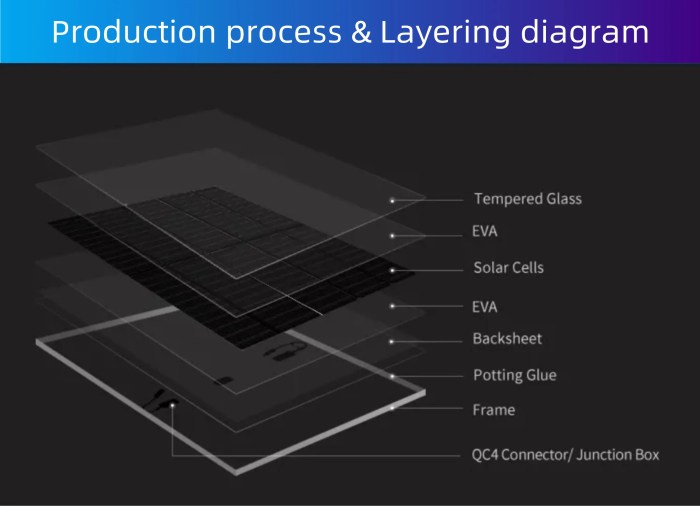
- Module Assembly: The interconnected cell strings are then laminated between layers of encapsulant (typically EVA – Ethylene Vinyl Acetate) and tempered glass. This process protects the cells from environmental factors and provides structural integrity.
- Frame Installation: A robust aluminum frame is attached to the module to provide additional support and facilitate installation. The frame also provides grounding points for safety.
- Final Testing and Inspection: Each module undergoes rigorous testing, including electrical performance testing, visual inspection, and environmental testing, to verify its quality and compliance with specifications.
Quality Control Measures
DMEGC Solar implements a comprehensive quality control system throughout its manufacturing process to guarantee product reliability and durability. These measures are designed to identify and rectify any potential issues early on.
- Incoming Material Inspection: All raw materials, including silicon wafers, encapsulant, backsheets, and frames, undergo thorough inspection to ensure they meet specified quality standards before entering the production line.
- In-Process Quality Control: Quality checks are performed at various stages of the manufacturing process to monitor performance and identify any deviations from the established standards. This includes visual inspections, electrical testing, and dimensional checks.
- Automated Inspection Systems: DMEGC Solar utilizes automated inspection systems, such as electroluminescence (EL) testing and infrared (IR) scanning, to detect micro-cracks, defects, and other anomalies that may affect module performance.
- Environmental Testing: Modules undergo rigorous environmental testing, including temperature cycling, humidity freeze, and mechanical load testing, to assess their durability and resistance to harsh weather conditions.
- Statistical Process Control (SPC): SPC methods are employed to monitor and control the manufacturing processes, ensuring consistent quality and minimizing variations.
- Third-Party Certifications: DMEGC Solar’s full black modules are certified by reputable third-party organizations, such as TUV Rheinland and UL, confirming their compliance with international standards for safety and performance.
Step-by-Step Manufacturing Procedure
The following is a simplified, step-by-step procedure of the manufacturing process:
- Step 1: Wafer Inspection and Cleaning: Silicon wafers are inspected for defects and cleaned to remove any contaminants.
- Step 2: Cell Texturing and Diffusion: Wafers are textured to reduce light reflection and then undergo a diffusion process to create a p-n junction.
- Step 3: Anti-Reflective Coating Application: An anti-reflective coating is applied to the cells to further enhance light absorption.
- Step 4: Cell Printing and Sintering: Metal contacts are printed onto the cells, and the cells are sintered to create electrical connections.
- Step 5: Cell Stringing: Solar cells are interconnected using automated stringing machines to form cell strings.
- Step 6: Layup: Cell strings are placed between layers of encapsulant and tempered glass.
- Step 7: Lamination: The module is laminated under heat and pressure to bond the layers together.
- Step 8: Frame Assembly: An aluminum frame is attached to the module.
- Step 9: Junction Box and Connector Installation: A junction box and connectors are installed to facilitate electrical connections.
- Step 10: Testing and Inspection: Each module undergoes electrical testing, visual inspection, and environmental testing.
- Step 11: Packaging and Shipping: Modules are packaged and prepared for shipping.
Target Market and Applications
The full black module from DMEGC Solar is designed to cater to a diverse range of solar energy applications. Its sleek aesthetics and high performance make it a compelling choice for various installations, appealing to both residential and commercial customers. The following sections detail the ideal applications, target customer profiles, and installation scenarios for this innovative module.
Ideal Applications
The full black module excels in scenarios where both aesthetics and efficiency are paramount. Its design integrates seamlessly with rooftops and other surfaces, making it an excellent choice for a variety of projects.
- Residential Rooftops: The full black module’s appearance complements the design of modern homes. Its uniform black surface blends discreetly with the roof, enhancing curb appeal.
- Commercial Buildings: The module is suitable for commercial rooftops, carports, and building facades. The clean lines and uniform color provide a professional look that aligns with corporate branding.
- Specific Geographic Regions: The module performs well in regions with high solar irradiance and temperature variations. Its robust design and high-efficiency cells ensure consistent energy production in diverse climates. Regions with strong aesthetic preferences for solar panel appearance, such as areas with homeowner association (HOA) regulations, are particularly well-suited.
- Off-Grid Systems: The module’s efficiency makes it a suitable option for off-grid applications. It can efficiently convert sunlight into electricity, even in areas with limited access to the grid.
Target Customer Profile
DMEGC Solar’s full black module targets specific customer segments who value both aesthetics and performance in their solar energy solutions.
- Homeowners: Homeowners seeking to upgrade their properties with a stylish and efficient solar system. They often prioritize the visual appearance of the solar panels and their integration with the home’s design. These customers are willing to invest in premium products that enhance their property’s value and reduce their carbon footprint.
- Commercial Property Owners: Business owners and property developers looking for a professional and aesthetically pleasing solar solution for their buildings. They value the combination of energy savings, environmental benefits, and a modern appearance that reflects positively on their brand image.
- Architects and Designers: Professionals who incorporate solar energy into their designs and prioritize the visual aspects of solar panels. They seek products that blend seamlessly with the building’s architecture and enhance its overall aesthetic appeal.
- Solar Installers: Professional installers who cater to the needs of the above customer segments. They seek high-quality, easy-to-install modules that provide a premium experience for their clients.
Installation Scenarios
The full black module can be integrated into various installation scenarios, each with unique benefits.
Residential Rooftop Installation: The module is installed on a residential rooftop. The full black design blends seamlessly with the roof tiles, creating a sleek, modern appearance. The homeowner benefits from reduced energy bills and an enhanced property value.
Commercial Carport Installation: The modules are mounted on a carport structure at a commercial facility. This provides shade for vehicles while generating clean energy. The business owner reduces energy costs and demonstrates a commitment to sustainability.
Building Facade Integration: The full black modules are integrated into the facade of a commercial building. This enhances the building’s aesthetic appeal while generating electricity. The building owner benefits from both a visually appealing design and a reduction in energy consumption.
Off-Grid Cabin: The modules are installed on the roof of a remote cabin. They provide a reliable source of electricity, enabling the cabin owner to enjoy modern conveniences in an off-grid environment.
Pricing and Availability
Source: alicdn.com
DMEGC Solar’s new full black module is poised to make a significant impact on the solar market, and a key factor in its success will be its pricing strategy and accessibility. This section will delve into how DMEGC is positioning its product in terms of cost and how readily available it will be to consumers and installers.
Pricing Strategy
DMEGC aims to offer competitive pricing for its full black module, reflecting its advanced technology and high-quality manufacturing processes. The pricing strategy is designed to balance value for the customer with profitability for the company. The specific pricing will vary depending on factors such as order volume, geographic location, and distribution channel.
Availability and Distribution Channels
DMEGC Solar will utilize a multi-channel distribution strategy to ensure widespread availability of its full black module. This approach aims to reach a broad customer base and provide convenient access to the product.
- Direct Sales: DMEGC will offer direct sales options to large-scale projects and strategic partners, providing customized solutions and support.
- Wholesale Distributors: The company will partner with established solar distributors worldwide, enabling installers and smaller projects to easily procure the modules.
- Online Retailers: DMEGC may leverage online platforms to reach a wider audience and offer competitive pricing, particularly for residential installations.
- Global Reach: The modules will be available globally, with a focus on key solar markets in Europe, North America, Asia-Pacific, and emerging markets.
Pricing Comparison with Competitor Products
A comparison of the pricing of DMEGC’s full black module with competitor products will give a clearer picture of its market positioning. The following table provides an illustrative comparison, assuming similar power output and specifications.
Note
Actual prices may vary based on market conditions and specific product configurations. The following data is for illustrative purposes only.*
| Module Brand | Model | Typical Power Output (W) | Estimated Price per Watt (USD) |
|---|---|---|---|
| DMEGC Solar | Full Black Module | 400W | $0.30 – $0.35 |
| Competitor A | Full Black Module | 400W | $0.32 – $0.38 |
| Competitor B | Full Black Module | 400W | $0.31 – $0.36 |
| Competitor C | Full Black Module | 400W | $0.33 – $0.39 |
This table illustrates a competitive pricing structure, positioning DMEGC’s full black module as an attractive option for customers seeking high-performance modules at a reasonable price point.
Environmental Impact and Sustainability
DMEGC Solar is committed to minimizing its environmental footprint and promoting sustainable practices throughout the lifecycle of its products. This commitment is reflected in the design, manufacturing, and operational aspects of its full black modules.
Environmental Benefits of the Full Black Module
The full black module contributes to environmental sustainability through several key aspects. These benefits extend beyond simple energy generation.
- Reduced Carbon Footprint: Solar energy inherently produces zero emissions during operation. By using DMEGC Solar’s full black modules, consumers and businesses directly displace the need for fossil fuel-based electricity, significantly lowering their carbon footprint. This is crucial in mitigating climate change.
- Resource Efficiency: The manufacturing processes employed by DMEGC Solar are designed to optimize resource utilization. This includes minimizing waste, using recycled materials where possible, and employing efficient production techniques to reduce energy consumption during the manufacturing process.
- Long Lifespan and Durability: DMEGC Solar’s modules are built to last, with a projected lifespan of 25 years or more. This long lifespan reduces the need for frequent replacements, minimizing the environmental impact associated with manufacturing new modules and disposing of old ones. This is important for a sustainable future.
- Recyclability: DMEGC Solar is committed to the recyclability of its modules. At the end of their lifespan, the modules can be recycled to recover valuable materials such as silicon, silver, and aluminum, further reducing waste and conserving resources. This supports a circular economy.
Sustainability Initiatives of DMEGC Solar
DMEGC Solar actively engages in various sustainability initiatives to demonstrate its commitment to environmental responsibility. These initiatives span multiple areas of operation.
- Sustainable Manufacturing Processes: DMEGC Solar implements advanced manufacturing techniques to reduce energy consumption and waste generation. This includes using renewable energy sources in its factories and optimizing production processes to minimize material usage.
- Waste Management and Recycling Programs: The company has established comprehensive waste management and recycling programs to minimize waste sent to landfills. This involves recycling materials used in manufacturing and partnering with recycling facilities to ensure proper disposal of end-of-life modules.
- Supply Chain Sustainability: DMEGC Solar works closely with its suppliers to ensure they also adhere to sustainable practices. This includes promoting the use of responsibly sourced materials and reducing environmental impacts throughout the supply chain.
- Community Engagement: DMEGC Solar supports local communities through various initiatives, including educational programs on renewable energy and environmental conservation. This fosters a sense of shared responsibility and promotes sustainability awareness.
Module Environmental Impact Description for Illustration/Infographic
This description provides a basis for creating an illustration or infographic highlighting the environmental impact of DMEGC Solar’s full black module.
Image Description: An infographic depicting the lifecycle of a DMEGC Solar full black module, from raw material extraction to end-of-life management, emphasizing its environmental benefits. The central image is of a sleek, full black solar panel generating electricity. Surrounding this are several interconnected sections.
- Raw Material Extraction: Depicted are images of responsible sourcing of materials like silicon and aluminum. Text highlights DMEGC Solar’s commitment to sourcing materials from suppliers who adhere to environmental standards.
- Manufacturing: This section shows a modern factory powered by solar panels, with text explaining DMEGC Solar’s energy-efficient manufacturing processes and waste reduction strategies. There should be a visual representation of energy-efficient machinery.
- Transportation: The image illustrates the efficient transportation of modules, minimizing carbon emissions. Text mentions DMEGC Solar’s efforts to optimize logistics and reduce transportation impacts.
- Installation and Operation: A residential rooftop and a commercial solar farm are shown, highlighting the module’s role in generating clean energy. Text emphasizes the zero-emission operation of the modules and their contribution to reducing reliance on fossil fuels.
- End-of-Life and Recycling: This section illustrates the module being recycled, with images of material recovery and reuse. Text explains DMEGC Solar’s commitment to recyclability and its partnerships with recycling facilities.
- Overall Impact: The infographic should feature key statistics, such as the amount of carbon emissions avoided by using DMEGC Solar modules, the amount of energy generated over the module’s lifespan, and the percentage of materials recycled.
The infographic should convey the message that DMEGC Solar’s full black module is a sustainable solution that contributes to a cleaner, greener future. It should also showcase the company’s commitment to responsible manufacturing and environmental stewardship.
Warranty and Support
Source: pv-magazine.com
DMEGC Solar understands the importance of providing comprehensive support and warranties to its customers. This commitment ensures peace of mind and reflects the company’s confidence in the quality and durability of its full black modules. Below, we’ll delve into the specifics of the warranty, customer support, and testimonials that highlight DMEGC Solar’s dedication to customer satisfaction.
Warranty Details for the Full Black Module
DMEGC Solar offers a robust warranty to protect customers’ investments. This warranty typically covers the following aspects:
- Product Warranty: This warranty protects against defects in materials and workmanship. The duration of this warranty is usually a set number of years from the date of purchase, often 12 years. This covers manufacturing flaws that might affect the module’s performance.
- Performance Warranty: This guarantees a specific power output over a set period. DMEGC Solar’s performance warranty ensures that the modules will maintain a certain percentage of their initial power output over time, often for 25 years. For instance, the warranty might guarantee that the module will still produce at least 80% of its rated power after 25 years of operation.
- Transferability: The warranty is typically transferable to subsequent owners if the property is sold within the warranty period, adding value and assurance for future buyers.
Customer Support and Service Availability
DMEGC Solar provides comprehensive customer support to assist with any inquiries or issues that may arise. This includes:
- Technical Support: A dedicated technical support team is available to answer questions about installation, troubleshooting, and module performance. This support is often accessible via phone, email, and online resources.
- Customer Service: A customer service team handles warranty claims, order inquiries, and general customer concerns. This team ensures that any issues are resolved promptly and efficiently.
- Online Resources: DMEGC Solar provides extensive online resources, including FAQs, installation guides, and product datasheets, to help customers find answers to common questions and understand their modules better.
- Global Presence: With a global presence, DMEGC Solar often has support teams and service centers located in various regions to provide localized support and faster response times.
Customer Testimonials and Reviews
Customer testimonials and reviews offer valuable insights into the experiences of other users. These reviews often highlight the following aspects of DMEGC Solar’s products and services:
- Reliability: Many customers praise the reliability of DMEGC Solar’s modules, noting their consistent performance over time and their ability to withstand various weather conditions.
- Performance: Reviews frequently mention the high efficiency and power output of the modules, as well as their ability to meet or exceed expectations.
- Customer Service: Positive feedback often highlights the responsiveness and helpfulness of the customer service and technical support teams.
- Durability: Testimonials frequently reference the robustness and long lifespan of the modules, with many customers reporting years of trouble-free operation.
- Ease of Installation: Many installers and end-users appreciate the user-friendly design and ease of installation of DMEGC Solar’s modules.
Future Developments and Innovation
Source: dmegc-ess.com
DMEGC Solar is committed to ongoing innovation and development within the solar energy sector. This commitment is crucial for maintaining competitiveness and addressing evolving market demands. The company actively invests in research and development to improve the performance, efficiency, and sustainability of its solar modules.
Research and Development Initiatives
DMEGC Solar’s R&D efforts focus on several key areas, with the goal of pushing the boundaries of solar technology. These initiatives are essential for long-term growth and leadership in the industry.DMEGC Solar’s research and development includes:
- Advanced Cell Technologies: Researching and implementing new cell technologies, such as TOPCon (Tunnel Oxide Passivated Contact) and heterojunction cells, to increase module efficiency. For example, TOPCon technology can boost efficiency by minimizing surface recombination losses, which directly translates to higher energy yields.
- Material Science: Exploring novel materials and coatings to enhance light absorption and reduce reflection. This includes researching anti-reflective coatings and advanced encapsulants. This is important as better materials lead to increased light absorption, improving overall module performance.
- Module Design Optimization: Continuously refining module design to minimize shading losses and improve thermal management. This involves optimizing cell layout and incorporating advanced cooling techniques. A well-designed module can perform more efficiently, especially in high-temperature environments.
- Durability and Reliability: Conducting extensive testing and analysis to improve the long-term durability and reliability of modules, including accelerated stress tests and field monitoring.
Potential Future Improvements for the Full Black Module
DMEGC Solar anticipates several enhancements for its full black module, building upon its existing strengths. These improvements aim to address market demands and technological advancements.Potential future improvements include:
- Increased Efficiency: Integrating higher-efficiency solar cells, such as those based on advanced silicon or perovskite technology. This will directly increase power output from the same module area. For instance, the transition to next-generation cell technologies is projected to increase module efficiency by up to 2% within the next few years.
- Enhanced Aesthetics: Further refining the module’s appearance by optimizing the blackness and minimizing visible gridlines. This would maintain the sleek, uniform look that consumers prefer. This is a crucial element, as it makes solar panels more visually appealing and suitable for residential applications.
- Improved Durability: Implementing advanced materials and manufacturing techniques to enhance the module’s resistance to extreme weather conditions and degradation. This involves the use of more durable backsheets and improved encapsulation processes. This will ensure that the modules can withstand harsh environments for an extended lifespan.
- Integration of Smart Features: Incorporating sensors and monitoring capabilities to provide real-time performance data and predictive maintenance insights. For example, sensors could detect hot spots and performance degradation, allowing for proactive maintenance and minimizing downtime.
- Reduced Environmental Impact: Using sustainable materials and manufacturing processes to minimize the module’s carbon footprint. This includes sourcing recycled materials and optimizing energy consumption during production.
Concluding Remarks
In conclusion, the DMEGC Solar full black module represents a significant step forward in solar technology. With its blend of aesthetic appeal, advanced performance capabilities, and commitment to sustainability, this module has the potential to reshape the solar landscape. From its innovative design to its efficient energy production, the full black module underscores DMEGC Solar’s dedication to providing cutting-edge solutions for a greener future.
The future looks bright, and black, for DMEGC Solar.
Questions Often Asked
What is the primary advantage of a full black solar module?
Full black modules offer superior aesthetics, blending seamlessly with rooftops and enhancing the overall look of a property.
How does the efficiency of a full black module compare to standard modules?
DMEGC Solar’s full black modules are designed to be highly efficient, often comparable to or even exceeding the performance of standard modules, depending on the specific model.
What kind of warranty does DMEGC Solar offer on its full black modules?
DMEGC Solar provides a comprehensive warranty, typically covering performance and product defects for a significant period, ensuring peace of mind for customers.
Are full black modules more expensive than standard modules?
While the initial cost might be slightly higher due to the specialized manufacturing, the long-term benefits and aesthetic appeal can make them a worthwhile investment.
Where can I purchase DMEGC Solar’s full black modules?
DMEGC Solar modules are available through various distribution channels, including authorized dealers, installers, and potentially directly from the company depending on the region.