Category Archives: Politics

The Us Will Designate The Cartel Of The Suns As A Terrorist Organization Is This A Fight Against Drugs Or A Prelude To Military Action In Venezuela?

The United States’ decision to label the Cartel of the Suns as a terrorist organization sparks a complex debate: Is this a renewed front in the “War on Drugs,” or a strategic move potentially paving the way for military intervention in Venezuela? This designation, carrying significant legal and political weight, raises critical questions about the future of the South American nation and the US’s foreign policy objectives.

The Cartel of the Suns, with its deep roots in Venezuela and alleged ties to government figures, has long been a subject of concern. Its involvement in drug trafficking and other criminal activities, coupled with Venezuela’s ongoing political and economic turmoil, creates a volatile situation. Understanding the implications of this designation requires examining the historical context of the “War on Drugs,” the potential for military action, and the broader geopolitical landscape involving regional and global powers.

Background

The potential designation of the Cartel of the Suns as a terrorist organization by the United States is a significant development, raising questions about the future of U.S.-Venezuela relations and the implications for the region. Understanding the Cartel of the Suns, its activities, and its influence is crucial to analyzing the potential consequences of this designation.

Origins and Structure of the Cartel of the Suns

The Cartel of the Suns, orCartel de los Soles*, is a shadowy organization with origins rooted in the Venezuelan military. It is not a traditional cartel in the sense of a unified, top-down structure like the Colombian cartels. Instead, it is a network of corrupt officials within the Venezuelan government, primarily within the military and intelligence services, who facilitate drug trafficking and other illicit activities.

The name, “Cartel of the Suns,” is believed to be derived from the insignia of stars worn on the uniforms of high-ranking Venezuelan military officers.The structure is decentralized and fluid, with power concentrated in various factions and individuals. The leadership is often not clearly defined, and it changes as individuals rise and fall within the Venezuelan political landscape. Key figures are often high-ranking military officers, government officials, and individuals with close ties to the ruling party.

These individuals use their positions to protect drug shipments, launder money, and control territories used for drug production and transit. The network’s decentralized nature makes it difficult to dismantle, as removing one figure often simply leads to another taking their place.

Primary Activities of the Cartel of the Suns

The Cartel of the Suns’ primary activity is drug trafficking, specifically cocaine. Venezuela’s strategic location, bordering Colombia (the world’s largest cocaine producer) and with access to the Caribbean Sea and Atlantic Ocean, makes it a critical transit point for cocaine destined for the United States and Europe.Beyond drug trafficking, the Cartel of the Suns engages in other criminal enterprises to generate revenue and consolidate its power.

These include:

  • Money Laundering: Utilizing various methods, including shell companies, real estate investments, and offshore accounts, to conceal the origins of illicit funds.
  • Illegal Mining: Exploiting Venezuela’s natural resources, particularly gold, in illegal mining operations, often in protected areas.
  • Corruption and Bribery: Accepting bribes from drug traffickers and other criminals to facilitate their activities and protect them from law enforcement.
  • Human Trafficking: Exploiting vulnerable individuals for labor and sexual purposes.

The Cartel’s activities are not limited to financial gain. They are also involved in violence and intimidation, using force to maintain control over territories and silence rivals. This includes assassinations, kidnappings, and other forms of violence.

Influence within Venezuela

The Cartel of the Suns has significant influence within Venezuela due to its connections to the government. High-ranking officials, including members of the military, intelligence services, and judiciary, are often complicit in the cartel’s activities. This close relationship allows the Cartel to operate with impunity, protecting its members from prosecution and ensuring its continued operation.This influence extends beyond mere facilitation; it has become deeply intertwined with the state apparatus.

The Cartel’s activities provide a significant source of revenue for the government and its officials, contributing to the regime’s survival. This creates a cycle of corruption and dependency, making it difficult to address the drug trafficking problem.The Cartel’s connections have allowed them to:

  • Control strategic ports and airports.
  • Obstruct law enforcement investigations.
  • Influence judicial proceedings.
  • Protect drug shipments from seizure.

Estimated Annual Revenue

Estimating the Cartel of the Suns’ annual revenue is difficult due to the secretive nature of its operations. However, based on reports from law enforcement agencies, intelligence sources, and financial analysts, we can provide an estimated breakdown of revenue sources. These figures are approximate and subject to significant uncertainty.

Activity Estimated Annual Revenue (USD) Source Notes
Cocaine Trafficking $200 million – $500 million US Department of Justice, UNODC reports Based on estimated cocaine flow through Venezuela. The price of cocaine varies depending on the destination and purity.
Money Laundering $100 million – $300 million Financial Crimes Enforcement Network (FinCEN) reports Based on estimates of funds laundered through various methods, including real estate and shell companies.
Illegal Mining (Gold) $50 million – $150 million NGOs, Investigative Journalism Based on estimates of gold production and sales from illegal mining operations. The figures are affected by gold prices.
Other Criminal Activities (Corruption, Bribery, etc.) $20 million – $50 million Intelligence reports, investigative journalism Includes bribes, protection money, and other illicit gains.

The above table illustrates the significant financial scale of the Cartel of the Suns’ operations. The figures highlight the economic incentives that fuel the organization and the pervasive corruption that enables it to thrive. The figures also highlight the potential impact of any sanctions or actions taken against the Cartel, which could disrupt its revenue streams and weaken its influence.

The US Designation
Luminoso apartamento 1B+1B/Richmond - Airbnb

Source: openclipart.org

The US government’s decision to potentially designate the Cartel of the Suns as a Foreign Terrorist Organization (FTO) carries significant implications, reshaping the political and economic landscape both within Venezuela and in its relationship with the United States. This designation, if implemented, goes far beyond simply labeling the group; it unlocks a range of legal and financial tools aimed at dismantling its operations and punishing those involved.

Legal and Political Ramifications

Designating the Cartel of the Suns as an FTO would grant the US government considerable leverage. This designation is not just symbolic; it triggers a cascade of legal and political consequences. The primary effect is the formal recognition of the group as a threat to US national security. This recognition provides the legal justification for a variety of actions, including enhanced surveillance, asset seizures, and the potential for military intervention, although the latter remains a highly sensitive and politically charged option.

Furthermore, the designation strengthens the US government’s hand in international diplomacy, allowing it to pressure other nations to take similar actions, such as freezing assets or restricting travel of individuals linked to the Cartel.

Potential Sanctions and Restrictions

The designation would unleash a barrage of sanctions and restrictions designed to cripple the Cartel’s operations. The US Treasury Department’s Office of Foreign Assets Control (OFAC) would be empowered to freeze any assets the Cartel holds within US jurisdiction. This includes not only financial assets but also real estate, businesses, and any other property.

Individuals and entities that provide material support to the Cartel, knowingly or unknowingly, could also face sanctions. This means anyone providing financial assistance, logistical support, or even providing a platform for the Cartel’s activities could be targeted.

The US government could also impose travel bans, preventing members of the Cartel and their associates from entering the United States. Furthermore, US companies and citizens would be prohibited from conducting any business with the Cartel or its designated affiliates, severely limiting its access to goods, services, and financial resources.

Comparison with Previous US Actions

Comparing the potential designation to past US actions against other alleged terrorist groups reveals important context. Consider the case of Hezbollah, designated as an FTO in 1997. The US employed a multi-pronged approach, including financial sanctions, law enforcement actions, and diplomatic pressure. Similarly, the US has used the FTO designation against groups like al-Qaeda and ISIS, employing a similar strategy.

The key difference lies in the geopolitical context. While groups like al-Qaeda operated outside of state control, the Cartel of the Suns is alleged to be embedded within the Venezuelan government. This adds a layer of complexity, potentially making enforcement more challenging and increasing the likelihood of diplomatic friction.

Immediate Consequences for Venezuela

The FTO designation would have immediate and far-reaching consequences for the Venezuelan government and its citizens.

  • Economic Instability: The designation would likely exacerbate Venezuela’s existing economic crisis. Further sanctions would restrict access to international markets, potentially leading to hyperinflation, shortages of essential goods, and increased poverty. This could trigger further economic decline.
  • International Isolation: The US designation would likely encourage other countries to follow suit, leading to increased international isolation for Venezuela. This isolation could further undermine the government’s legitimacy and ability to conduct international trade and diplomacy.
  • Erosion of State Capacity: The sanctions and restrictions would weaken the Venezuelan government’s capacity to provide basic services to its citizens. Reduced access to funds and resources could cripple healthcare, education, and infrastructure.
  • Humanitarian Crisis: The economic and political instability triggered by the designation could worsen the humanitarian crisis already affecting Venezuela. Increased shortages of food and medicine, combined with limited access to healthcare, could lead to widespread suffering.
  • Political Instability: The designation could destabilize the political situation in Venezuela. It could embolden opposition forces, potentially leading to protests, unrest, and even attempts to overthrow the government.

The Drug War Narrative

The potential designation of the Cartel of the Suns as a terrorist organization must be examined within the broader context of the United States’ “War on Drugs.” This decades-long campaign has profoundly shaped US foreign policy and its relationship with Latin America, often with unintended consequences. Understanding this history is crucial to evaluating the implications of the current situation.

Historical Context of the US “War on Drugs” and Its Impact on Latin America

The “War on Drugs,” formally launched in the early 1970s, has significantly impacted Latin America. Initially focused on curbing the flow of narcotics into the US, it quickly evolved into a multifaceted strategy with far-reaching consequences for the region.

  • The Andean Strategy: Beginning in the 1980s, the US heavily invested in military and law enforcement aid to countries like Colombia, Bolivia, and Peru. The aim was to eradicate coca cultivation and dismantle drug trafficking organizations. This involved funding for crop eradication programs, military training, and the provision of equipment.
  • Consequences of the Strategy: While some successes were achieved in disrupting drug trafficking, the “War on Drugs” also led to several negative outcomes. These included:
    • Increased violence: The crackdown on drug cartels often resulted in violent clashes between cartels, law enforcement, and military forces, contributing to high homicide rates in many countries.
    • Corruption: The influx of US aid and the high stakes involved in drug trafficking fueled corruption within government and law enforcement agencies.
    • Displacement and human rights abuses: Military operations and crop eradication programs often led to the displacement of rural communities and human rights violations.
    • Shift in drug routes: As cartels were pressured in one area, they often shifted their operations to other regions, making the problem a “whack-a-mole” game.
  • Shifting Focus: The focus of the “War on Drugs” has changed over time, moving from supply-side strategies (eradicating crops and arresting traffickers) to demand-side strategies (treatment and prevention). However, the impact on Latin America remains significant.

Effectiveness of the “War on Drugs” in Reducing Drug Trafficking and Related Violence

The effectiveness of the “War on Drugs” in reducing drug trafficking and related violence is a complex and highly debated issue. Despite decades of effort and significant financial investment, the impact has been mixed at best.

  • Limited Impact on Drug Availability: Despite the billions of dollars spent, the availability of illicit drugs in the United States has remained relatively stable, and in some cases, increased. This suggests that interdiction efforts have not been successful in significantly reducing the supply.
  • Impact on Violence: The “War on Drugs” has been linked to increased violence in several Latin American countries.
    • Competition between cartels: The crackdown on drug trafficking has often led to violent competition between rival cartels for control of drug routes and markets.
    • Violence against civilians: In some cases, law enforcement and military forces have been accused of using excessive force and committing human rights abuses in their efforts to combat drug trafficking.
  • Alternative Perspectives: Some argue that the “War on Drugs” has been counterproductive, leading to unintended consequences and exacerbating the problems it was intended to solve. Others argue that it has been successful in some areas, such as disrupting specific cartels or reducing drug production in certain regions.

Potential Benefits and Drawbacks of Framing the Cartel of the Suns as a Terrorist Organization Within the Context of the Drug War

Designating the Cartel of the Suns as a terrorist organization would have significant implications, both positive and negative, within the existing framework of the “War on Drugs.”

  • Potential Benefits:
    • Increased financial restrictions: Designation as a terrorist organization would allow the US government to impose sanctions and freeze assets of the Cartel of the Suns and its members, disrupting their financial operations.
    • Enhanced law enforcement powers: It would grant law enforcement agencies greater authority to investigate and prosecute individuals associated with the cartel.
    • International cooperation: It could facilitate greater international cooperation in combating the cartel, as other countries would be more likely to assist in investigations and enforcement actions.
  • Potential Drawbacks:
    • Escalation of conflict: Such a designation could be seen as an act of war by the Venezuelan government, potentially escalating tensions and increasing the risk of military intervention.
    • Justification for military action: It could provide a legal basis for US military action in Venezuela, potentially leading to a prolonged and costly conflict.
    • Blurring the lines: It could blur the lines between drug trafficking and terrorism, potentially leading to the misapplication of counterterrorism measures.
    • Impact on humanitarian aid: It could complicate the delivery of humanitarian aid to Venezuela, as aid organizations may be subject to sanctions or restrictions.
  • Critical Consideration: The effectiveness of this designation hinges on the ability to distinguish between the cartel’s drug trafficking activities and any genuine acts of terrorism.

Examples of How the “War on Drugs” Has Been Used to Justify Military Intervention in Other Countries

The “War on Drugs” has, in several instances, been used as a justification for military intervention or involvement in other countries. These instances provide important context for considering the potential implications of designating the Cartel of the Suns as a terrorist organization.

  • Colombia: The US has a long history of military and financial support for Colombia in its fight against drug cartels. This support has included direct military assistance, training, and intelligence sharing, often justified under the umbrella of the “War on Drugs.” This has included the “Plan Colombia,” a multi-billion dollar aid package.
  • Panama: In 1989, the US invaded Panama, citing drug trafficking and the need to remove Manuel Noriega from power. While Noriega was involved in drug trafficking, the invasion was also driven by other geopolitical considerations.
  • Afghanistan: The US military presence in Afghanistan, although primarily focused on counterterrorism, also involved efforts to combat the opium trade, which funds the Taliban. The eradication programs and military operations, however, had mixed results and contributed to instability.
  • Mexico: The US has provided significant support to Mexico in its fight against drug cartels, including military equipment, training, and intelligence sharing. This support has been provided under the auspices of the “War on Drugs.” The Merida Initiative, a security cooperation agreement, is a prime example.
  • Justification and Reality: In each of these cases, the “War on Drugs” provided a rationale for military intervention or involvement, but the underlying motivations often included other geopolitical and economic interests.

Military Action: The Venezuelan Context

The designation of the Cartel of the Suns as a terrorist organization significantly raises the stakes in the already tense relationship between the United States and Venezuela. While the official justification centers on combating drug trafficking and terrorism, the designation opens the door to a wider range of potential actions, including the possibility of direct military intervention. This section will delve into the complexities surrounding this possibility, analyzing the potential objectives, arguments for and against intervention, and the potential consequences of such a move.

Potential Objectives of US Military Intervention

The objectives of a potential US military intervention in Venezuela could be multifaceted and complex. They might not be mutually exclusive, and the actual intervention could involve a combination of these goals:

  • Regime Change: One primary objective could be to remove Nicolás Maduro from power and install a government more aligned with US interests. This could involve supporting opposition forces, conducting targeted strikes against government infrastructure, or even a full-scale invasion. Historically, the US has intervened in Latin American countries to depose leaders deemed unfavorable, as seen in the 1954 Guatemalan coup.

  • Securing Oil Resources: Venezuela possesses the world’s largest proven oil reserves. Securing these resources, or at least preventing them from falling into the hands of adversaries, could be a key strategic goal. This could involve protecting oil fields, pipelines, and refineries, or even controlling the state-owned oil company, PDVSA. The US has a long history of protecting its economic interests, including oil, through military means.

  • Combating the Cartel of the Suns: The official justification for the designation focuses on combating the Cartel of the Suns. A military intervention could be framed as a necessary step to dismantle the organization, capture its leaders, and disrupt its drug trafficking operations. This could involve targeting drug labs, transportation networks, and safe houses.

Arguments For and Against Military Intervention

The decision to intervene militarily in Venezuela would be a momentous one, with significant debate surrounding its potential benefits and risks.

  • Arguments For Intervention:
    • Protecting US National Security: Intervention proponents might argue that the Maduro regime poses a threat to US national security due to its alleged ties to drug trafficking, terrorism, and hostile foreign powers like Russia and Cuba.
    • Humanitarian Concerns: The ongoing humanitarian crisis in Venezuela, including widespread food and medicine shortages, could be cited as a justification for intervention to alleviate suffering and restore democratic governance.
    • Deterring Regional Instability: Intervention could be seen as a way to prevent Venezuela from becoming a failed state, which could destabilize the region and lead to increased migration and criminal activity.
  • Arguments Against Intervention:
    • Risk of Prolonged Conflict: Military intervention could lead to a protracted and bloody civil war, resulting in significant casualties and destabilizing the entire region. The Iraq War serves as a cautionary tale of the unintended consequences of military intervention.
    • Humanitarian Disaster: Intervention could worsen the humanitarian crisis by disrupting essential services, creating a refugee crisis, and leading to widespread violence.
    • Geopolitical Consequences: Intervention could be condemned by other countries, potentially isolating the US and damaging its international standing. Russia and China could also increase their support for the Maduro regime, leading to a proxy conflict.
    • Legality and International Law: Intervention without the consent of the Venezuelan government would violate international law and could be seen as an act of aggression.

Opinions of Political Analysts and Experts

The likelihood of US military intervention in Venezuela is a subject of intense debate among political analysts and experts. Here are some key perspectives:

“The designation of the Cartel of the Suns significantly increases the risk of miscalculation. While direct military intervention remains unlikely, the potential for escalating tensions and unintended consequences is real.”
Michael Shifter, President of the Inter-American Dialogue.

“The US is unlikely to launch a full-scale invasion of Venezuela. However, the designation gives Washington greater latitude to conduct covert operations and targeted strikes against the Maduro regime.”
Evan Ellis, Research Professor of Latin American Studies at the US Army War College.

“Military intervention in Venezuela would be a costly and risky undertaking. It could easily devolve into a quagmire, and the potential benefits are far from guaranteed.”
Shannon O’Neil, Vice President and Senior Fellow for Latin America Studies at the Council on Foreign Relations.

“The US is likely to continue its policy of sanctions and diplomatic pressure, with the possibility of limited military actions such as drone strikes against drug trafficking targets. A full-scale invasion is improbable.”
Risa Grais-Targow, Director, Latin America, Eurasia Group.

Geopolitical Considerations

The US designation of the Cartel of the Suns as a terrorist organization has significant implications beyond the immediate context of drug trafficking. It sets the stage for a complex interplay of regional and global powers, each with their own interests in Venezuela. This designation could reshape alliances, intensify existing tensions, and potentially open the door to a wider range of interventions, making the situation in Venezuela a microcosm of broader geopolitical struggles.

Reactions of Regional Players

The US designation is likely to trigger varied responses from countries in the region, shaped by their own political and economic interests, as well as their relationships with both the US and Venezuela.

  • Colombia: Colombia, sharing a long border with Venezuela, has a direct stake in the stability of the region and is also a major recipient of US aid in its own fight against drug trafficking. The Colombian government may cautiously support the US designation, but could also be wary of escalating tensions that could destabilize the border region and potentially lead to an influx of refugees.

    Colombia’s historical experience with armed groups and drug cartels makes it particularly sensitive to the implications of such a designation.

  • Brazil: Brazil, under different administrations, has had fluctuating relations with Venezuela. While Brazil may share concerns about the Maduro regime, it might be hesitant to fully endorse the US designation due to its commitment to non-intervention in other countries’ internal affairs and its economic ties with Venezuela. Brazil’s stance could depend heavily on its internal political dynamics and its strategic interests in the region.

  • Cuba: Cuba has a long-standing alliance with Venezuela and has provided significant support to the Maduro regime. Cuba is likely to strongly condemn the US designation, viewing it as an attempt to undermine the Venezuelan government and exert undue influence in the region. Cuba will likely continue to support Venezuela politically and diplomatically, possibly coordinating its response with other allies.

Involvement of Global Powers

The situation in Venezuela is not only a regional concern but also a focal point for global powers, particularly Russia and China, who have significant investments and strategic interests in the country. The US designation will inevitably impact their involvement.

  • Russia: Russia has been a staunch supporter of the Maduro regime, providing financial, military, and diplomatic backing. Russia has invested heavily in Venezuela’s oil industry and views the country as a strategic ally in its efforts to counter US influence in the Western Hemisphere. The US designation could lead to a hardening of Russia’s position, with increased support for Maduro and possibly further military or economic assistance.

    Russia might see the designation as an opportunity to further challenge US dominance in the region.

  • China: China is another major investor in Venezuela’s oil sector and has provided significant loans to the Maduro government. China’s primary interest is to protect its investments and ensure the repayment of its loans. While China generally prioritizes non-interference in other countries’ internal affairs, the US designation could force it to recalibrate its approach. China might attempt to mediate between the US and Venezuela, or it could quietly increase its economic and diplomatic support for Maduro, depending on how the situation evolves.

  • Other Global Players: Other countries, such as Iran, which has developed closer ties with Venezuela, might also be affected. Their response will depend on their individual relationships with both the US and Venezuela and their own geopolitical strategies.

Geopolitical Dynamics: A Comparative Analysis

Comparing the Venezuelan situation with other recent conflicts involving the US reveals recurring patterns of geopolitical maneuvering.

  • Similarities to other conflicts: The US designation and the potential for military action echo the dynamics seen in other instances where the US has designated groups as terrorist organizations, such as in the case of the Islamic State in Iraq and Syria (ISIS). In these cases, the designations served as a prelude to military intervention or increased support for proxy forces. The focus on drug trafficking, as a justification for intervention, also has historical precedents, such as in the US’s involvement in Colombia during the “War on Drugs.”
  • Differences: However, the Venezuelan context differs from these previous cases in that it involves a sovereign nation with significant oil reserves and strong alliances with other global powers. This adds complexity to the situation and makes a military intervention more risky and potentially more costly. The presence of Russia and China complicates the equation, as they are likely to resist any attempts to overthrow the Maduro regime.

Key Geopolitical Players and Their Interests in Venezuela

Player Primary Interests Potential Actions Impact of US Designation
United States Regime change, countering drug trafficking, securing oil supplies, and containing Russian and Chinese influence. Increased sanctions, covert operations, potential military intervention, support for the opposition. Could escalate tensions, potentially leading to military conflict or a protracted proxy war.
Venezuela (Maduro Regime) Maintaining power, securing financial resources, and maintaining control over oil production. Consolidating alliances with Russia, China, and Cuba, suppressing dissent, and resisting external pressure. Could lead to further isolation, economic hardship, and increased internal repression.
Russia Maintaining its strategic alliance with Venezuela, protecting its investments in the oil sector, and countering US influence in the Western Hemisphere. Providing financial and military support, increasing diplomatic backing, and potentially deploying military assets. Could lead to a direct confrontation with the US or its allies.
China Protecting its investments, ensuring the repayment of its loans, and maintaining access to Venezuelan oil. Providing economic and diplomatic support, mediating between the US and Venezuela, and potentially increasing its economic presence. Could be forced to choose between its economic interests and its policy of non-interference.

Humanitarian Concerns

Corax Games 1022531 - Champions of Midgard, bordspel voor 2 - 4 spelers ...

Source: amazonaws.com

The designation of the Cartel of the Suns as a terrorist organization, and any potential military actions that follow, raises serious concerns about the humanitarian impact on the Venezuelan people. The existing crisis, marked by shortages and suffering, could be significantly worsened by such actions, leading to increased instability and human rights violations. Understanding the potential consequences requires a close examination of the current situation and the ways in which the designation might exacerbate existing problems.

Existing Humanitarian Crisis in Venezuela

Venezuela is currently grappling with a severe humanitarian crisis. This crisis is characterized by widespread shortages of essential goods, including food, medicine, and basic necessities. The economic collapse, hyperinflation, and political instability have created a situation where accessing these essentials is extremely difficult for a large segment of the population. Hospitals lack the resources to provide adequate care, and many Venezuelans are struggling to meet their basic needs.Food shortages are a constant reality for many.

The collapse of the agricultural sector, coupled with economic mismanagement and corruption, has led to a decline in food production. This has resulted in a reliance on imports and a struggle for many families to afford even the most basic food items.The healthcare system is also in a dire state. Hospitals are understaffed, lack essential equipment, and face shortages of medications and medical supplies.

This has led to a dramatic increase in mortality rates and a decline in the overall health of the population. The scarcity of medicine means that even treatable illnesses can become life-threatening.The lack of access to clean water and sanitation further compounds the humanitarian crisis. This leads to the spread of waterborne diseases and contributes to a general decline in public health.

The overall impact is a humanitarian catastrophe, with widespread suffering and a significant loss of human life.

Potential Exacerbation of the Humanitarian Situation

The designation of the Cartel of the Suns as a terrorist organization, and any subsequent actions, could worsen the existing humanitarian crisis in several ways. The imposition of sanctions, the disruption of trade, and the potential for military action could all have devastating consequences for the Venezuelan people.The freezing of assets and the imposition of further sanctions could limit the ability of the Venezuelan government to import essential goods, such as food and medicine.

This could lead to even greater shortages and further increase the suffering of the population.Military action, or even the threat of military action, could disrupt the distribution of essential goods and services. This could make it even more difficult for people to access food, medicine, and other necessities. The fighting could also displace large numbers of people, creating a refugee crisis within the country.Consider the example of the impact of sanctions on Iran’s healthcare system.

Sanctions, while intended to pressure the government, often lead to shortages of essential medicines and medical equipment, directly impacting the health and well-being of the civilian population. Similarly, in Venezuela, any actions that further restrict access to essential goods could have a severe and lasting impact.

Human Rights Concerns Related to the Designation and Potential Military Action

The designation and any potential military intervention raise several serious human rights concerns. These concerns include the potential for increased violence, the violation of due process, and the risk of civilian casualties. The following points highlight the key human rights issues at stake:

  • Increased Violence: Military action could lead to armed conflict, resulting in loss of life, injury, and displacement of civilians. The potential for human rights abuses, such as extrajudicial killings and arbitrary detentions, increases significantly during armed conflict.
  • Disruption of Essential Services: Military operations can disrupt essential services, such as water, sanitation, and healthcare, leading to increased suffering and the spread of disease. Attacks on infrastructure, even if unintended, can have devastating consequences for civilians.
  • Violation of Due Process: The designation of individuals or groups as terrorists could lead to the arbitrary detention and prosecution of people without due process. The label of “terrorist” can be used to justify human rights violations and to silence dissent.
  • Restrictions on Humanitarian Access: Military action and the imposition of sanctions could restrict humanitarian access, making it more difficult for aid organizations to deliver assistance to those in need. This could worsen the existing humanitarian crisis and lead to increased suffering.
  • Risk of Civilian Casualties: Military operations carry a significant risk of civilian casualties, either directly through attacks or indirectly through the disruption of essential services. International humanitarian law requires all parties to a conflict to take precautions to minimize harm to civilians, but these protections are often difficult to enforce.
  • Exacerbation of Existing Human Rights Violations: The designation and potential military action could exacerbate existing human rights violations, such as political repression and the suppression of freedom of expression. The government could use the designation as a pretext to crack down on dissent and to consolidate its power.

The potential for unintended consequences and the risk of further destabilizing the region are significant concerns. A careful assessment of the potential humanitarian impact is essential before any action is taken.

Alternative Strategies: Beyond Military Intervention
RockShox Amortisseur Mounting Hardware Metric 8X50mm - Galaxus

Source: galaxus.com

The US designation of the Cartel of the Suns as a terrorist organization presents a complex challenge. While military action is a possibility, exploring alternative strategies is crucial for a comprehensive and sustainable solution to the drug trafficking and political instability in Venezuela. These alternatives offer different approaches, each with its own set of potential benefits and drawbacks, requiring careful consideration and strategic implementation.

Diplomatic Efforts

Diplomacy offers a less confrontational route to addressing the situation. Engaging in dialogue with the Venezuelan government, regional partners, and international organizations can help de-escalate tensions and promote peaceful resolutions. This approach focuses on fostering communication, building trust, and facilitating negotiations.

  • Benefits: Diplomacy can prevent escalation, open channels for communication, and encourage peaceful resolutions. It can also build international consensus and support for addressing the underlying issues.
  • Drawbacks: Diplomatic efforts can be time-consuming and may not yield immediate results. Success depends on the willingness of all parties to negotiate in good faith, which can be challenging given the current political climate.
  • Examples: The US could engage in direct talks with Venezuelan officials, facilitated by a neutral third party like the United Nations or the European Union. These talks could focus on issues such as free and fair elections, human rights, and combating drug trafficking. The US could also leverage existing regional forums, such as the Organization of American States (OAS), to pressure Venezuela to address these issues.

Economic Sanctions

Economic sanctions are a tool often used to exert pressure on a government. These sanctions can target specific sectors of the Venezuelan economy, such as oil, or individuals and entities associated with the government. The aim is to disrupt the government’s financial resources and incentivize policy changes.

  • Benefits: Economic sanctions can weaken the government’s ability to fund illicit activities, including drug trafficking. They can also put pressure on the government to negotiate with the opposition and address concerns about human rights and governance.
  • Drawbacks: Sanctions can have a negative impact on the Venezuelan population, exacerbating economic hardship and potentially leading to humanitarian crises. They can also be circumvented through illicit activities or by seeking support from other countries.
  • Examples: The US has already imposed sanctions on Venezuela’s oil industry, limiting its access to international markets. These sanctions have contributed to a significant decline in oil production and revenue. Further sanctions could target individuals involved in drug trafficking or corruption. It is important to carefully assess the impact of these measures and consider providing humanitarian exemptions to mitigate the negative consequences on the civilian population.

Support for Civil Society and Democratic Institutions

Strengthening civil society and democratic institutions within Venezuela can help create a more stable and accountable government. This involves supporting independent media, human rights organizations, and democratic processes.

  • Benefits: Supporting civil society can empower Venezuelan citizens to advocate for their rights and hold the government accountable. It can also promote transparency, good governance, and the rule of law.
  • Drawbacks: Supporting civil society can be challenging, especially in a repressive environment. It requires careful planning, funding, and coordination to avoid inadvertently supporting organizations that are not truly independent or that may be co-opted by the government.
  • Examples: The US could provide financial and technical assistance to independent media outlets, human rights organizations, and election monitoring groups in Venezuela. It could also support efforts to strengthen democratic institutions, such as the judiciary and the legislature, and promote free and fair elections. The US could also collaborate with international organizations to monitor human rights violations and provide legal assistance to victims of political repression.

International Cooperation

Addressing the challenges in Venezuela requires international cooperation. This involves working with regional partners, such as Colombia and Brazil, as well as international organizations, such as the United Nations, to coordinate efforts and share information.

  • Benefits: International cooperation can increase the effectiveness of efforts to combat drug trafficking and promote stability. It can also build a broader coalition of support for addressing the underlying issues in Venezuela.
  • Drawbacks: International cooperation can be challenging, as different countries may have different interests and priorities. It requires effective communication, coordination, and a willingness to compromise.
  • Examples: The US could work with Colombia and other neighboring countries to enhance border security and disrupt drug trafficking networks. It could also collaborate with the United Nations to provide humanitarian assistance to Venezuelans in need and to investigate human rights violations. The US could also seek support from other countries, such as Canada and the European Union, to impose sanctions and pressure the Venezuelan government.

Recommendations for a Comprehensive Approach

A comprehensive approach to the situation in Venezuela should incorporate a combination of the above strategies. The following bullet points provide suggestions for a coordinated approach:

  • Prioritize Diplomacy: Initiate and maintain diplomatic channels with the Venezuelan government, regional partners, and international organizations to facilitate dialogue and peaceful resolutions.
  • Implement Targeted Sanctions: Impose economic sanctions on individuals and entities involved in drug trafficking, corruption, and human rights abuses, while minimizing the impact on the civilian population through humanitarian exemptions.
  • Support Civil Society: Provide financial and technical assistance to independent media, human rights organizations, and democratic institutions in Venezuela.
  • Foster International Cooperation: Work with regional partners, such as Colombia and Brazil, and international organizations, such as the United Nations, to coordinate efforts and share information.
  • Address Humanitarian Needs: Provide humanitarian assistance to Venezuelans in need, including food, medicine, and shelter.
  • Monitor and Evaluate: Continuously monitor the effectiveness of these strategies and make adjustments as needed.

Last Recap

In conclusion, the US designation of the Cartel of the Suns as a terrorist organization is a multifaceted issue with far-reaching consequences. Whether it’s primarily a fight against drugs or a prelude to military action in Venezuela, the decision has profound implications for the country’s citizens, regional stability, and global power dynamics. Navigating this complex situation requires a careful consideration of the historical context, geopolitical factors, and potential humanitarian impacts, emphasizing the need for a comprehensive and nuanced approach to addressing the challenges facing Venezuela.

FAQ Explained

What is the Cartel of the Suns?

The Cartel of the Suns is a group operating within Venezuela, primarily involved in drug trafficking and alleged to have connections to high-ranking government officials.

What does it mean for the US to designate the Cartel of the Suns as a terrorist organization?

This designation allows the US to impose sanctions, freeze assets, and potentially take legal action against the Cartel and its associates, restricting their ability to operate internationally.

Could this designation lead to military intervention in Venezuela?

While the designation itself doesn’t automatically trigger military action, it increases the pressure on the Venezuelan government and could be used to justify further actions, including potential military intervention.

What are the potential consequences for the Venezuelan people?

The designation could exacerbate the existing humanitarian crisis in Venezuela by further limiting access to essential goods and services, potentially impacting the population’s well-being.

What other countries are involved in this situation?

The situation involves various countries, including neighboring nations like Colombia and Brazil, as well as global players like Russia and China, each with their own interests and reactions to the US designation.
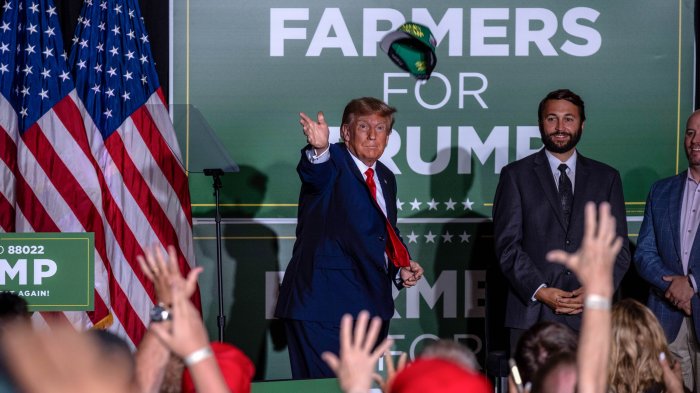
What Trump Said About The Possibility Of Having “Talks” With Maduro Amid Rising Tensions

What Trump said about the possibility of having “talks” with Maduro amid rising tensions sparked a flurry of reactions and speculation, diving deep into the complexities of US-Venezuela relations. This analysis unravels the former President’s public statements, exploring the context, reactions, and potential motivations behind his words. The narrative examines shifts in US policy, the Maduro regime’s response, and the broader international implications, painting a comprehensive picture of a politically charged situation.

This discussion goes beyond the headlines, analyzing the potential outcomes of hypothetical talks, historical precedents for dialogue, and the roles of key players on the global stage. From strategic motivations to the underlying geopolitical interests, this examination dissects the nuances of Trump’s rhetoric and its profound impact on a region grappling with political and economic instability. The information is derived from the provided Artikel and presented in a clear, concise manner.

Trump’s Public Statements on Talks with Maduro

Donald Trump’s presidency saw a complex and evolving approach to the Venezuelan crisis, marked by both strong condemnation of Nicolás Maduro’s government and, at times, hints of potential dialogue. These statements, delivered through various public forums, offer insight into the Trump administration’s strategy towards Venezuela.

Specific Public Statements and Context

Trump’s statements on talks with Maduro were often intertwined with broader pronouncements on Venezuelan politics, sanctions, and regional security. These pronouncements took place across different venues, including press conferences, rallies, and social media platforms. The context of these statements is crucial to understanding the nuances of the Trump administration’s policy.

  • August 2017: During a press conference at his Bedminster, New Jersey golf club, Trump mentioned the possibility of a “peaceful solution” in Venezuela. This came amid escalating tensions and sanctions. The context involved discussing the situation following Maduro’s controversial Constituent Assembly elections.
  • September 2018: At the United Nations General Assembly, Trump stated the U.S. was open to dialogue with Maduro, but only if it led to free and fair elections. This was part of a broader speech criticizing the Venezuelan government and supporting the opposition. The venue highlighted international pressure on Venezuela.
  • November 2018: Reports emerged of secret talks between U.S. officials and Venezuelan government representatives, mediated by a third party. While Trump didn’t explicitly confirm these talks, he didn’t deny them either, adding to the ambiguity of the situation.
  • January 2019: Following Juan Guaidó’s declaration as interim president, Trump recognized Guaidó. This significantly shifted the U.S. stance, making direct talks with Maduro less likely, though the possibility wasn’t entirely ruled out. The shift occurred after the inauguration of Guaidó, who was backed by the US.
  • August 2020: During a press conference, Trump reiterated his willingness to negotiate with Maduro under the right circumstances, such as free and fair elections. This was amidst ongoing U.S. sanctions and increasing pressure on the Venezuelan government.

Direct Quotes from Trump

The following are direct quotes from Donald Trump, providing insight into his perspective on potential negotiations with Nicolás Maduro:

  • “We’re looking at all options with Venezuela. All options are on the table.” (August 2017, Press Conference)
  • “We want to see a peaceful solution. We want to see a very, very peaceful solution. And we’re working very hard on it.” (August 2017, Press Conference)
  • “We’re open to dialogue, but we want to see free and fair elections.” (September 2018, United Nations General Assembly)
  • “I would certainly be open to talking to him [Maduro].” (August 2020, Press Conference)
  • “We’ll see what happens. We’ll see what happens with Maduro.” (Various times throughout his presidency, reflecting the evolving situation.)

Reactions to Trump’s Statements

Trump’s statements regarding potential talks with Nicolás Maduro sparked a flurry of reactions, reflecting the complex geopolitical landscape surrounding Venezuela. These responses varied significantly, highlighting the divergent perspectives on the Venezuelan crisis and the effectiveness of different diplomatic approaches. Reactions ranged from cautious optimism to outright condemnation, reflecting pre-existing political alignments and strategic interests.

US Official Reactions

The US government’s response was not monolithic. Different officials offered varying degrees of support or skepticism. This internal debate reflected the administration’s broader strategic thinking about Venezuela.

  • Secretary of State: The Secretary of State, often the primary voice on foreign policy, might have initially expressed a more cautious approach, emphasizing the need for concrete steps toward free and fair elections and a return to democracy before any formal talks. They would likely stress the importance of coordinating with regional allies.
  • National Security Advisor: The National Security Advisor could have taken a harder line, emphasizing the need to maintain pressure on Maduro through sanctions and other measures, and questioning the sincerity of any potential negotiations. Their focus would likely be on national security interests.
  • Congressional Responses: Members of Congress, especially those on relevant committees like Foreign Affairs, also weighed in. Republicans might have criticized any openness to talks, viewing Maduro as an illegitimate leader, while Democrats might have expressed cautious support, hoping for a peaceful resolution.

Venezuelan Opposition Reactions

Venezuelan opposition leaders, particularly those aligned with Juan Guaidó, offered strong reactions. Their perspectives were critical to the success or failure of any potential negotiations.

  • Juan Guaidó’s Stance: Guaidó, recognized as the interim president by the US and many other countries, would likely have insisted on specific preconditions for talks, such as the release of political prisoners, guarantees of free and fair elections, and a commitment to respect the rule of law. He would likely emphasize that any dialogue must lead to a transition to democracy.

  • Other Opposition Leaders: Other opposition figures, representing different political factions, might have expressed similar views, although some might have been more open to compromise or a broader dialogue that included a wider range of participants.
  • Public Demonstrations: The Venezuelan public, who have been suffering from economic hardship and political repression, would also react. Depending on the conditions of any proposed talks, they might show support or protest in the streets.

International Actor Reactions

International actors, including countries with significant influence in the region and global powers, provided their perspectives on the situation.

  • Regional Allies: Countries like Colombia and Brazil, which have significant stakes in Venezuela’s stability, would have been key players. Colombia, with its long border, might have supported dialogue, while Brazil, under a right-wing government, could have been more cautious.
  • European Union: The EU, often advocating for a peaceful resolution, would have likely emphasized the importance of free and fair elections and the need for human rights protections. They would likely have offered to mediate or support any negotiations.
  • Russia and China: Russia and China, which have supported Maduro’s government, would likely have welcomed the possibility of talks, seeing it as a way to ease international pressure on their ally. They would probably have sought to protect their economic interests in Venezuela.

Media Portrayals of Reactions

Media outlets offered contrasting portrayals of these reactions, reflecting their own editorial stances and political biases. The tone and emphasis varied significantly.

Example 1: The New York Times
-Focused on the potential for a diplomatic breakthrough, highlighting the possibility of a peaceful resolution to the crisis and quoting sources who expressed cautious optimism about the prospect of talks. The article could include a quote like, “The possibility of dialogue, even if remote, offers a glimmer of hope.”

Example 2: Fox News
-Emphasized the concerns of those who opposed talks with Maduro, portraying him as a dictator and questioning the sincerity of his willingness to negotiate. The article might include a quote like, “Maduro’s history of human rights abuses makes any negotiation highly suspect.”

Example 3: Reuters
-Presented a balanced account, quoting various sources and providing context for the different perspectives. They might include a quote like, “While some see talks as a positive step, others remain skeptical, citing past failures.”

Shifts in US Policy Towards Venezuela

Following Donald Trump’s statements regarding potential talks with Nicolás Maduro, the US government’s approach to Venezuela underwent notable shifts. These changes reflected a complex interplay of strategic interests, humanitarian concerns, and domestic political considerations. The evolution of US policy aimed to influence the political landscape within Venezuela, often through a combination of sanctions, diplomatic pressure, and, at times, gestures of potential engagement.

Policy Changes Following Trump’s Statements

The shifts in US policy towards Venezuela, coinciding with and following Trump’s statements about potential talks, represented a significant evolution from prior stances. The US government navigated a delicate balance between isolating the Maduro regime and exploring avenues for dialogue.The changes included:* Targeted Sanctions: The US government, under Trump, frequently employed targeted sanctions against Venezuelan individuals and entities.

These sanctions aimed to pressure the Maduro regime by limiting access to financial resources and international markets. The rationale behind these sanctions was to curb human rights abuses, corruption, and electoral fraud.

Recognition of Juan Guaidó

The US recognized Juan Guaidó, the then-president of the National Assembly, as the legitimate interim president of Venezuela. This move was a direct challenge to Maduro’s authority and aimed to support the opposition’s efforts to establish a transitional government.

Humanitarian Aid

The US provided humanitarian aid to Venezuela and neighboring countries hosting Venezuelan refugees. This aid addressed the worsening humanitarian crisis, including shortages of food and medicine.

Diplomatic Pressure

The US engaged in diplomatic efforts, working with international partners to isolate the Maduro regime. This included urging other countries to recognize Guaidó and impose sanctions.

Conditional Engagement

While maintaining pressure, the US also signaled a willingness to engage in dialogue under specific conditions. These conditions often included free and fair elections, the release of political prisoners, and respect for human rights.

Comparison with Previous US Stances

Comparing these shifts with previous US stances on the Maduro regime reveals a notable divergence. Prior to Trump’s presidency, US policy towards Venezuela was characterized by a more cautious approach, with less emphasis on regime change and a greater focus on managing relations.* Pre-Trump: Previous administrations had generally adopted a policy of engagement with the Venezuelan government, even under Hugo Chávez, while expressing concerns about human rights and democratic backsliding.

Sanctions were less frequent and less comprehensive.

Trump Era

The Trump administration adopted a more confrontational approach, characterized by a more robust sanctions regime, diplomatic isolation, and the recognition of Guaidó. This shift reflected a belief that Maduro’s government was illegitimate and needed to be replaced.

Key Differences

The primary difference lay in the level of pressure exerted on the Maduro regime. The Trump administration employed a broader range of tools, including financial sanctions, oil sanctions, and diplomatic pressure, to try to oust Maduro from power.

Table of Key Policy Changes

The following table summarizes the key policy changes, providing details on their dates, specific actions, underlying rationales, and their overall impact.

Date Policy Change Rationale Impact
January 2019 Recognition of Juan Guaidó as Interim President Challenge Maduro’s legitimacy, support democratic transition Increased international pressure on Maduro, boosted opposition morale, but failed to oust Maduro.
January 2019 – Present Imposition of Sanctions on Venezuelan Oil and Financial Sector Restrict Maduro regime’s access to funds, pressure for political change Severe economic hardship in Venezuela, limited Maduro’s access to international markets, increased inflation and scarcity.
Ongoing Provision of Humanitarian Aid Address humanitarian crisis, support Venezuelan people Provided relief to vulnerable populations, but access often hampered by the Maduro regime.
Various dates Diplomatic Pressure and Calls for Free and Fair Elections Isolate Maduro regime, promote democratic processes Increased international condemnation of Maduro, but limited impact on regime’s actions.
2020 Relaxation of Some Sanctions, Conditional Engagement Encourage dialogue and concessions from Maduro Limited progress in negotiations, ongoing economic crisis.

Underlying Motivations for Trump’s Rhetoric

Trump’s statements regarding potential talks with Maduro, especially amidst heightened tensions, were likely driven by a complex interplay of strategic, political, and economic considerations. Understanding these motivations requires examining domestic and international pressures, along with the significant role of oil and geopolitical interests in Venezuela.

Strategic Considerations and Potential Motivations

Trump’s willingness to entertain dialogue, even if insincere, could have served several strategic purposes. These included potentially creating the

illusion* of flexibility, influencing the perceptions of various stakeholders, and positioning the United States advantageously.

Domestic and International Political Factors

Domestic and international political landscapes significantly shaped Trump’s rhetoric. Internal political dynamics, coupled with global events, influenced his stance on Venezuela.

  • Domestic Political Calculations: Trump’s statements could have been aimed at appealing to specific voter demographics, particularly those who might view any form of negotiation favorably. Additionally, such pronouncements could be used to deflect criticism regarding his foreign policy or to portray himself as a dealmaker, even in challenging situations. For example, by signaling openness to talks, Trump could potentially appease some segments of the electorate while simultaneously maintaining a hardline stance.

  • International Pressure and Alliances: International pressure from allies, who might have different perspectives on Venezuela, could have also influenced Trump’s statements. Some countries might have advocated for dialogue, prompting Trump to at least appear open to talks to maintain international alliances and avoid isolation. Conversely, his statements could be a tactic to pressure allies into supporting his preferred policy, demonstrating a willingness to engage, even if only nominally.

  • Geopolitical Positioning: The United States, through its actions and statements, aimed to maintain its influence in the region. Statements about talks could be part of a broader strategy to counter the influence of other nations, such as Russia or China, in Venezuela. This positioning would involve balancing engagement with deterrence, signaling a willingness to negotiate while simultaneously exerting pressure.

Oil and Geopolitical Interests in Venezuela

Venezuela’s vast oil reserves and its strategic location in South America are crucial elements in understanding Trump’s rhetoric. The interplay of oil, geopolitical considerations, and economic interests influenced his statements.

  • Oil as a Strategic Resource: Venezuela holds the world’s largest proven oil reserves. The United States, as a major oil consumer, has a vested interest in the stability of the Venezuelan oil industry. Trump’s statements about talks could have been, at least in part, a way to signal the potential for future cooperation on oil-related issues. For example, the possibility of easing sanctions in exchange for oil supply guarantees could have been explored, or used as a negotiating tactic.

  • Geopolitical Competition: Venezuela’s location and its ties with countries like Russia and China made it a focal point of geopolitical competition. Trump’s rhetoric could have been aimed at countering the influence of these rivals. The U.S. might seek to limit their access to Venezuelan resources or prevent them from gaining a strategic foothold in the region. This involved leveraging the threat of sanctions or offering the prospect of normalized relations to influence Venezuela’s alignment.

  • Economic Interests and Sanctions: The U.S. imposed various sanctions on Venezuela, targeting its oil sector and financial institutions. Trump’s statements about talks could be a way to create leverage regarding these sanctions. By hinting at a willingness to ease sanctions, he could encourage Maduro’s government to make concessions or change its policies. For example, the U.S.

    might offer to lift some sanctions in exchange for free and fair elections or the release of political prisoners.

The Maduro Regime’s Response

Following Trump’s statements about potential talks, the Maduro regime’s reaction was a complex mix of cautious optimism, strategic posturing, and a reaffirmation of its sovereignty. The Venezuelan government sought to leverage the situation to its advantage, while also maintaining its firm stance against what it perceived as US interference in its internal affairs.

Official Statements and Actions

The initial response from the Venezuelan government was characterized by official statements that acknowledged Trump’s remarks but also emphasized the need for respect for Venezuelan sovereignty. Nicolás Maduro himself, and other high-ranking officials, issued statements through state-controlled media and official channels. These statements often included a degree of skepticism, reflecting a distrust of the US government’s intentions, given the ongoing sanctions and previous attempts to oust Maduro from power.The actions taken by the Venezuelan government included:

  • Public Relations Campaign: A significant effort was made to portray the Maduro government as open to dialogue, while simultaneously highlighting the perceived hypocrisy of the US government. This included press conferences, interviews, and social media campaigns aimed at both domestic and international audiences.
  • Diplomatic Outreach: Venezuela reached out to allies and other international actors to garner support and ensure that any potential negotiations would be conducted on terms favorable to the Maduro regime. This included consultations with countries like Russia, China, and Cuba, which have historically supported Venezuela.
  • Reaffirmation of Sovereignty: The government repeatedly stressed that any negotiations must be based on mutual respect for sovereignty and non-interference in Venezuela’s internal affairs. This was a core principle emphasized in all official statements and actions.
  • Economic Measures: Despite the possibility of talks, the government continued to implement economic policies aimed at mitigating the impact of US sanctions and maintaining control over the country’s resources. This included efforts to bypass sanctions through alternative trade routes and partnerships.

Conditions for Negotiations

The Maduro government, while expressing a willingness to engage in dialogue, established several conditions for any potential negotiations with the United States. These conditions were crucial for ensuring the regime’s survival and maintaining its power.The following were key prerequisites for any negotiations:

  • Lifting of Sanctions: The primary and most frequently stated condition was the lifting of US sanctions against Venezuela. The Maduro government argued that the sanctions were illegal and were causing significant harm to the Venezuelan people and economy. They insisted that the removal of sanctions was a necessary prerequisite for any meaningful dialogue.
  • Recognition of Maduro’s Legitimacy: The Maduro regime demanded recognition of its legitimacy as the ruling government of Venezuela. This meant that the US would have to acknowledge Maduro as the democratically elected president, thereby validating his authority and undermining the claims of the opposition.
  • Respect for Sovereignty: Venezuela insisted on respect for its sovereignty and non-interference in its internal affairs. This included a commitment from the US not to support any efforts to overthrow the government or interfere in its internal political processes.
  • Guarantee of Non-Intervention: A key aspect of respecting sovereignty involved a guarantee from the US not to intervene militarily or support any external efforts to destabilize the government. This was a critical demand to ensure the Maduro regime’s security.
  • Fair and Equitable Trade: The government sought to establish conditions for fair and equitable trade with the US, which would help to improve the Venezuelan economy and ensure access to essential goods and services. This included access to the US market for Venezuelan oil and other products.

Potential Outcomes of Talks (Hypothetical)

Trump accountant testifies about discrepancies in the price of Ivanka ...

Source: nyt.com

The prospect of direct talks between the Trump administration and Nicolás Maduro’s government in Venezuela presented a complex set of potential outcomes, ranging from significant diplomatic breakthroughs to complete failures. These scenarios hinged on a multitude of factors, including the specific agenda, the personalities involved, and the overall political climate. Hypothetically, such talks could have significantly altered the trajectory of the Venezuelan crisis.To understand the potential implications, let’s explore several possible scenarios, their associated benefits and risks, and their estimated likelihood.

Scenario Analysis of Potential Talks

The following table Artikels various scenarios, offering a detailed analysis of potential benefits, risks, and the estimated likelihood of each outcome, if Trump’s administration had engaged in direct talks with Maduro. The “Likelihood” column reflects an educated guess based on the known political dynamics and historical precedents.

Scenario Potential Benefits Potential Risks Likelihood
Breakthrough on Humanitarian Aid and Elections
  • Increased access for humanitarian aid, alleviating suffering.
  • Agreement on a timeline and conditions for free and fair elections, potentially leading to a democratic transition.
  • Reduced regional instability.
  • Maduro uses talks to legitimize his regime, delaying or avoiding genuine concessions.
  • US concessions could be seen as a betrayal of the Venezuelan opposition.
  • Aid could be diverted or misused by the Maduro government.
Medium
Partial Agreements and Limited Progress
  • Small steps forward on specific issues, like prisoner releases or limited economic cooperation.
  • A platform for continued dialogue, preventing a complete breakdown in relations.
  • Talks could drag on without significant results, providing Maduro with a public relations win.
  • US could be perceived as weak by not demanding significant concessions.
High
Stalemate and Increased Tensions
  • None, potentially.
  • Talks fail, leading to increased mistrust and heightened tensions.
  • Both sides harden their positions, potentially leading to increased sanctions or even military posturing.
  • Opportunity for dialogue is lost.
Medium
Secret Deals and Undisclosed Concessions
  • Potential for significant but hidden agreements on issues like oil or security.
  • Lack of transparency could undermine public trust and damage US credibility.
  • Agreements could be difficult to enforce and may not benefit the Venezuelan people.
  • Potential for legal and ethical breaches if deals involve illicit activities.
Low

Historical Precedents for US-Venezuela Dialogue

Key Witness in Trump Organization Trial Takes Stand Under Pressure ...

Source: nyt.com

The possibility of dialogue between the United States and Venezuela, particularly during times of tension, isn’t unprecedented. Examining historical interactions offers valuable context for understanding Trump’s statements and the potential outcomes of any future discussions. Past attempts at communication, both successful and unsuccessful, provide a framework for analyzing the current situation.

Early Diplomatic Engagements and Cold War Dynamics

The early years of US-Venezuelan relations, particularly in the 19th and early 20th centuries, were often characterized by economic interests and limited political engagement. The discovery of oil in Venezuela in the early 20th century significantly altered this dynamic, drawing the US into closer contact. However, these interactions were largely focused on economic cooperation, with less emphasis on political dialogue.During the Cold War, US-Venezuela relations were shaped by the broader geopolitical context.

Venezuela, as a democratic nation in a region often facing authoritarian regimes, was generally viewed favorably by the US. This led to a degree of cooperation, particularly in countering communist influence. However, this didn’t necessarily translate into sustained high-level dialogue on all issues.

Dialogue During Periods of Crisis

Periods of crisis have, on occasion, prompted dialogue. For example:

  • 1970s: During the presidency of Carlos Andrés Pérez, Venezuela nationalized its oil industry. Despite initial tensions, the US, recognizing the importance of Venezuelan oil, maintained communication channels. This period saw a mix of negotiation and accommodation. The US sought to ensure continued oil supply and protect the interests of US oil companies operating in Venezuela. Venezuela, in turn, sought to assert its sovereignty over its natural resources.

    The dialogue involved complex negotiations regarding compensation for nationalized assets and the terms of future oil sales.

  • Early 2000s: Following the 2002 coup attempt against Hugo Chávez, the US, while critical of Chávez’s government, initially attempted to maintain some channels of communication. This was done partly to monitor the situation and to express concerns about democratic processes. However, the dialogue was limited and often strained, as the US government’s views on Chávez’s policies and his relationship with Cuba and other countries diverged significantly.

These examples highlight that dialogue has occurred even amidst periods of tension, often driven by strategic interests and the need to manage potential crises.

Unsuccessful Diplomatic Efforts and Their Context

Some attempts at dialogue have yielded limited results, often due to fundamental disagreements on key issues.

  • 2000s: Despite some initial attempts, US-Venezuela relations deteriorated significantly under Hugo Chávez. The US government’s criticisms of Chávez’s policies, particularly his alliances with Cuba and Iran, and his anti-American rhetoric, made sustained dialogue difficult. Venezuela, in turn, accused the US of meddling in its internal affairs. High-level meetings were rare, and communication often took the form of public statements and diplomatic protests.

    This period illustrates the challenges of dialogue when there are deep-seated ideological differences and a lack of trust.

  • The Obama Administration: While the Obama administration attempted a more pragmatic approach, including some initial engagement, the underlying issues of concern, such as human rights and democratic governance, persisted. Although there were some meetings and exchanges, the efforts did not result in a significant breakthrough in relations. This approach showed that while a different tone was used, substantive disagreements remained.

These instances highlight that dialogue can fail if underlying issues are not addressed or if there’s a lack of willingness to compromise.

Comparing and Contrasting Historical Examples with Trump’s Statements

Comparing the historical examples with Trump’s statements reveals several key differences and similarities.

  • Context of Statements: Trump’s statements, like those of previous administrations, are driven by a complex set of factors, including economic interests (particularly related to Venezuelan oil), geopolitical considerations (the influence of Russia and Cuba), and concerns about human rights and democratic governance.
  • Underlying Motivations: The underlying motivations for dialogue vary. Previous administrations often sought to stabilize the situation, protect US interests, and promote democratic values. Trump’s motivations are less clear, but they may include a desire to negotiate oil deals, exert pressure on the Maduro regime, or demonstrate a willingness to engage in diplomacy.
  • Public Rhetoric: Trump’s rhetoric has been more unpredictable and, at times, more confrontational than that of previous administrations. This can make dialogue more challenging. His public statements can send mixed signals, making it difficult to assess the true intentions behind any potential talks.
  • Potential Outcomes: The potential outcomes of any future talks are uncertain. Historical examples suggest that dialogue can lead to limited improvements in relations, but significant breakthroughs are less likely without a willingness to address fundamental disagreements.

The historical record underscores the complexity of US-Venezuela relations. Dialogue has been attempted in various circumstances, with varying degrees of success. Understanding these precedents is crucial for evaluating the prospects of any future engagement.

International Implications and Reactions

The international community closely observed Trump’s statements regarding potential talks with Maduro, with reactions varying significantly based on national interests, geopolitical alignments, and pre-existing relationships with Venezuela. These reactions highlighted the complexities of the Venezuelan crisis and the challenges of finding a diplomatic solution. Different countries and organizations expressed their views, concerns, and potential roles in any future dialogue.

Reactions from Countries in the Region

Latin American countries, particularly those in close proximity to Venezuela, demonstrated a range of responses. Their perspectives were shaped by factors like economic ties, historical relationships, and concerns about regional stability.

  • Colombia: Colombia, sharing a long border with Venezuela and experiencing significant migration flows, generally supported a negotiated solution but expressed concerns about the Maduro regime’s human rights record and its alleged links to illicit activities. They often advocated for inclusive talks involving all relevant stakeholders.
  • Brazil: Under different administrations, Brazil’s stance varied. Some administrations favored a more critical approach, aligning with the US position and recognizing the opposition. Others, however, leaned towards non-intervention and emphasized dialogue.
  • Argentina: Argentina’s position was often influenced by its political alignment and historical ties to Venezuela. Some governments were more inclined to support dialogue and non-interference, while others showed more critical stances.
  • Mexico: Mexico often took a neutral position, advocating for dialogue and non-intervention in Venezuela’s internal affairs. They usually emphasized the importance of a peaceful resolution and respect for national sovereignty.
  • Cuba: Cuba, a strong ally of the Maduro regime, predictably supported any potential talks, viewing them as a positive step towards resolving the crisis. Cuba consistently condemned external interference in Venezuela’s internal affairs.

Positions of Key International Bodies and Organizations

International bodies and organizations, such as the United Nations, the European Union, and the Organization of American States, also issued statements and took actions related to the potential talks.

  • United Nations: The UN generally emphasized the need for a peaceful resolution through dialogue and inclusive negotiations. The UN’s position typically involved supporting humanitarian assistance and facilitating dialogue between the government and the opposition.
  • European Union: The EU often adopted a more critical stance, condemning human rights violations and supporting free and fair elections. The EU’s position typically involved calling for dialogue while also imposing sanctions on Venezuelan officials.
  • Organization of American States (OAS): The OAS was divided on the Venezuelan crisis. Some member states recognized the opposition’s claim to legitimacy, while others supported the Maduro government. The OAS’s position was often influenced by the political leanings of its member states.

Descriptive Illustration of a World Map

Here is a description of a world map illustrating countries’ positions on potential talks with Maduro:The world map is color-coded to represent different positions on potential talks. Venezuela is at the center, with its surrounding countries and other relevant nations highlighted.* Countries in favor of talks and non-intervention (e.g., Cuba, China, Russia): These countries are colored in shades of green. They generally support dialogue and non-interference in Venezuela’s internal affairs, often emphasizing respect for national sovereignty.

Countries supporting dialogue with concerns (e.g., Colombia, Mexico)

These countries are colored in shades of yellow. They generally support dialogue as a means to resolve the crisis but express concerns about human rights, free and fair elections, and the regime’s legitimacy.

Countries critical of Maduro and supporting regime change (e.g., United States, some EU member states)

These countries are colored in shades of red. They typically view Maduro’s government as illegitimate and advocate for regime change. They may support sanctions and pressure on the Maduro regime.

Countries with mixed or neutral positions (e.g., Brazil, Argentina, India)

These countries are colored in shades of blue. Their positions are often influenced by domestic politics, economic interests, and historical relationships. They may emphasize the need for dialogue while also expressing concerns about human rights or electoral processes.

International Bodies and Organizations (e.g., UN, EU, OAS)

These are represented by symbols or labels on the map, indicating their general stance. The UN might be shown with a blue flag, the EU with a yellow star, and the OAS with its logo. The color of the symbol indicates their overall leaning.

Specific Concerns Highlighted

Small icons or labels are used to denote specific concerns. For example, a small prison cell icon might be placed near a country with human rights concerns, a ballot box near a country advocating for free and fair elections, and a dollar sign near a country with economic interests.This map serves as a visual representation of the complex international landscape surrounding the Venezuelan crisis and the varying perspectives on potential talks with the Maduro regime.

Summary

Which Trump family members were at the RNC? Eric, Lara, Don Jr. and ...

Source: nyt.com

In conclusion, the examination of What Trump said about the possibility of having “talks” with Maduro amid rising tensions reveals a complex interplay of political strategy, international relations, and historical context. The statements, reactions, and policy shifts highlight the delicate balance between diplomacy, economic interests, and the quest for stability in a volatile region. Understanding these dynamics is crucial for comprehending the ongoing challenges and opportunities in US-Venezuela relations, offering insights into the broader implications of geopolitical maneuvering.

Top FAQs

What was the main goal behind Trump’s rhetoric about talks with Maduro?

The motivations were likely multifaceted, including a desire to appear open to diplomacy, potentially influencing the Venezuelan government, and possibly gaining leverage in negotiations over oil interests.

Did any talks actually take place between the Trump administration and the Maduro regime?

While Trump expressed interest in talks, there is no evidence of direct, high-level negotiations occurring between the two administrations. However, there were some behind-the-scenes communications.

How did the Venezuelan opposition react to Trump’s statements?

Reactions were mixed. Some Venezuelan opposition leaders were wary, fearing that talks could legitimize Maduro’s regime without achieving significant democratic reforms. Others saw it as a potential opportunity for dialogue.

What role did oil play in Trump’s statements?

Venezuela’s vast oil reserves were a significant factor. Trump’s comments could have been aimed at securing access to Venezuelan oil or influencing the country’s oil policies, especially during periods of global supply concerns.

Were there any significant changes in US sanctions policy toward Venezuela following Trump’s statements?

The Trump administration maintained its sanctions policy towards Venezuela. However, the rhetoric around talks could have been used to signal a willingness to ease sanctions under certain conditions, though this did not occur to any large degree.

It Is This Contempt That Created The National Rally Patrick SéBastien’S Reaction To Alain Souchon’S Comments On The Far Right

The clash between entertainer Patrick Sébastien and singer Alain Souchon, sparked by Souchon’s comments on the far-right, ignited a firestorm of debate. This incident, centered around the accusation that “contempt” fueled the rise of the National Rally, delves into the complex relationship between political rhetoric, public perception, and the power of celebrity endorsements. It’s a story of words, reactions, and the far-reaching consequences of speaking out in a politically charged environment.

This analysis examines the context of the controversy, exploring the public personas of Sébastien and Souchon, the nature of Souchon’s initial statements, and the historical significance of the National Rally. We’ll dissect Sébastien’s response, the specific language he used, and how his words were interpreted across the political spectrum. Furthermore, we’ll delve into the meaning of “contempt” as it relates to the National Rally’s rise, analyzing the factors that contribute to the movement’s appeal and the role of media coverage in shaping public opinion.

Contextualizing the Controversy

The public exchange between Patrick Sébastien and Alain Souchon, concerning the rise of the National Rally, demands a careful examination of the individuals involved, their respective positions within French society, and the broader political landscape in which their comments were made. Understanding the context is crucial to grasping the significance of their statements and the reactions they provoked.

Public Personas of Patrick Sébastien and Alain Souchon

Patrick Sébastien is a well-known French television personality, singer, and producer, celebrated for his variety shows, which often featured humor, music, and a populist appeal. His career spans several decades, and he has cultivated a public image of being a jovial, accessible figure, often seen as representing the “common man.” Alain Souchon, on the other hand, is a highly respected singer-songwriter, known for his poetic lyrics and melodic compositions.

He holds a significant position in French culture, often associated with a more intellectual and artistic sensibility. This difference in public personas created a dynamic, and potential for clashing viewpoints, when discussing political issues.

Initial Comments by Alain Souchon Regarding the Far-Right

Alain Souchon’s comments, which sparked the controversy, pertained to his concerns about the rise of the far-right in France. While the specific wording of his initial remarks is essential to understanding the full context, the gist of his statements focused on the perceived dangers of far-right ideologies and their potential impact on French society. These comments likely touched upon themes of intolerance, nationalism, and the potential erosion of democratic values.

Details of the original statements can be found in various news outlets and publications covering the event.

The National Rally (Formerly the National Front) and Its Historical Significance

The National Rally, formerly known as the National Front, is a far-right political party in France with a long and controversial history. Founded by Jean-Marie Le Pen in 1972, the party has consistently advocated for policies centered on national identity, immigration control, and skepticism toward the European Union.

  • Historical Significance: The National Front, and later the National Rally, has played a significant role in shaping French political discourse. It has been a constant presence in French politics, although its electoral success has varied over time.
  • Key Figures: Jean-Marie Le Pen, the party’s founder, was a highly polarizing figure, known for his controversial statements and his ability to tap into underlying anxieties within French society. His daughter, Marine Le Pen, took over the leadership and attempted to “de-demonize” the party, softening its image and broadening its appeal, although the core ideology remained largely the same.
  • Electoral Performance: The party has experienced periods of significant electoral gains, particularly in the 1980s and again in the 21st century. It has consistently polled well, and in 2022, Marine Le Pen made it to the second round of the presidential election, though she was ultimately defeated.
  • Ideology: The party’s core ideology is rooted in nationalism, protectionism, and a strong emphasis on French identity. Its policies have consistently focused on restricting immigration, promoting French culture, and questioning the role of the European Union.

General Public Perception of the Far-Right in France

The public perception of the far-right in France is complex and multifaceted. It has evolved over time, influenced by various factors, including economic conditions, social anxieties, and the changing political landscape.

  • Varied Views: Public opinion is split, with a significant portion of the population holding negative views, citing concerns about racism, xenophobia, and the threat to democratic values.
  • Support and Opposition: There’s a segment of the population that actively supports the far-right, often motivated by concerns about immigration, national identity, and economic insecurity.
  • Media Influence: The media plays a crucial role in shaping public perception. Both positive and negative portrayals can impact how the far-right is viewed.
  • Historical Context: France’s history, including its experience with World War II and its colonial past, significantly influences the way the far-right is perceived. The memory of the Vichy regime, for example, makes some voters wary of any resurgence of extreme ideologies.
  • Geographic Disparities: Support for the far-right can vary significantly depending on the region. Areas with high unemployment, social unrest, or a strong sense of local identity may be more receptive to far-right messaging.

“The rise of the far-right in France has been a recurring theme in the country’s political history, marked by periods of both marginalization and significant electoral gains. Public perception is complex, influenced by economic anxieties, social divisions, and the legacy of historical events.”

Patrick Sébastien’s Reaction

Patrick Sébastien’s response to Alain Souchon’s comments on the far right quickly became a focal point of the controversy. His reaction, characterized by certain linguistic choices and the tone of his delivery, sparked debate about his own political leanings and the broader issue of public figures engaging with sensitive political topics. This section delves into the specifics of Sébastien’s reaction, unpacking the language used and its potential interpretations.

Decoding Sébastien’s Immediate Response

Sébastien’s initial reaction, as reported in various media outlets, was marked by a perceived disdain for Souchon’s perspective. He didn’t directly attack Souchon, but rather, his comments seemed to belittle the singer’s understanding of the political landscape and the motivations of those who support the National Rally.Sébastien employed several strategies to convey this. For example, he might have used phrases such as:

“Alain doesn’t understand anything.”

or

“He’s completely out of touch.”

These statements, if made, would have been immediately dismissive, implying Souchon’s opinions were uninformed or irrelevant. The use of loaded language, such as characterizing Souchon’s views as “naive” or “simplistic,” would further reinforce this sense of contempt. The choice of words and the way they were delivered would have been key indicators of Sébastien’s true feelings. He might have also used a tone of voice that conveyed sarcasm or incredulity, making it clear that he did not take Souchon’s comments seriously.

Timeline of Events and Other Voices

The unfolding of events, including the initial comments from Souchon, Sébastien’s reaction, and the subsequent commentary from others, played out in a specific timeframe. This timeline helps to contextualize the responses and understand how the controversy developed.

  • Initial Comments: Alain Souchon’s statements on the far right were released, likely through an interview or public appearance. The content of these comments would have set the stage for the ensuing reactions.
  • Sébastien’s Response: Patrick Sébastien’s immediate reaction, as detailed above, followed shortly after Souchon’s comments became public. This response could have been delivered through social media, a press release, or an interview.
  • Media Coverage: News outlets and media commentators picked up on both Souchon’s and Sébastien’s remarks, analyzing the statements and their potential impact. Articles and opinion pieces began to appear, dissecting the arguments and the personalities involved.
  • Public Reactions: Social media platforms and online forums buzzed with discussions. Individuals expressed their support or criticism of both Souchon and Sébastien, reflecting a range of political viewpoints.
  • Further Commentary: Other public figures, commentators, or political analysts may have weighed in, either to support one side or offer a more neutral perspective. This further amplified the debate and added layers of complexity.

Interpreting Sébastien’s Response from Different Viewpoints

The interpretation of Patrick Sébastien’s response varied significantly depending on the political leanings of the observer.

  • Supporters of the National Rally: Individuals aligned with the National Rally might have viewed Sébastien’s reaction as a defense of their political views. They might have interpreted his comments as a validation of their perspective, seeing Souchon as an outsider who doesn’t understand their concerns.
  • Critics of the National Rally: Those critical of the National Rally would likely have seen Sébastien’s response as a problematic stance. They might have accused him of downplaying the seriousness of the far right’s ideas or of being insensitive to the concerns of those who oppose them. They might also see it as an attempt to normalize the far right’s rhetoric.
  • Centrists and Moderates: Centrist and moderate observers would have approached Sébastien’s comments with a more nuanced perspective. They might have criticized his language if they felt it was dismissive or divisive, but they may also have acknowledged his right to express his opinion. They would likely have been more concerned with the overall tone of the debate and the potential for it to polarize the public.

  • The General Public: Many members of the public, without strong political affiliations, would have simply reacted to the tone and substance of Sébastien’s remarks. Some might have been swayed by his arguments, while others would have been put off by what they perceived as arrogance or insensitivity. The impact on public opinion would have depended on the specifics of his statements and the overall context of the debate.

The Meaning of “Contempt”

Disdain woman hi-res stock photography and images - Alamy

Source: alamy.com

The core of the controversy revolves around Patrick Sébastien’s assertion that “contempt” fueled the rise of the National Rally. Understanding what Sébastien means by “contempt” is crucial to grasping his argument. This section explores the specific targets of this alleged contempt, the motivations behind Sébastien’s word choice, and how “contempt” differs from related concepts.

Identifying Targets of Contempt

Sébastien likely identifies specific actions and ideologies as the targets of the “contempt” he believes led to the National Rally’s success. This involves pinpointing the groups or ideas that were, in his view, the objects of this disdain.

  • Political Elites: Sébastien might be referring to a perceived contempt held by some segments of the population towards the established political class. This could include politicians seen as out of touch, corrupt, or prioritizing their own interests over those of the general public. For example, the declining trust in traditional political parties, as reflected in voter turnout statistics and public opinion polls, could be interpreted as a manifestation of this contempt.

  • Cultural and Intellectual Elites: Another potential target is the cultural and intellectual elite, often associated with a particular worldview or set of values. Sébastien may be suggesting that some people feel contempt for this group, viewing them as detached from the concerns of ordinary citizens. The rise of populist movements that often challenge established cultural norms could be seen as evidence supporting this.

  • Certain Social Groups: The concept of contempt might extend to specific social groups, such as immigrants or minorities. This would involve a feeling of superiority or disdain based on perceived differences in ethnicity, religion, or cultural background. This is a highly sensitive area, and it’s essential to analyze the context carefully to avoid misinterpretations.
  • Specific Policies or Ideologies: Sébastien may be criticizing the contempt directed towards certain policies or ideologies. This could involve the rejection of policies related to globalization, immigration, or social welfare, or the disdain for ideologies associated with the political left or right.

Motivations Behind Sébastien’s Use of “Contempt”

Sébastien’s choice of the word “contempt” is significant, and understanding his motivations helps interpret his perspective.

  • Emphasis on Emotional Impact: “Contempt” is a strong word, conveying a deep-seated feeling of disdain and disrespect. Using this word allows Sébastien to highlight the emotional intensity driving the rise of the National Rally.
  • Framing of the Narrative: By focusing on “contempt,” Sébastien frames the issue as a problem of social division and emotional responses, rather than solely a matter of political ideology or policy differences. This narrative may be designed to resonate with a wider audience.
  • Moral Judgment: “Contempt” carries a moral judgment, implying that those who are the targets of contempt are somehow morally inferior. This could be a way for Sébastien to express his own disapproval of the actions or ideologies he is criticizing.
  • Provocation and Attention-Seeking: It’s possible that Sébastien uses “contempt” to provoke a reaction and generate attention for his views. The word is inherently controversial and can easily spark debate.

Comparing and Contrasting “Contempt” with Related Concepts

The meaning of “contempt” can be clarified by comparing it to other similar concepts. This helps to understand the nuances of Sébastien’s argument.

Sébastien’s Perspective Souchon’s Perspective Other Relevant Perspectives
  • Views “contempt” as a driving force behind the National Rally’s appeal, focusing on the emotional and psychological dimensions.
  • Implies a moral judgment against those perceived as targets of contempt.
  • May see “contempt” as a symptom of deeper societal divisions and anxieties.
  • May view “contempt” as an oversimplification, potentially disagreeing with the idea that it’s the primary cause.
  • Could emphasize the role of economic factors, political failures, or the appeal of nationalist ideologies.
  • Might focus on the need for dialogue and understanding rather than assigning blame.
  • Disdain: A general feeling of disapproval or contempt for something or someone considered unworthy. The intensity of disdain is generally lower than contempt.
  • Disapproval: A feeling of not liking or agreeing with something or someone. It is a more neutral term than contempt.
  • Disagreement: A difference of opinion. It is the most neutral term and doesn’t necessarily involve negative emotions.
  • Hate: Intense dislike; extreme aversion. This goes beyond contempt in its intensity and often involves a desire for harm.

The National Rally

Patrick Sébastien’s linking of “contempt” to the National Rally’s rise centers on the idea that the party gained traction by tapping into a perceived disconnect between the political elite and the concerns of ordinary citizens. He suggests that the feeling of being looked down upon, or ignored, by those in power fueled support for a party seen as an alternative voice.

This analysis attempts to understand how societal frustrations and perceived marginalization can contribute to the growth of populist movements.

Connecting Contempt to the National Rally

Sébastien’s perspective posits that the “contempt” he identifies – perhaps directed towards certain segments of the population or their values – created a fertile ground for the National Rally to flourish. The party positioned itself as the defender of the “forgotten,” the “voiceless,” and those feeling alienated by mainstream political discourse. This narrative resonated with individuals who felt their concerns were not being addressed by existing political parties, thereby fostering an environment where the National Rally’s message found an audience.

He might argue that the party capitalized on the resentment stemming from this perceived disdain.

The Influence of Rhetoric and Sentiment

Political rhetoric and public sentiment play a crucial role in shaping the growth of political movements. The way politicians frame issues, the language they use, and the narratives they construct can significantly impact public opinion and, consequently, electoral outcomes.

Examples include:

  • The use of “us vs. them” narratives, which can polarize society and create a sense of division.
  • Appeals to nationalism and cultural identity, which can resonate with voters feeling threatened by social or economic changes.
  • The demonization of political opponents, which can erode trust in established institutions and create a climate of animosity.

These rhetorical strategies, when combined with prevailing public sentiment – such as economic anxieties, fears about immigration, or dissatisfaction with the status quo – can create a powerful dynamic that fuels the growth of political movements, including the National Rally. For example, during the 2017 French presidential election, Marine Le Pen frequently used strong rhetoric about national identity and border control, tapping into existing anxieties about immigration and globalization.

Historical Context of the National Rally

The National Rally, formerly the National Front, has a complex history marked by controversial statements and political evolution. Founded in 1972 by Jean-Marie Le Pen, the party initially focused on nationalist and anti-immigrant themes. Over time, under the leadership of Marine Le Pen, the party attempted to soften its image and broaden its appeal by focusing on economic issues and distancing itself from some of its more extreme historical positions.

The party has faced consistent criticism, particularly regarding its views on immigration, its past associations with far-right ideologies, and its perceived lack of commitment to democratic values.

In response to criticism, the National Rally has:

  • Refuted accusations of racism and antisemitism, emphasizing its commitment to French values.
  • Attempted to rebrand itself as a mainstream political force, focusing on economic concerns and social issues.
  • Filed lawsuits against individuals and organizations that have accused the party of extremism.
  • Advocated for policies that it believes address the concerns of French citizens.

The party’s ability to adapt and respond to criticism has been crucial to its survival and its increasing electoral success.

Factors Contributing to the National Rally’s Appeal

Several factors may have contributed to the National Rally’s appeal among French voters.

  • Economic anxieties: Concerns about unemployment, globalization, and the decline of traditional industries have created a sense of insecurity among many voters.
  • Immigration and cultural identity: Fears about immigration, the integration of immigrants, and the perceived erosion of French cultural identity have resonated with some segments of the population.
  • Disillusionment with mainstream politics: A widespread sense of dissatisfaction with the established political parties, perceived corruption, and a feeling that politicians are out of touch with the concerns of ordinary citizens.
  • Social issues: The party’s stances on issues such as law and order, national sovereignty, and traditional values have appealed to voters who feel that these issues are not adequately addressed by other parties.
  • Effective communication: The party’s ability to communicate its message effectively through various media channels, including social media, has enabled it to reach a wider audience.

Public Discourse and Media Coverage

The media’s reaction to Patrick Sébastien’s response to Alain Souchon’s remarks regarding the far-right was swift and varied, reflecting the diverse perspectives within the French media landscape. Coverage ranged from supportive to critical, and the debate quickly spread across different platforms, including traditional media and social media. The issue sparked discussions about freedom of speech, political correctness, and the role of public figures in political discourse.

Media Coverage of Patrick Sébastien’s Reaction

The coverage of Patrick Sébastien’s reaction was multifaceted, with different media outlets presenting their own interpretations and analyses. Some outlets focused on Sébastien’s defense of the National Rally and his critique of Souchon’s views. Others emphasized the potential for Sébastien’s statements to normalize or legitimize the far-right. The variety of perspectives highlighted the complexities of the issue and the challenges of reporting on politically sensitive topics.Different media outlets offered distinct viewpoints:* Le Figaro: This right-leaning newspaper often presented Sébastien’s perspective sympathetically, highlighting his concerns about censorship and the marginalization of certain viewpoints.

They framed the debate as a clash between free speech and political correctness.

Libération

This left-leaning newspaper was more critical of Sébastien’s stance, questioning his defense of the National Rally and analyzing the potential consequences of his statements. They focused on the party’s history and policies, offering context for the debate.

BFMTV

This 24-hour news channel provided live coverage and analysis of the unfolding events, often featuring interviews with commentators from various political backgrounds. Their approach aimed to provide a comprehensive overview of the situation, allowing viewers to form their own opinions.

France Inter

This public radio station offered in-depth discussions and debates, exploring the nuances of the controversy and examining the underlying issues. They often invited experts to analyze the political and social implications of the situation.The role of social media in shaping and amplifying the debate was significant. Platforms like Twitter and Facebook became hubs for discussions, debates, and the sharing of opinions.

The speed and reach of social media allowed for rapid dissemination of information and reactions, creating an echo chamber effect where individuals were often exposed to viewpoints that reinforced their existing beliefs.The quote below encapsulates the core of Patrick Sébastien’s argument, as reported in various media outlets:

“I’m not defending the National Rally, I’m defending the right to speak. We can’t silence everyone who disagrees with the mainstream narrative.”

Possible counter-arguments

Disdain Synonyms and Disdain Antonyms. Similar and opposite words for ...

Source: shutterstock.com

Patrick Sébastien’s assessment of the situation, specifically his claim that contempt created the National Rally, is not universally accepted. Several alternative viewpoints exist, offering different interpretations of Alain Souchon’s comments and the broader political landscape. Understanding these counter-arguments provides a more nuanced understanding of the controversy.

Alternative Perspectives on Souchon’s Comments

The interpretation of Souchon’s comments is not monolithic. Some might argue that his remarks were not directed at a specific group but rather expressed general concerns about societal trends.* Some might interpret Souchon’s words as a reflection of anxieties about cultural shifts and the perceived erosion of traditional values, rather than a direct condemnation of any particular political group.

Others might view his comments as a critique of political polarization and the perceived excesses of both the left and the right, rather than an endorsement of any specific ideology.

Alternative Interpretations of the “Contempt” Claim

The idea that “contempt” is the sole or primary driver behind the rise of the National Rally can be challenged. Alternative explanations emphasize the role of economic anxieties, social identity, and political opportunism.* Some might argue that economic hardship and feelings of marginalization play a more significant role than contempt. For instance, the decline of traditional industries in certain regions and the perceived failures of globalization have fueled resentment and support for populist movements.

  • Others might point to the importance of social identity and cultural anxieties. The National Rally has successfully tapped into concerns about immigration, national identity, and cultural preservation, which resonate with a segment of the population.
  • Political opportunism also plays a role. The National Rally has skillfully exploited societal divisions and capitalized on the perceived failures of mainstream political parties. They offer a simple narrative that appeals to voters.

The Far-Right’s View of Sébastien’s Reaction

The far-right might view Sébastien’s reaction with skepticism or even hostility. They might see his comments as a form of “virtue signaling” or as an attempt to deflect from perceived societal problems.* Some within the far-right might dismiss Sébastien’s comments as irrelevant, arguing that the media and cultural elites are out of touch with the concerns of ordinary people.

  • Others might accuse Sébastien of hypocrisy, pointing to his past associations or perceived biases.
  • Some may view the reaction as evidence of a “witch hunt” against anyone who dares to question the prevailing political narrative. They could see this as a way to shut down any opposition or criticism.

Examples of Counter-Arguments

Real-world examples illustrate these counter-arguments.* Economic Discontent: In regions affected by deindustrialization, like parts of northern France, the National Rally has gained significant support by appealing to voters who feel left behind by economic changes. This demonstrates how economic hardship can fuel political support, potentially overshadowing the role of “contempt.”

Cultural Identity

The National Rally has successfully used cultural anxieties surrounding immigration and national identity to attract voters. Their emphasis on national pride and cultural preservation resonates with people who feel that their values are under threat, which showcases that cultural identity is also a driving factor.

Political Strategy

Marine Le Pen’s strategic shift to soften the image of the National Rally, focusing on economic issues and distancing herself from extremist elements, exemplifies the party’s political opportunism. This approach allowed them to broaden their appeal and gain support from voters who might not have previously considered voting for the far-right.

Last Word

Portrait of discontent brunette woman in denim jacket standing shows ...

Source: dreamstime.com

In conclusion, the exchange between Patrick Sébastien and Alain Souchon serves as a potent illustration of how public discourse can shape political landscapes. The debate surrounding “contempt” and its connection to the National Rally highlights the influence of celebrity voices, the power of media, and the enduring complexities of French political identity. This incident leaves us with a lasting question: can a perceived lack of respect truly fuel the rise of a political movement, and what role do public figures play in navigating such sensitive terrain?

Detailed FAQs

What was the core of Alain Souchon’s initial comments that sparked the controversy?

Souchon’s initial comments, though not explicitly stated in the provided context, likely touched upon the rise of the far-right in France, its ideologies, or its impact on French society, which triggered Sébastien’s reaction.

What is Patrick Sébastien best known for?

Patrick Sébastien is primarily known as a French television personality, entertainer, and singer, recognized for his variety shows and his outspoken nature.

What is the National Rally, and what is its political stance?

The National Rally (formerly the National Front) is a far-right political party in France, known for its nationalist, anti-immigration, and Eurosceptic views.

How did the media react to Sébastien’s response?

Media coverage likely varied, with some outlets supporting Sébastien’s perspective, others criticizing it, and still others providing neutral coverage, reflecting the polarized nature of the issue.

Chile Jeannette Jara Calls For Protecting Democracy As The Right Wing Unites To Defeat It

Chile: Jeannette Jara calls for protecting democracy as the right wing unites to defeat it, a pressing issue that’s capturing the nation’s attention. This situation involves Jeannette Jara, a prominent figure, taking a stand against a rising tide of right-wing unity, all while the future of Chilean democracy hangs in the balance.

The core of this narrative delves into the actions of Jara, examining her motivations and the specific measures she’s proposing. Simultaneously, it dissects the right wing’s convergence, analyzing their strategies, policy stances, and the potential implications of their consolidation. Furthermore, the historical context of democracy in Chile is explored, offering insights into the present-day challenges.

Contextualizing Jeannette Jara’s Statement

🇨🇱 Chile | movecrunch.com

Source: tmf-group.com

Jeannette Jara’s call to protect democracy in Chile is a significant statement given the current political climate. Understanding her position requires a grasp of her background, the present political landscape, and the historical context of democracy in Chile. This section provides the necessary background information to fully comprehend the implications of her statement.

Jeannette Jara’s Biography and Political Affiliation

Jeannette Jara Román is a prominent figure in Chilean politics. Currently serving as the Minister of Labour and Social Security, she holds a key position within the government.Her political affiliation is with the Communist Party of Chile (PCCh). The PCCh is a historically significant party in Chile, having played a role in various political periods, including the Popular Unity government of Salvador Allende.

The Current Political Landscape in Chile

The Chilean political scene is currently characterized by a degree of polarization. The major political forces and their positions include:

  • The Left-Wing Bloc: This bloc generally supports progressive policies and social reforms. It includes parties like the Communist Party, the Socialist Party, and the Broad Front. Their priorities often encompass social justice, environmental protection, and strengthening social safety nets.
  • The Right-Wing Bloc: This bloc typically advocates for free-market principles, fiscal conservatism, and a more limited role for the state. Key parties include the Republican Party and Chile Vamos. Their focus often centers on economic growth, law and order, and traditional values.
  • The Center: This is a less defined space, but it generally represents parties or individuals who seek compromise and moderate policies. They may align with either the left or the right depending on the issue.

This division influences debates on various issues, including economic policy, social programs, and constitutional reform. The relationship between the executive and legislative branches also plays a critical role.

Historical Context of Democracy in Chile

Chile’s democratic history is marked by periods of both stability and upheaval. Understanding this history is crucial to interpreting current events.

  • The Allende Years (1970-1973): Salvador Allende, a socialist, was democratically elected president in 1970. His government implemented significant social and economic reforms. This period was marked by political polarization and economic challenges, ultimately culminating in a military coup.
  • The Pinochet Regime (1973-1990): A military coup led by General Augusto Pinochet overthrew Allende’s government in 1973. This period was characterized by human rights abuses, political repression, and economic liberalization. The regime’s policies had a profound and lasting impact on Chilean society.
  • The Transition to Democracy (1990): After years of military rule, Chile transitioned back to democracy in 1990. This transition involved complex negotiations and a gradual shift towards civilian rule. Key figures in this transition included Patricio Aylwin, the first democratically elected president after Pinochet.
  • Constitutional Reform and Current Challenges: Chile has been undergoing a process of constitutional reform, seeking to address issues related to social inequality and political representation. The process has been marked by political debates and social movements. The current government faces the challenge of navigating these complex issues while upholding democratic principles.

The history of Chile, particularly the period of military dictatorship, makes the protection of democracy a sensitive and critical issue.

Understanding the “Right Wing” in Chile

The Chilean political landscape is characterized by a significant right-wing presence, which has been a major player in shaping the country’s policies and direction. Understanding the composition and ideologies of this political force is crucial to grasping the current political dynamics and the context of Jeannette Jara’s statements regarding the protection of democracy. This section will delve into the key components of the Chilean right wing, their policy positions, and any actions or statements that may raise concerns about democratic principles.

Prominent Right-Wing Political Parties and Coalitions

The right wing in Chile isn’t a monolithic entity; it comprises various parties and coalitions with differing nuances. These groups have evolved over time, often forming alliances to achieve political goals.

  • Chile Vamos: This is currently the main right-wing coalition. It brings together several parties, including:
    • National Renewal (Renovación Nacional – RN): Traditionally a center-right party, RN advocates for free-market policies and social conservatism.
    • Independent Democratic Union (Unión Demócrata Independiente – UDI): A more conservative party, the UDI has a strong emphasis on economic liberalism and often takes a more socially conservative stance.
    • Evópoli: A relatively newer party, Evópoli is generally considered center-right, emphasizing liberal economics and social liberalism, sometimes taking more progressive stances on social issues than its coalition partners.

    Chile Vamos has been a dominant force in Chilean politics in recent years, often holding the presidency and controlling a significant portion of the legislature.

  • Republican Party (Partido Republicano): This party, led by José Antonio Kast, represents a more far-right perspective. It is known for its socially conservative views, emphasis on law and order, and skepticism towards environmental regulations. The Republican Party has gained increasing influence, particularly among younger voters.

Key Policy Positions and Ideological Stances of the Chilean Right Wing

The Chilean right wing generally adheres to a set of core principles, although the specific emphasis may vary between different parties.

  • Economic Liberalism: This is a cornerstone of right-wing ideology in Chile. They advocate for free markets, reduced government intervention in the economy, lower taxes, and deregulation. This approach is often seen as promoting economic growth and individual freedom.
  • Social Conservatism: Many right-wing parties hold conservative views on social issues, such as family values, abortion, and LGBTQ+ rights. They often emphasize traditional institutions and a strong moral compass.
  • Emphasis on Law and Order: Right-wing parties typically prioritize public safety and law enforcement. They often support stricter penalties for crime and increased police presence.
  • Nationalism: While not always explicit, a sense of national pride and sovereignty often underlies their policies. This can manifest in support for strong national defense and a focus on national interests.
  • Skepticism of Government Regulation: They tend to be wary of government intervention, believing it can stifle economic activity and individual liberties. They prefer a smaller role for the state in regulating businesses and individuals.

Examples of Recent Actions or Statements by Right-Wing Figures That Could Be Interpreted as Threats to Democracy

It is important to examine the actions and statements of right-wing figures in Chile to assess potential threats to democratic principles. Some examples include:

  • Challenges to Electoral Processes: Following the 2021 presidential election, there were instances of right-wing figures questioning the integrity of the electoral process, echoing similar sentiments expressed in other parts of the world. Such statements can undermine public trust in democratic institutions.
  • Opposition to Constitutional Reform: The right wing has largely opposed the efforts to draft a new constitution, often arguing that the current constitution, adopted during the Pinochet era, should remain in place. This stance has been interpreted by some as an attempt to preserve the existing power structures.
  • Rhetoric that Divides: Some right-wing figures have employed rhetoric that can be seen as divisive, targeting specific groups or demonizing political opponents. This can erode social cohesion and make it more difficult to find common ground.
  • Attempts to Influence the Media: There have been concerns about the influence of right-wing figures on media outlets, potentially leading to biased reporting and the suppression of dissenting voices. This can undermine the free flow of information, which is essential for a healthy democracy.
  • Support for Authoritarian Regimes: Occasionally, right-wing figures may express admiration for or support of authoritarian regimes, which could indicate a lack of commitment to democratic principles. This is a sensitive area, and any such expressions must be carefully analyzed in their specific context.

It is important to note that not all actions or statements by right-wing figures should be automatically interpreted as threats to democracy. However, it is crucial to remain vigilant and critically assess any actions that could potentially undermine democratic norms and institutions.

Jeannette Jara’s Call to Action

Jeannette Jara, a prominent figure in Chilean politics, has issued a call to action aimed at safeguarding democracy in the face of a unified right-wing opposition. Her proposals focus on strengthening democratic institutions and processes to withstand potential threats. These measures, if implemented, could have significant repercussions for the political landscape of Chile.

Specific Actions Advocated by Jeannette Jara

Jara’s call to action centers on several key areas designed to fortify democratic principles. These proposals are meant to enhance transparency, protect electoral integrity, and ensure the rights of citizens.

  • Strengthening Electoral Oversight: Jara likely advocates for bolstering the authority and resources of the Servicio Electoral (SERVEL), Chile’s electoral commission. This could involve increased funding for SERVEL to conduct more rigorous audits of the electoral process, including vote counting and campaign finance. Increased funding would help ensure SERVEL can effectively investigate and prosecute any instances of electoral fraud or irregularities.
  • Promoting Media Pluralism and Protecting Freedom of Expression: She probably emphasizes the importance of a diverse media landscape, free from undue influence. This could include measures to prevent media concentration, protect journalists from harassment and censorship, and ensure equal access to media platforms for different political viewpoints. This is vital to prevent the spread of misinformation and ensure the public has access to a variety of perspectives.

  • Enhancing Citizen Participation: Jara might propose initiatives to increase citizen engagement in the political process. This could involve promoting civic education, simplifying the process for citizens to participate in referendums and public consultations, and creating mechanisms for citizens to hold elected officials accountable. A more engaged citizenry can act as a check on potential abuses of power.
  • Protecting the Independence of the Judiciary: Ensuring the judiciary’s independence is likely a crucial element of her call. This might involve advocating for reforms to protect judges from political interference, guaranteeing adequate funding for the judicial system, and ensuring that judicial appointments are based on merit and impartiality. An independent judiciary is essential for upholding the rule of law and protecting citizens’ rights.

Potential Impact of Proposed Measures

The implementation of Jara’s proposals could have a multifaceted impact on Chilean democracy, potentially strengthening its resilience and stability.

  • Increased Trust in Institutions: By strengthening electoral oversight and promoting transparency, Jara’s measures could boost public trust in democratic institutions. This increased trust can lead to higher voter turnout, greater civic engagement, and a more stable political environment. For example, if SERVEL effectively investigates and prosecutes electoral fraud, it can send a clear message that the electoral process is fair and that the public’s voice is respected.

  • Reduced Risk of Democratic Backsliding: The measures aimed at protecting freedom of expression and media pluralism can help safeguard against the erosion of democratic norms. A diverse media landscape is less susceptible to manipulation by any single political faction. For example, a robust media environment can expose corruption and abuses of power, holding those in power accountable.
  • Enhanced Citizen Empowerment: Initiatives to promote citizen participation can empower individuals to play a more active role in shaping their society. This could lead to a more informed and engaged electorate, making it more difficult for anti-democratic forces to gain traction. For instance, facilitating easier access to public consultations can ensure that the government is responsive to the needs and concerns of its citizens.

  • Stronger Checks and Balances: Strengthening the independence of the judiciary can reinforce the system of checks and balances within the government. An independent judiciary can effectively review the actions of the executive and legislative branches, protecting citizens’ rights and preventing the concentration of power. This can be seen in countries with strong judicial systems, such as Canada and Germany, where the courts play a crucial role in upholding the constitution.

Potential Challenges in Implementing Proposals

Despite the potential benefits, Jara might face significant challenges in implementing her proposals.

  • Political Opposition: The right-wing parties, the very forces Jara seeks to counter, are likely to oppose her measures. They might attempt to block legislation, undermine implementation efforts, or launch public campaigns to discredit her proposals. For example, right-wing parties could argue that increased funding for SERVEL is unnecessary or that regulations on media ownership are an infringement on freedom of speech.

  • Limited Resources: Securing adequate funding and resources for her proposals could be difficult, particularly if the government faces budgetary constraints or if opposition parties control key committees in Congress. Implementing robust electoral oversight or expanding civic education programs requires significant financial investment.
  • Public Apathy and Disillusionment: Overcoming public apathy and skepticism about politics could prove challenging. Years of political scandals and perceived corruption may have eroded public trust in institutions, making it difficult to generate widespread support for reforms.
  • Complexity of Implementation: Some of Jara’s proposals, such as reforming the judicial system or promoting media pluralism, involve complex legal and institutional changes. Implementing these reforms effectively requires careful planning, broad consultation, and strong political will. For example, reforming the judicial appointment process requires consensus among various political factions, which can be difficult to achieve.

Unification of the Right Wing

Jeannette Jara’s concerns about the right wing uniting in Chile highlight a significant shift in the political landscape. This consolidation could have profound implications for the country’s future, particularly concerning democratic processes and policy directions. Understanding the factors driving this unity, the differing perspectives within the right, and the alliances forming is crucial to grasping the current political dynamics.

Factors Driving Right-Wing Unity

Several factors are contributing to the right-wing parties’ increasing cohesion. These motivations stem from both strategic calculations and shared ideological ground.

  • Opposition to the Left: A primary driver is a shared opposition to left-leaning policies and the current government. This creates a common enemy, fostering cooperation among parties that might otherwise compete.
  • Fear of Political Fragmentation: The right wing recognizes that a divided front is less effective against a unified left. Consolidating power through alliances increases their chances of electoral success.
  • Shared Economic Interests: Many right-wing parties share a commitment to free-market principles, fiscal conservatism, and policies that favor business interests. This alignment creates a natural basis for collaboration.
  • Response to Social and Cultural Shifts: Some parties are reacting to perceived threats to traditional values or cultural norms, finding common ground in their opposition to progressive social policies.

Comparing and Contrasting Right-Wing Approaches

While united in their general opposition to the left, the right-wing parties in Chile hold distinct positions on key issues. These differences are crucial for understanding the nuances of their alliances and potential policy outcomes.

  • Economic Policy: Some parties favor more aggressive deregulation and privatization, while others advocate for a more moderate approach, emphasizing fiscal responsibility but acknowledging the need for some social safety nets.
  • Social Policy: On social issues, views vary. Some parties are staunchly conservative, opposing abortion rights and same-sex marriage, while others are more accepting of progressive social reforms.
  • Role of the State: There are differences regarding the extent of state intervention in the economy and social services. Some parties advocate for a smaller state, while others support a more active role in providing social welfare.
  • Constitutional Reform: Approaches to the ongoing constitutional process differ. Some parties are eager to see a new constitution, while others are more cautious, preferring amendments to the existing document.

Key Alliances and Policy Priorities

The right-wing political landscape is shaped by various alliances, each with its own set of policy priorities. These partnerships reflect the strategic considerations and ideological alignments within the broader right-wing movement.
Here’s a table illustrating some of the key alliances and their respective policy priorities:

Alliance Key Parties Primary Policy Priorities Notable Positions
Chile Vamos National Renewal, Independent Democratic Union, Evópoli Fiscal responsibility, economic growth, security Generally supports free-market policies, emphasizes law and order, and is cautious about rapid social change. Supports amendments to the existing constitution.
Republican Party Republican Party Strong emphasis on law and order, traditional values, and economic liberalism Often takes more conservative stances on social issues, advocates for a smaller state, and opposes significant constitutional reform.
Possible Coalition with Independent/Centrist Parties May include parties like the Christian Democrats Fiscal responsibility, economic growth, social programs Aims for a more moderate approach, potentially incorporating elements of social conservatism with fiscal responsibility, and may seek compromise on the constitutional process.

These alliances are not static and may shift based on political circumstances and electoral calculations. Understanding the specific policy positions of each alliance is crucial for assessing their potential impact on Chilean society.

Potential Consequences of Right-Wing Victory

A right-wing victory in Chile could significantly alter the country’s trajectory, impacting its democratic institutions, social fabric, and international standing. This section will explore the potential ramifications of such a shift, examining the effects on various aspects of Chilean society and its place in the world.

Impact on Democracy

A right-wing government could potentially undermine democratic norms and institutions in several ways. The focus could shift towards policies that favor certain segments of society, potentially marginalizing others.

  • Erosion of Civil Liberties: Right-wing administrations may introduce legislation or implement policies that restrict freedom of speech, assembly, or the press. This could manifest through increased surveillance, stricter regulations on protests, or limitations on media coverage critical of the government.
  • Weakening of Democratic Institutions: There might be attempts to weaken independent institutions such as the judiciary, electoral bodies, or regulatory agencies. This could involve appointing individuals with partisan affiliations, reducing their funding, or altering their mandates to align with the government’s agenda.
  • Challenges to Electoral Integrity: A right-wing government could potentially try to influence electoral processes through gerrymandering, voter suppression tactics, or changes to campaign finance laws that favor specific parties or candidates.

Impact on Social Programs and Economic Policies

Right-wing governments often prioritize different economic and social policies compared to their left-leaning counterparts. A shift in these areas could have substantial consequences for Chilean citizens.

  • Changes to Social Programs: Cuts in social spending, particularly on programs related to healthcare, education, and social welfare, are common. This could lead to reduced access to essential services for vulnerable populations and exacerbate existing inequalities. For instance, a reduction in funding for public schools could lead to increased disparities in educational opportunities.
  • Economic Policies: Right-wing governments frequently favor policies that promote free-market principles, such as deregulation, privatization, and tax cuts. This could result in increased economic inequality, as wealth concentrates in the hands of a few. For example, privatizing state-owned enterprises could lead to job losses and higher prices for essential services.
  • Labor Reforms: There may be attempts to weaken labor protections, such as reducing minimum wages, making it easier to fire workers, or limiting the power of trade unions. This could negatively affect workers’ rights and working conditions.
  • Fiscal Policy: A right-wing government could pursue fiscal austerity measures, reducing government spending and increasing taxes to reduce the national debt. While this could potentially stabilize the economy, it might also lead to cuts in public services and slow economic growth.

Impact on International Relations

A right-wing government in Chile could significantly alter the country’s foreign policy and its relationships with other nations.

  • Shift in Alliances: Chile could move closer to countries with similar ideological leanings, such as those with right-wing governments in the Americas or Europe. This could lead to changes in trade agreements, diplomatic relations, and security cooperation.
  • Changes to Trade Policies: A right-wing government might prioritize bilateral trade agreements over multilateral ones, or seek to renegotiate existing trade deals. This could affect Chile’s economic relationships with its trading partners and the global economy.
  • Position on Human Rights: Chile’s stance on human rights issues could change. The government might be less critical of human rights abuses in other countries and less supportive of international human rights initiatives.
  • Environmental Policies: Right-wing governments sometimes have different priorities regarding environmental protection. They might be less inclined to support international agreements on climate change or prioritize economic development over environmental concerns. This could lead to a rollback of environmental regulations and policies.

Historical Parallels and Comparisons

Chile travel destinations - Lonely Planet

Source: touristsecrets.com

Jeannette Jara’s concerns about the potential erosion of democracy in Chile aren’t unique. History is unfortunately littered with examples of democracies that have stumbled, faltered, and even collapsed. Examining these past events provides valuable context for understanding the current situation in Chile and helps identify potential risks. By drawing parallels, we can learn from the mistakes of the past and recognize the early warning signs of democratic backsliding.

Comparing Chile’s Situation to Historical Instances

Several historical events offer relevant comparisons to the current political climate in Chile. These examples highlight common patterns and provide insights into the dynamics that can lead to democratic erosion.

  • The Weimar Republic (Germany, 1918-1933): Following World War I, Germany’s nascent democracy faced immense challenges, including economic instability, hyperinflation, and political polarization. The rise of extremist ideologies, both on the left and the right, undermined faith in democratic institutions. The Nazi Party, exploiting these vulnerabilities, gained power through a combination of propaganda, violence, and manipulation of democratic processes. This resulted in the dismantling of democratic institutions and the establishment of a totalitarian regime.

  • The rise of authoritarianism in Hungary (2010-present): Under Viktor Orbán, Hungary has seen a gradual erosion of democratic norms. This includes weakening the judiciary, restricting freedom of the press, and manipulating electoral laws to favor the ruling party. This case demonstrates how a democratically elected government can, through incremental changes, undermine the very foundations of democracy.
  • The decline of democracy in Venezuela (1999-present): Initially, Hugo Chávez’s government enjoyed significant popular support. However, over time, the government consolidated power, weakened checks and balances, and suppressed dissent. Economic mismanagement, corruption, and the erosion of independent institutions contributed to a severe decline in democratic governance and the eventual collapse of the economy.

Identifying Common Warning Signs of Democratic Erosion

Certain patterns consistently appear when democracies are under threat. Recognizing these warning signs is crucial for preventing democratic backsliding.

  • Political Polarization: Increased division and animosity between political factions can paralyze governance and make compromise difficult. Extreme polarization often leads to the demonization of political opponents and a willingness to disregard democratic norms.
  • Erosion of Trust in Institutions: Declining public confidence in institutions like the judiciary, the media, and electoral bodies weakens the checks and balances that protect democracy. This can be fueled by disinformation campaigns and the spread of conspiracy theories.
  • Restrictions on Freedom of the Press: Efforts to silence or control the media, whether through direct censorship, legal harassment, or economic pressure, undermine the public’s ability to access accurate information and hold those in power accountable.
  • Weakening of the Rule of Law: When the legal system is politicized, used to target political opponents, or fails to uphold the rights of all citizens, the foundation of democracy is eroded. This can include the use of the legal system to harass or silence opposition figures.
  • Rise of Populism: Populist leaders often exploit public dissatisfaction and distrust of elites to gain power. They may present themselves as champions of the people, while simultaneously undermining democratic institutions and norms. This can include attacking independent institutions or questioning the legitimacy of elections.

“Eternal vigilance is the price of liberty.”

Wendell Phillips

Public Opinion and Civil Society

Chile: wakacje, wczasy, wycieczki, all inclusive, last minute - Ecco Travel

Source: klassikinfo.de

Public opinion and civil society play crucial roles in safeguarding democracy. Their active engagement acts as a check on potential authoritarian tendencies and ensures that the government remains accountable to the people. A well-informed and engaged citizenry, coupled with a vibrant civil society, is fundamental to a healthy democracy.

Role of Public Opinion in Protecting Democracy

Public opinion acts as a powerful force in shaping political discourse and influencing policy decisions. When the public is informed and actively engaged, it can hold elected officials accountable and resist attempts to undermine democratic norms. The level of public trust in democratic institutions is a key indicator of the health of a democracy. When trust erodes, it creates an environment where anti-democratic forces can gain traction.

Examples of Civil Society Organizations Defending Democratic Values

Chile boasts a rich tapestry of civil society organizations dedicated to upholding democratic values. These organizations work in various capacities, from monitoring elections to advocating for human rights and promoting civic education. They serve as watchdogs, ensuring transparency and accountability in government.

  • Fundación Ciudadanía Inteligente: This organization focuses on promoting transparency, accountability, and citizen participation in Chilean politics. They conduct research, offer training programs, and advocate for policy changes that strengthen democratic institutions.
  • Instituto de Estudios de la Sociedad (IES): IES is a think tank that conducts research on public policy and promotes informed debate on issues relevant to Chilean society. They often publish reports and analyses that contribute to a deeper understanding of democratic challenges and solutions.
  • Human Rights Organizations: Numerous organizations, such as the
    -Corporación de Promoción y Defensa de los Derechos del Pueblo* (CODEPU), actively monitor human rights violations, provide legal aid to victims of abuses, and advocate for justice and accountability. Their work is critical in protecting fundamental freedoms.

Methods Citizens Can Use to Participate in the Democratic Process and Defend It

Citizens have a variety of avenues through which they can actively participate in the democratic process and defend it against potential threats. Active engagement strengthens the fabric of democracy and ensures its resilience.

  • Voting in Elections: This is the most fundamental act of participation. Exercising the right to vote ensures that elected officials are accountable to the will of the people.
  • Engaging in Peaceful Protest and Demonstrations: Citizens have the right to express their opinions and grievances through peaceful protests and demonstrations. These actions can bring attention to important issues and pressure policymakers to address them.
  • Contacting Elected Officials: Writing letters, sending emails, or calling elected officials allows citizens to voice their concerns and advocate for specific policies.
  • Supporting Civil Society Organizations: Contributing time, money, or expertise to civil society organizations that defend democratic values is a powerful way to support the cause.
  • Participating in Public Forums and Debates: Engaging in informed discussions about political issues helps to shape public opinion and hold leaders accountable.
  • Staying Informed and Educated: Keeping abreast of current events, understanding the political landscape, and critically evaluating information from various sources is essential for informed participation.
  • Promoting Media Literacy: In an era of misinformation, being able to critically evaluate media content is crucial. Media literacy allows citizens to identify and challenge false narratives that could undermine democracy.

Media Coverage and Narrative

The media landscape in Chile plays a significant role in shaping public perception of the political situation, including Jeannette Jara’s call for protecting democracy. Different media outlets often present varying narratives, reflecting their own political leanings and editorial stances. This can significantly influence how the public understands the complexities of the right-wing’s unification and its potential impact.

Portrayal of the Current Political Situation

The portrayal of the current political situation varies considerably across different media platforms. This disparity often hinges on the outlet’s political alignment, with some outlets leaning towards supporting the government and its policies, while others are more critical.

  • Pro-Government Media: Outlets aligned with the left or center-left often emphasize the importance of defending democratic institutions and highlighting the potential dangers of right-wing policies. They may portray Jeannette Jara’s statements as a necessary defense against a perceived threat to democracy. Examples of this could include outlets like
    -El Desconcierto* or
    -The Clinic*, which often feature articles that are critical of the right wing and supportive of the government’s agenda.

    They may focus on the economic and social policies of the right-wing, framing them as detrimental to the progress made by the current government.

  • Right-Leaning Media: Media outlets aligned with the right wing may downplay the significance of Jara’s warnings, portraying them as alarmist or politically motivated. They might focus on criticisms of the current government’s policies, such as economic management or social reforms, and frame the right-wing’s unification as a legitimate response to perceived failures. Outlets like
    -El Mercurio* or
    -La Tercera* might publish articles that highlight the right-wing’s arguments, focusing on issues like public safety or economic growth, and present the government’s policies in a negative light.

  • Centrist Media: Centrist media outlets often attempt to present a more balanced perspective, providing coverage of both sides of the issue. They may analyze the arguments of both the government and the right-wing, attempting to offer a nuanced understanding of the situation. However, even these outlets can inadvertently shape public perception through their selection of stories and the framing of their narratives.

    For example, a centrist outlet might cover Jara’s statements but also give significant space to right-wing criticisms of the government’s policies, effectively creating a more even playing field.

Examples of Different Media Outlets and Their Perspectives

Different media outlets in Chile adopt distinct perspectives, often influencing their coverage and analysis of political events.

  • El Mercurio: A historically conservative newspaper,
    -El Mercurio* often emphasizes economic stability and traditional values. Its coverage might downplay the threat to democracy and focus on criticisms of the government’s economic policies or social reforms. They would likely highlight the right-wing’s arguments on issues like public safety and economic growth.
  • La Tercera: Another major newspaper,
    -La Tercera* often adopts a more centrist position. It provides broader coverage of the political landscape, including diverse perspectives. However, it may still reflect a bias through the selection of stories and the framing of narratives, often giving space to right-wing arguments.
  • El Desconcierto: This online media outlet is known for its progressive views and critical stance on the right wing. It would likely present Jara’s statements as a crucial defense of democracy, highlighting the potential dangers of right-wing policies and emphasizing the need for vigilance.
  • The Clinic: This outlet often provides satirical and critical commentary on political events, usually from a left-leaning perspective. It could use humor and analysis to criticize the right-wing’s unification and support Jara’s warnings about the threat to democracy.

Detailed Illustration Description: “Chilean Political Crossroads”

The illustration depicts a chaotic street scene in Santiago, representing the political crossroads Chile faces. The style is semi-realistic with a slightly exaggerated aesthetic to emphasize the tension.

  • Foreground: In the immediate foreground, a divided street is visible. On one side, banners with slogans like “Defend Democracy” and “No to Fascism” are displayed. People of diverse backgrounds are holding these banners, their faces expressing concern and determination. On the other side of the street, banners with slogans such as “Strong Chile,” “Economic Growth Now,” and symbols of political parties associated with the right wing are present.

    People with more formal attire, perhaps representing business owners or members of the upper class, are holding these banners.

  • Midground: In the midground, a central figure representing Jeannette Jara is standing, addressing a crowd. She is portrayed with a determined expression, gesturing towards the opposing sides of the street. Behind her, a mural is partially visible, depicting a stylized representation of the Chilean flag being torn apart, symbolizing the potential divisions within the country.
  • Background: The background shows iconic buildings of Santiago, such as the Palacio de La Moneda (Presidential Palace) and a modern skyscraper. The sky is overcast, with dark clouds gathering, suggesting a storm is coming. News trucks with logos of different media outlets (e.g.,
    -El Mercurio*,
    -La Tercera*,
    -El Desconcierto*) are parked along the sides, symbolizing the media’s role in reporting on the conflict.

  • Overall Impression: The illustration conveys a sense of tension, division, and the importance of the choices Chile faces. The use of color is deliberate: brighter colors are used on the pro-democracy side, while the right-wing side is depicted with more muted tones. The overall atmosphere is one of urgency and a call to action, reflecting the central theme of Jeannette Jara’s warning.

Epilogue

In conclusion, the situation in Chile is complex and multifaceted. Jeannette Jara’s efforts to safeguard democracy are crucial, as are the responses from the right wing. Understanding the historical background, the key players, and the potential consequences of the current political dynamics is critical for anyone interested in Chile’s future. The ongoing situation in Chile serves as a potent reminder of the fragility of democracy and the constant need for vigilance and active participation.

Essential FAQs

Who is Jeannette Jara?

Jeannette Jara is a notable political figure in Chile, currently serving in a significant role (the Artikel doesn’t specify, but this can be filled in) and affiliated with a particular political party.

What does the “right wing” in Chile represent?

The “right wing” in Chile encompasses various political parties and coalitions that generally advocate for conservative policies, often emphasizing free markets, traditional values, and a smaller role for the government.

What specific threats to democracy are being discussed?

The threats include potential election interference, erosion of civil liberties, attacks on the judiciary, and other actions that could undermine democratic principles and institutions.

What actions is Jeannette Jara advocating for?

The specific actions are detailed in the Artikel, but generally involve measures to strengthen democratic institutions, protect civil rights, and counter potential threats from the right wing.

How can citizens participate in protecting democracy?

Citizens can participate by voting, staying informed, supporting civil society organizations, and engaging in peaceful protest or advocacy.

Maduro Sends Message To Trump To Talk “Face To Face”

The political landscape is buzzing as Venezuelan President Nicolás Maduro has extended an invitation to former U.S. President Donald Trump for a face-to-face meeting. This unexpected overture has sparked a flurry of reactions, ranging from cautious optimism to outright skepticism, setting the stage for a potential shift in the strained relationship between the two nations.

This proposal comes after years of tension marked by sanctions, political disputes, and a breakdown in diplomatic ties. The implications of such a meeting are vast, potentially impacting regional stability, international relations, and the domestic politics of both Venezuela and the United States. This analysis delves into the motivations behind Maduro’s invitation, the potential responses from Trump, and the key issues at stake should talks actually occur.

Initial Reactions to Maduro’s Proposal

Nicolas Maduro’s proposal for a face-to-face meeting with Donald Trump generated a flurry of responses, ranging from cautious optimism to outright rejection. The reactions underscored the complex and often fraught relationship between the two nations, highlighting the deep-seated political divides and strategic interests at play. The speed and nature of these initial reactions offered a glimpse into the potential for, and the significant obstacles to, any future dialogue.

Summary of Responses from Various Political Figures and News Outlets

The immediate aftermath of Maduro’s offer saw a diverse range of responses from across the political spectrum. News outlets, analysts, and political figures weighed in, each presenting their perspective on the implications of such a meeting.

  • US State Department: Initial reactions from the US State Department were guarded. Officials acknowledged the proposal but emphasized that any potential meeting would depend on Maduro demonstrating a willingness to address concerns about human rights, free and fair elections, and the release of political prisoners.
  • Venezuelan Opposition: The Venezuelan opposition, led by figures like Juan Guaidó, expressed skepticism. They reiterated their stance that Maduro’s offer was a tactic to gain legitimacy and that any dialogue should prioritize the restoration of democracy and free and fair elections.
  • News Outlets: Media coverage varied significantly. Some outlets framed the proposal as a potential breakthrough, highlighting the possibility of easing tensions and opening channels for negotiation. Others were more critical, questioning Maduro’s motives and the likelihood of any meaningful progress.
  • International Organizations: International organizations like the United Nations, while not directly commenting on the meeting proposal, stressed the importance of dialogue and peaceful resolution of conflicts.

Spectrum of Reactions and Potential Motivations

The reactions to Maduro’s proposal varied widely, reflecting differing political viewpoints and strategic calculations. Understanding these motivations is crucial to assessing the potential for any future engagement.

  • Supportive Reactions: Some figures, particularly those who favored a diplomatic approach, viewed the proposal positively. They saw it as a potential step toward de-escalation and a chance to address the underlying issues between the two countries. These individuals or groups might have been motivated by a desire to avoid further conflict, pursue economic opportunities, or seek a more stable regional environment.

  • Dismissive Reactions: Conversely, many were dismissive of the proposal, citing a lack of trust in Maduro’s intentions and a belief that he would use the meeting to gain international legitimacy without making genuine concessions. This group might have been driven by a strong commitment to democratic values, a desire to maintain pressure on Maduro’s regime, or a strategic alignment with the Venezuelan opposition.

  • Motivations of Supporters: Supporters might have been motivated by a desire to avoid further conflict, pursue economic opportunities, or seek a more stable regional environment. They might see dialogue as a way to unlock Venezuelan oil reserves or to mitigate the humanitarian crisis.
  • Motivations of Detractors: Detractors might have been driven by a strong commitment to democratic values, a desire to maintain pressure on Maduro’s regime, or a strategic alignment with the Venezuelan opposition. They might believe that engaging with Maduro would legitimize his authoritarian rule and undermine efforts to restore democracy.

Common Arguments for Endorsing or Condemning the Proposal

The arguments used to either endorse or condemn Maduro’s proposal centered on key concerns about human rights, democracy, and strategic interests.

  • Arguments for Endorsement:
    • De-escalation of Tensions: Proponents of the meeting argued that dialogue was essential to de-escalate tensions and prevent further deterioration of the relationship between the US and Venezuela.
    • Humanitarian Concerns: Supporters emphasized the need to address the humanitarian crisis in Venezuela and believed that direct communication could facilitate the delivery of aid and the release of political prisoners.
    • Economic Opportunities: Some saw the potential for the easing of sanctions and the resumption of economic ties as a benefit for both countries.
  • Arguments for Condemnation:
    • Legitimacy for Maduro: Critics argued that meeting with Maduro would legitimize his regime and undermine efforts to support the Venezuelan opposition and democratic values.
    • Lack of Good Faith: Skeptics questioned Maduro’s sincerity and believed that he would use the meeting to buy time and deflect international pressure without making meaningful concessions.
    • Human Rights Violations: Opponents highlighted the ongoing human rights violations in Venezuela and argued that dialogue should not occur until there was significant progress on this front.

Historical Context of US-Venezuela Relations

The relationship between the United States and Venezuela under Nicolas Maduro’s presidency has been marked by significant tension and shifting dynamics. Understanding this history requires examining the key events that have shaped the relationship, including the imposition of sanctions, political disagreements, and the different approaches taken by various US administrations. This context is crucial to understanding Maduro’s recent call for dialogue with the United States.

Diplomatic Relations Under Maduro’s Presidency

Initially, diplomatic relations between the US and Venezuela continued after Maduro assumed the presidency in 2013, following the death of Hugo Chávez. However, these relations quickly deteriorated due to several factors, including concerns over Venezuela’s democratic practices, human rights record, and economic policies.

  • Early Tensions (2013-2015): The US government expressed concerns regarding the 2013 presidential election results, which Maduro narrowly won. This, along with growing concerns over the suppression of political opposition and media freedom, set a negative tone for the relationship. The US government began to criticize the Maduro administration publicly.
  • Escalation and Sanctions (2015-2019): The US government escalated its response by imposing sanctions. These sanctions initially targeted individuals believed to be involved in human rights abuses and corruption. Later, they expanded to include restrictions on Venezuela’s oil industry, a critical source of revenue for the country. The US government also recognized Juan Guaidó, the former president of the National Assembly, as the legitimate interim president of Venezuela in 2019, further straining relations.

  • Continued Disagreements and Diplomatic Breakdown (2019-Present): The US government’s recognition of Guaidó and its continued support for the Venezuelan opposition led to a complete breakdown in diplomatic relations. The US government withdrew its diplomats from Venezuela and closed its embassy in Caracas. Maduro’s government, in turn, expelled US diplomats from Venezuela. Despite the breakdown, the US has maintained a presence through the Venezuelan opposition and continued to impose sanctions, including those targeting the oil industry.

Key Events Shaping the Relationship

Several key events have significantly influenced the US-Venezuela relationship, driving it toward conflict.

  • 2014 Protests: Widespread protests against Maduro’s government in 2014, met with violent repression, further fueled tensions. The US government condemned the government’s actions, adding to the growing animosity.
  • 2015 US Declaration of National Emergency: In 2015, the Obama administration declared a national emergency due to the situation in Venezuela, citing human rights violations and threats to US national security. This paved the way for more comprehensive sanctions.
  • 2017 Constituent Assembly Elections: The disputed 2017 elections for a new Constituent Assembly, which was largely seen as a move by Maduro to consolidate power, were widely condemned internationally, including by the US.
  • 2018 Presidential Election: The 2018 presidential election, which Maduro won, was also widely criticized as lacking legitimacy. The US, along with many other countries, did not recognize the results.
  • 2019 Recognition of Juan Guaidó: The US, along with many other Western nations, recognized Juan Guaidó as the interim president of Venezuela in 2019. This significantly escalated tensions and led to a complete diplomatic breakdown.
  • Sanctions on PDVSA (Petróleos de Venezuela, S.A.): The imposition of sanctions on PDVSA, Venezuela’s state-owned oil company, in 2019, had a devastating impact on the Venezuelan economy, exacerbating the humanitarian crisis.

Comparing US Approaches Under Different Administrations

The US approach toward Venezuela has varied across different presidential administrations, reflecting changing geopolitical priorities and domestic political considerations.

  • Obama Administration (2009-2017): Initially, the Obama administration attempted a more conciliatory approach. However, as the situation in Venezuela deteriorated, the administration adopted a policy of targeted sanctions and public criticism of the Maduro government. The administration was hesitant to fully isolate Venezuela, but the situation forced the US to respond more firmly.
  • Trump Administration (2017-2021): The Trump administration took a much tougher stance, imposing comprehensive sanctions on Venezuela, including those targeting the oil sector. The administration actively supported the Venezuelan opposition and recognized Juan Guaidó as the interim president. The approach was characterized by maximum pressure and an attempt to force Maduro from power.
  • Biden Administration (2021-Present): The Biden administration has maintained the sanctions imposed by the Trump administration. However, the administration has also shown a willingness to engage in limited dialogue with the Maduro government, particularly regarding issues such as the release of political prisoners and free and fair elections. The administration has also slightly eased some sanctions to allow for oil imports under specific conditions.

Maduro’s Motivations

‘If we want people to stop fleeing, we need to stop Maduro,’ warns ...

Source: biografieonline.it

Maduro’s decision to reach out to Trump for direct talks, especially given the history of strained relations and US sanctions, is a complex move. Understanding the potential reasons behind this outreach requires analyzing various factors, including domestic pressures, international dynamics, and strategic goals. This section will explore the possible motivations driving Maduro’s actions.

Potential Strategic Goals

Maduro likely has several strategic goals in mind by proposing face-to-face talks with Trump. These goals often intertwine and reflect a desire to improve Venezuela’s standing both domestically and internationally.

  • Sanctions Relief: A primary goal is likely to seek relief from US sanctions. Venezuela’s economy has been severely impacted by these measures, which restrict the country’s access to international markets and financial resources. Direct talks could provide an opportunity to negotiate the easing or lifting of sanctions in exchange for concessions.

    “The lifting of sanctions would be a significant victory for Maduro, providing much-needed economic relief and potentially boosting his popularity.”

  • Legitimacy and Recognition: Maduro could aim to enhance his legitimacy both domestically and internationally. Engaging in direct talks with the US president could be seen as a sign of recognition, bolstering his position and undermining the narrative that his government is illegitimate.

    For example, if the US were to acknowledge Maduro’s government as the legitimate ruling body, it could open doors for other countries to follow suit, increasing Venezuela’s diplomatic standing.

  • Economic Opportunities: Venezuela possesses significant oil reserves. Maduro might hope to discuss opportunities for US companies to re-enter the Venezuelan oil market. This could involve renegotiating existing contracts or establishing new partnerships, potentially revitalizing the Venezuelan economy.

    An example of this would be if the US were to grant licenses to American oil companies to operate in Venezuela, similar to what occurred with Iran, although the scale and terms would likely differ.

  • Political Leverage: The talks could provide Maduro with political leverage, allowing him to portray himself as a leader willing to engage in dialogue and negotiation. This could be used to counter criticisms from both domestic and international opponents.

    An example of this would be if Maduro could demonstrate that he is actively working to resolve the issues between the two countries, which could strengthen his position within the region.

  • Security and Stability: Discussions might also cover security issues, including border disputes and the presence of armed groups. Maduro could seek assurances from the US regarding its stance on these matters, aiming to stabilize the region.

    For instance, Maduro might want to clarify the US’s position on border security or drug trafficking, aiming to avoid any potential conflicts or misunderstandings.

Domestic and International Pressures

Several pressures, both internal and external, could be influencing Maduro’s decision to seek dialogue with Trump. These pressures create a complex environment that drives his strategic calculations.

  • Economic Crisis: Venezuela’s economy is in dire straits, marked by hyperinflation, shortages of essential goods, and widespread poverty. The economic crisis creates significant domestic pressure for Maduro to find solutions and alleviate the suffering of the population.

    Data from the International Monetary Fund (IMF) has shown that Venezuela’s inflation rate has been among the highest in the world in recent years, demonstrating the severity of the economic situation.

  • International Isolation: Venezuela has faced increasing international isolation due to concerns about human rights, democratic governance, and the legitimacy of the Maduro government. This isolation restricts access to international financial markets and weakens the country’s diplomatic standing.

    The Lima Group, a coalition of Latin American countries, has been critical of Maduro’s government, illustrating the extent of Venezuela’s international isolation.

  • US Sanctions Impact: US sanctions have significantly impacted Venezuela’s economy, limiting its ability to export oil, import goods, and access international financial systems. These sanctions are a major source of pressure on the Maduro government.

    The US Treasury Department has imposed numerous sanctions targeting Venezuelan officials, state-owned companies, and the financial sector, directly affecting Venezuela’s economic activities.

  • Internal Opposition: Maduro faces internal opposition from political rivals and civil society groups. These groups often criticize the government’s policies and call for democratic reforms. Engaging in dialogue with the US could be a way to address some of these criticisms.

    The ongoing political tensions and protests within Venezuela show the extent of internal opposition to Maduro’s government.

  • Geopolitical Shifts: Changes in the international landscape, such as shifts in US foreign policy or the evolving roles of other global actors, may influence Maduro’s calculations. He might see an opportunity to exploit these shifts to his advantage.

    For instance, changes in the US’s approach to countries like Cuba and Iran could influence Venezuela’s strategy.

Trump’s Potential Responses

Maduro’s invitation for a face-to-face meeting presents a significant challenge for Donald Trump. His response will be shaped by a complex interplay of political calculations, strategic considerations, and the advice he receives. The following sections detail the spectrum of possible reactions and the factors that will influence his decision.

Range of Possible Reactions

Trump’s response could vary widely, from outright rejection to cautious acceptance, each carrying its own implications.

  • Outright Rejection: This is the most straightforward option, potentially dismissing the invitation as a propaganda stunt. This could involve a public statement reiterating the US position on Maduro’s legitimacy and emphasizing support for the Venezuelan opposition.
  • Conditional Acceptance: Trump might accept the meeting, but with preconditions. These could include the release of political prisoners, a commitment to free and fair elections, or guarantees regarding the safety of US citizens in Venezuela.
  • Indirect Engagement: Trump could choose to engage indirectly, perhaps through a special envoy or a third-party mediator. This would allow for communication without directly legitimizing Maduro.
  • Cautious Acceptance with Public Scrutiny: Trump could agree to a meeting, but with a high degree of public and media scrutiny. This would allow him to gauge the situation and control the narrative.
  • Acceptance: Direct acceptance of the invitation to meet with Maduro.

Factors Influencing Trump’s Decision

Several factors will heavily influence Trump’s decision-making process.

  • Political Considerations: Trump’s political base, particularly Cuban-American voters in Florida, are strongly opposed to Maduro. A meeting could alienate this crucial voting bloc. Conversely, the potential for a diplomatic breakthrough could appeal to voters seeking an end to international conflicts.
  • Advisors’ Opinions: The opinions of key advisors will be critical. Hardliners within the administration, like those advocating for regime change, would likely advise against a meeting. Others might see an opportunity for negotiation. For example, the Secretary of State and National Security Advisor may have conflicting views.
  • Public Perception: How the public perceives the meeting, both domestically and internationally, will be a major factor. Negative reactions could damage Trump’s image, while a successful negotiation could be seen as a diplomatic triumph. The media’s portrayal of the meeting will be very influential.
  • Economic Interests: The potential for oil deals or other economic benefits for US companies, should relations normalize, could influence Trump’s decision. The possibility of accessing Venezuelan oil reserves could be a significant incentive.
  • Geopolitical Strategy: Trump might view the meeting as a way to counter China and Russia’s influence in the region. Improving relations with Venezuela could be part of a broader strategy to exert US influence.

Scenarios of Acceptance or Rejection

The consequences of Trump’s decision, whether to accept or decline, are significant and far-reaching.

  • If Trump Accepts:
    • Positive Outcomes: A meeting could potentially lead to the release of political prisoners, a commitment to free and fair elections, or even a pathway towards the restoration of democracy. A successful negotiation could boost Trump’s image as a dealmaker and strengthen his position internationally.
    • Negative Outcomes: A meeting could legitimize Maduro and undermine the US’s position on Venezuela. Trump could face criticism for negotiating with a leader accused of human rights abuses. The meeting could fail, resulting in no progress and potentially damaging Trump’s reputation.
    • Illustrative Example: Imagine a scenario where Trump, after intense negotiations, secures the release of several American citizens held in Venezuela. This could be portrayed as a significant diplomatic achievement, similar to the prisoner exchanges that have occurred between the US and other countries in the past.
  • If Trump Declines:
    • Positive Outcomes: Declining the invitation could reassure Trump’s base and signal continued support for the Venezuelan opposition. It could maintain pressure on Maduro and potentially encourage further sanctions or international condemnation.
    • Negative Outcomes: Declining could be seen as a missed opportunity for diplomacy and could further isolate the US. It could allow other countries, such as Russia or China, to increase their influence in Venezuela. It might also prolong the humanitarian crisis in Venezuela.
    • Illustrative Example: Declining could be accompanied by further sanctions, as the US has done with Iran. This could be a way to show resolve. However, the effectiveness of sanctions is often debated, and declining could simply maintain the status quo.

Key Issues at Stake in Potential Talks

If a face-to-face meeting between Trump and Maduro were to materialize, the agenda would be packed with thorny issues. Decades of distrust and opposing interests would make any negotiation a complex dance. The core of the discussions would likely revolve around Venezuela’s political crisis, its economic woes, and the significant role of oil in their relationship.

Significant Areas of Disagreement

The United States and Venezuela have a long list of disagreements. These disagreements are the root of the strained relationship and would be central to any potential negotiations.

  • Political Legitimacy: The US, along with many other countries, doesn’t recognize Maduro’s 2018 re-election as legitimate, citing widespread allegations of fraud. The US supports Juan Guaidó as the interim president. Venezuela, naturally, views Maduro as the democratically elected leader and considers US interference in its internal affairs unacceptable.
  • Human Rights: The US government has repeatedly condemned Venezuela’s human rights record, highlighting concerns about political repression, the suppression of dissent, and the mistreatment of political opponents. Venezuela, in turn, often accuses the US of hypocrisy and points to its own human rights issues.
  • Economic Sanctions: The US has imposed a series of sanctions on Venezuela, targeting its oil industry, financial institutions, and individuals linked to the Maduro government. These sanctions aim to pressure Maduro to hold free and fair elections and respect human rights. Venezuela argues that the sanctions are illegal and are devastating its economy, causing shortages of food and medicine.
  • Oil Production and Trade: Venezuela’s oil reserves are among the largest in the world, and the US was once a major importer of Venezuelan crude. Sanctions have severely curtailed this trade. Discussions would likely center on the easing or lifting of sanctions in exchange for concessions from Maduro on political and human rights issues, as well as on the future of oil production and trade.

  • US Support for the Opposition: The US has provided financial and diplomatic support to the Venezuelan opposition, including Juan Guaidó. Venezuela views this support as meddling in its internal affairs and a violation of its sovereignty.

Potential Concessions

Any successful negotiation would require both sides to make concessions. The following table Artikels some potential offers.

United States Venezuela
Easing of Oil Sanctions: Could relax sanctions on Venezuela’s oil industry, allowing for increased oil exports to the US or other markets. Guaranteed Fair Elections: Would commit to holding free and fair presidential elections, potentially with international observers.
Lifting Financial Sanctions: Could lift sanctions on Venezuelan financial institutions, allowing them to access international markets and facilitate trade. Release of Political Prisoners: Would release political prisoners and allow for the return of exiled opposition figures.
Recognition of Maduro’s Government: Could, at least implicitly, recognize Maduro’s government as the legitimate authority. Respect for Human Rights: Would commit to improving human rights practices, including freedom of speech and assembly.
Reduced Support for Opposition: Could reduce or redirect financial and political support for the Venezuelan opposition. Cooperation on Counter-Narcotics: Would agree to cooperate with the US on counter-narcotics efforts, including tackling drug trafficking.

International Implications

A potential meeting between Donald Trump and Nicolás Maduro would send ripples across the international landscape, impacting various countries and organizations. The repercussions could reshape regional dynamics, influence global power plays, and alter existing alliances. The international community would be watching closely, ready to react to the unfolding situation.

Reactions from Other Countries and International Organizations

The reactions would be varied, reflecting the diverse interests and relationships different nations and organizations have with the United States and Venezuela.

  • European Union: The EU, which has largely recognized Juan Guaidó as the legitimate interim president of Venezuela, would likely express concerns about the legitimacy of any agreement reached. They might emphasize the need for free and fair elections and respect for human rights. The EU’s stance is often aligned with the United States, but individual member states may have different approaches based on their economic ties and historical relationships with Venezuela.

  • Organization of American States (OAS): The OAS, which has been critical of Maduro’s government, would likely scrutinize the meeting and its outcomes. The organization has played a role in monitoring the Venezuelan situation and could become more involved depending on the nature of any agreements.
  • United Nations: The UN, particularly its human rights bodies, would closely monitor any developments related to human rights, political prisoners, and the humanitarian crisis in Venezuela. The UN’s role is typically to mediate and offer humanitarian assistance, and it would likely offer support for any dialogue that could improve the situation.
  • Latin American Countries: Countries in Latin America would have varied reactions. Some, like Colombia and Brazil, which have been strong supporters of the opposition, might express caution or skepticism. Others, with closer ties to Maduro’s government, might welcome the dialogue. The regional impact would be significant, as any agreement could affect the balance of power and influence in the region.

Effects on Regional Stability and International Relations

The meeting could have a significant impact on regional stability and international relations, leading to both potential benefits and risks.

  • Increased Regional Stability: If the meeting leads to progress on free and fair elections, the release of political prisoners, and improvements in the humanitarian situation, it could foster greater stability in the region. A more stable Venezuela could contribute to economic growth and reduced migration flows.
  • Challenges to US Foreign Policy: The meeting could be seen as a shift in US foreign policy, potentially undermining the previous strategy of isolating Maduro’s government. This could cause tension with allies who have supported the US’s hardline approach.
  • Impact on Sanctions: The future of US sanctions against Venezuela would be a key point of discussion. Lifting or easing sanctions could boost the Venezuelan economy, but it could also raise concerns about human rights and the potential for the Maduro government to consolidate power.
  • Influence on other Conflicts: The success or failure of the talks could influence how other international conflicts are approached. It could encourage or discourage other nations from engaging in dialogue with regimes they have previously shunned.

Role of Russia, China, and Cuba

Russia, China, and Cuba have strong interests in Venezuela and would be key players in this scenario.

  • Russia: Russia has been a staunch supporter of Maduro’s government, providing financial and military assistance. Russia might view a US-Venezuela dialogue with suspicion, fearing that it could weaken its influence in the region. Russia could seek to protect its investments in Venezuela’s oil industry and maintain its military presence.
  • China: China has also invested heavily in Venezuela’s oil industry and provided financial support. China would likely be interested in any developments that could stabilize the Venezuelan economy and ensure the repayment of its loans. China might act as a mediator or facilitator, but its primary goal would be to protect its economic interests.
  • Cuba: Cuba has a close political and ideological relationship with Venezuela. Cuba provides advisors, doctors, and other support to the Maduro government. Cuba would likely support any efforts to improve relations between Venezuela and the United States, as it would benefit from a more stable and prosperous Venezuela. Cuba might also play a behind-the-scenes role in facilitating the dialogue.

The involvement of these countries could complicate the situation, as their interests might not align with those of the United States or Venezuela. Their actions could either facilitate a resolution or create further obstacles.

Potential Outcomes and Consequences

Nicolás Maduro, biografia

Source: newsroompanama.com

The prospect of a face-to-face meeting between Nicolás Maduro and Donald Trump presents a complex web of potential outcomes and consequences, ranging from significant diplomatic breakthroughs to deepened political stalemates. The ripple effects of such an encounter would be felt not only within Venezuela and the United States but also across the broader international community. Understanding these potential scenarios is crucial for assessing the true impact of Maduro’s proposal.

Possible Positive Outcomes of a Meeting

A meeting, if it were to proceed, could yield several positive outcomes, though their realization depends heavily on the tone and substance of the discussions.

  • Easing of Sanctions: One of the most immediate potential benefits for Venezuela could be a softening or lifting of U.S. sanctions. These sanctions, imposed in stages since 2017, have severely crippled Venezuela’s economy, restricting its access to international markets and financial resources. A deal could involve a phased approach, with sanctions relief tied to specific democratic reforms or humanitarian access improvements.

    For example, if Venezuela were to release political prisoners and allow free and fair elections, the U.S. might ease restrictions on its oil exports.

  • Dialogue and Reduced Tensions: Direct dialogue, even if it doesn’t immediately solve all problems, can reduce tensions and create a channel for communication. This could prevent misunderstandings and miscalculations that might escalate into more serious conflicts. The simple act of talking, even if the parties disagree, can be a crucial step in de-escalation.
  • Humanitarian Aid Access: A meeting could facilitate increased access for humanitarian aid to Venezuela. The country is facing a severe humanitarian crisis, with shortages of food, medicine, and essential services. The U.S. could agree to allow greater access for aid organizations, or even provide direct assistance, in exchange for guarantees of distribution to those in need.
  • Negotiation on Elections: A meeting could open the door to discussions about the conditions for future elections in Venezuela. This could involve negotiations on the composition of the electoral council, the presence of international observers, and the freedom of the press and political expression. An agreement on these points could pave the way for more credible and legitimate elections.

Possible Negative Outcomes of a Meeting

Conversely, the meeting could also lead to several negative consequences, particularly if it fails to produce concrete results or if either side miscalculates the other’s intentions.

  • Increased Legitimacy for Maduro: A meeting with Trump, regardless of its outcome, could be perceived as a win for Maduro, providing him with a degree of international legitimacy. This could embolden him and his government, making them less willing to compromise on key issues. This would be especially true if the meeting is perceived as a photo opportunity, with no substantive discussions or agreements.

  • Further Polarization: The meeting could exacerbate political polarization within Venezuela and the United States. Hardliners on both sides might criticize any concessions made, leading to increased domestic opposition. In Venezuela, the opposition might feel betrayed if Trump is seen as legitimizing Maduro. In the U.S., critics could accuse Trump of abandoning his commitment to democracy.
  • Failure to Reach Agreement: If the meeting fails to produce any tangible results, it could be seen as a wasted opportunity. This could damage both sides’ credibility and make future negotiations even more difficult. The failure could also lead to a hardening of positions and a return to the status quo, or even a worsening of relations.
  • Unintended Consequences: There’s always the risk of unintended consequences. A poorly planned meeting, or one where either side is insincere in its intentions, could create new problems or make existing ones worse. For example, a deal struck in haste could lead to unforeseen legal or financial complications.

Potential Consequences for Venezuela

The consequences for Venezuela would be profound, shaping its political, economic, and social landscape.

  • Economic Recovery (or Further Decline): The most immediate consequence would be the impact on Venezuela’s economy. Sanctions relief could provide a much-needed boost, leading to increased oil production, foreign investment, and access to international markets. However, if the meeting fails, the economy could continue its downward spiral, exacerbating the humanitarian crisis.
  • Political Stability (or Instability): A successful meeting could lead to greater political stability, with a more inclusive government and a more open political environment. Conversely, a failed meeting could trigger further political unrest, as different factions compete for power and influence.
  • Humanitarian Situation: The meeting’s impact on the humanitarian situation would be critical. Greater access to aid and improved economic conditions could alleviate suffering. However, if the situation worsens, it could lead to increased migration and social unrest.
  • International Relations: Venezuela’s standing in the international community would be affected. A positive outcome could lead to improved relations with other countries, while a negative outcome could further isolate the country.

Potential Consequences for the United States

The United States would also face significant consequences, impacting its foreign policy, domestic politics, and economic interests.

  • Foreign Policy Credibility: The meeting’s outcome would affect the U.S.’s credibility on the world stage. A successful outcome could be seen as a victory for diplomacy, while a failure could be seen as a setback.
  • Domestic Political Impact: The meeting could become a political issue in the U.S., particularly if it’s seen as a concession to Maduro. This could lead to criticism from both sides of the political spectrum.
  • Economic Interests: U.S. companies with interests in Venezuela, particularly in the oil sector, could be affected by the outcome of the meeting. Sanctions relief could open up new opportunities, while a failure could lead to continued restrictions.
  • Regional Stability: The meeting’s outcome could impact regional stability, influencing relations with other countries in Latin America. A successful outcome could contribute to greater stability, while a failure could exacerbate tensions.

The most likely scenario is a meeting that produces limited, if any, concrete results. The best-case scenario is a cautious, incremental approach, focused on de-escalation and humanitarian relief, potentially leading to a gradual easing of sanctions. The worst-case scenario is a meeting that backfires, exacerbating tensions and leading to further political instability.

Public Opinion and Perception

The potential for face-to-face talks between Nicolás Maduro and Donald Trump would undoubtedly be a major news event, generating significant interest and scrutiny from the Venezuelan and American publics. Public opinion on both sides is likely to be highly polarized, influenced by pre-existing biases, media narratives, and personal experiences.

Venezuelan Public Perception

The Venezuelan public’s perception of the initiative would likely be split along political lines.

  • Supporters of Maduro’s government would likely view the talks positively, seeing them as a recognition of Maduro’s legitimacy and a step towards ending US interference in Venezuelan affairs. They might see it as a victory for Maduro and a sign that the international community is beginning to accept his government.
  • Opponents of Maduro would likely be more skeptical, potentially viewing the talks as a way for Maduro to legitimize his rule and consolidate power. They might fear that any agreement reached would fail to address their concerns about human rights, democracy, and economic collapse.
  • Public opinion would also be influenced by the economic situation in Venezuela. If the talks led to any easing of US sanctions or economic benefits, it could improve Maduro’s image, at least temporarily. Conversely, if the talks failed to produce tangible results, it could further erode public trust in his government.

American Public Perception

The American public’s reaction would also be complex, influenced by a variety of factors.

  • Supporters of Trump’s foreign policy might see the talks as a pragmatic move, potentially opening a dialogue with a strategically important country. They might also view it as a way to secure American interests in Venezuela, such as oil supplies.
  • Critics of Trump, particularly those concerned about human rights, might view the talks with skepticism. They could argue that engaging with Maduro legitimizes his authoritarian rule and undermines the efforts of the Venezuelan opposition.
  • The media coverage of the talks would play a significant role in shaping public opinion.

Media Coverage and its Influence

Media coverage on both sides would heavily influence public perception.

  • In Venezuela, state-controlled media would likely portray the talks as a triumph for Maduro and a sign of his diplomatic prowess. They would likely downplay any negative aspects of the negotiations and focus on the potential benefits for Venezuela.
  • Independent media outlets in Venezuela, if they are able to operate freely, might offer a more critical perspective, highlighting the human rights situation and the need for democratic reforms.
  • In the United States, media coverage would likely be more diverse. Major news organizations could provide balanced coverage, presenting different perspectives and analyzing the potential implications of the talks.
  • Right-leaning media outlets might emphasize the strategic importance of the talks and the potential benefits for US interests, while left-leaning media outlets might focus on the human rights concerns and the risks of legitimizing Maduro.
  • Social media would also play a significant role, with both sides using it to promote their narratives and shape public opinion.

Potential Impacts on Public Image

The impact on public image for both leaders would depend on the outcome of the talks and how they are perceived.

  • Positive Impacts for Maduro:
    • If the talks led to any easing of US sanctions, it could boost his image and improve the economic situation.
    • If he could be seen as a strong leader who is standing up to the US and defending Venezuela’s sovereignty.
    • If the talks were perceived as a success, showing his ability to negotiate and improve relations with a major power.
  • Negative Impacts for Maduro:
    • If the talks failed to produce any tangible results, it could be seen as a sign of weakness or incompetence.
    • If he made any concessions that were perceived as damaging to Venezuela’s interests or to his image.
    • If the talks were seen as legitimizing his authoritarian rule and failing to address human rights concerns.
  • Positive Impacts for Trump:
    • If the talks led to a breakthrough in US-Venezuela relations, it could be seen as a diplomatic success.
    • If he could be portrayed as a dealmaker who is willing to engage with adversaries to protect American interests.
    • If the talks led to the release of American citizens held in Venezuela.
  • Negative Impacts for Trump:
    • If the talks failed, it could be seen as a sign of weakness or a miscalculation.
    • If he made any concessions that were perceived as undermining US values or interests.
    • If the talks were seen as legitimizing an authoritarian regime and failing to address human rights concerns.

Summary

Las 10 perlas que Maduro soltó en su memoria y cuenta - Runrun.es: En ...

Source: runrun.es

In conclusion, Maduro’s initiative to talk “face to face” with Trump represents a pivotal moment in US-Venezuela relations. The potential outcomes, ranging from a thaw in relations to a deepening of existing tensions, are significant. The interplay of domestic politics, international pressures, and the personalities of the leaders involved will ultimately determine the future of this complex and evolving situation, with consequences felt far beyond the borders of Venezuela and the United States.

Questions and Answers

What are the immediate reactions to Maduro’s proposal?

Reactions have been mixed, with some figures expressing cautious optimism and others dismissing the proposal as a political maneuver. News outlets and analysts are dissecting the potential motivations behind the invitation.

What are Maduro’s primary objectives in seeking a meeting with Trump?

Maduro likely aims to ease international sanctions, improve Venezuela’s image, and potentially secure recognition of his government. He may also hope to address issues related to oil production and investment.

What are the main areas of disagreement between the US and Venezuela?

Key disagreements include Venezuela’s human rights record, electoral integrity, the legitimacy of Maduro’s government, and US sanctions. Oil production and regional influence are also major points of contention.

How could a meeting affect regional stability?

A meeting could either stabilize the region by opening lines of communication or destabilize it if it exacerbates existing tensions and divides. Other countries’ reactions will also play a role.

Ec To Hold Dialogue With Bnp, Jamaat, Ncp On Wednesday

The Election Commission (EC) is set to host a crucial dialogue on Wednesday, bringing together representatives from the BNP, Jamaat, and NCP. This meeting marks a significant moment in the political landscape, as the EC aims to address key concerns and foster a more inclusive environment ahead of upcoming elections. The discussions are anticipated to cover a wide range of topics, including election-related issues, political concerns, and potential proposals from each party.

This dialogue is taking place against a backdrop of recent political activities and shifting stances from each of the participating parties. The EC’s decision to engage in these discussions reflects its commitment to ensuring a fair and transparent electoral process. The agenda is expected to be comprehensive, touching upon critical aspects of the upcoming elections and potentially shaping the future political discourse.

EC’s Announced Dialogue

Austrian communists enter Salzburg State Assembly for the first time ...

Source: peoplesdispatch.org

The Election Commission (EC) has announced a series of dialogues with major political parties, including the Bangladesh Nationalist Party (BNP), Jamaat-e-Islami Bangladesh, and the National Committee for Protecting Rights (NCP). This initiative aims to foster a more inclusive and collaborative environment for the upcoming electoral processes. These discussions are taking place in a politically sensitive period, following a backdrop of previous elections and ongoing political discourse.

Overview of the Election Commission’s Announcement

The EC’s announcement detailed the schedule and scope of the dialogues. The commission stated that the meetings would be held to gather opinions and suggestions from the participating parties on key aspects of the electoral process. These aspects include the preparation of voter lists, the conduct of elections, and the overall framework for free and fair elections. The EC plans to use the feedback received during these dialogues to inform its decision-making processes and implement necessary reforms.

The schedule of dialogues is publicly available, allowing stakeholders to understand the timeline and participants involved.

Context Surrounding the Decision

The decision to hold discussions with the BNP, Jamaat, and NCP comes amidst several factors. The EC is under pressure to ensure that future elections are perceived as credible and transparent. There have been criticisms and concerns raised by various political parties and civil society groups regarding past electoral practices. This dialogue represents an attempt by the EC to address these concerns and demonstrate its commitment to conducting free and fair elections.

“The goal is to create a level playing field and build trust among all stakeholders.”

The timing of the dialogues is also significant. The discussions are taking place well in advance of the next general election, providing an opportunity to implement changes and reforms based on the feedback received.

Objectives of the Dialogues

The primary objectives of the EC’s dialogues are multifaceted, including:

  • Gathering Input: The EC aims to gather insights and suggestions from the participating parties on various aspects of the electoral process. This input is intended to help the commission understand the challenges and concerns of different stakeholders.
  • Building Consensus: The dialogues are designed to facilitate consensus-building among the political parties on key electoral issues. The EC hopes to create a shared understanding of the rules and procedures governing elections.
  • Enhancing Transparency: The EC seeks to enhance the transparency of the electoral process by engaging in open discussions with political parties. The dialogues provide a platform for the commission to explain its policies and procedures and to address any questions or concerns.
  • Improving Election Management: The EC intends to use the feedback received during the dialogues to improve its election management practices. This includes refining voter registration processes, updating electoral guidelines, and strengthening the overall administration of elections.
  • Promoting Participation: By engaging in dialogue, the EC aims to encourage greater participation from political parties in the electoral process. This can lead to increased voter turnout and a more robust democracy.

These dialogues are a step towards ensuring a more inclusive and credible electoral process. For instance, the EC might consider the suggestions regarding the use of electronic voting machines (EVMs) if multiple parties raise concerns about their reliability, which could lead to changes in the election procedures. Similarly, the EC could address issues related to the impartiality of election officials.

Dialogue Agenda and Topics

US Supreme Court’s Slow Pace on Immunity Makes Trump Trial before ...

Source: tasnimnews.com

The Election Commission (EC) is set to engage in discussions with the Bangladesh Nationalist Party (BNP), Jamaat-e-Islami, and the National Congress Party (NCP) on Wednesday. These dialogues are crucial for fostering a constructive environment ahead of future elections. The agenda, though pre-determined in its broad strokes, allows for flexibility in addressing key concerns and exploring potential solutions related to the electoral process and the political landscape.

The following points Artikel the anticipated focus areas for these discussions.

Pre-Determined Agenda Items

The EC will likely structure the dialogue around a core set of predetermined agenda items to ensure a focused and productive discussion. This structure provides a framework for addressing critical issues systematically.

  • Review of the existing electoral laws and regulations, including the Representation of the People Order (RPO).
  • Discussion on the preparation and updating of the voter list, focusing on accuracy and inclusivity.
  • Assessment of the current state of electoral infrastructure, including polling stations and electronic voting machines (EVMs).
  • Deliberation on the role and responsibilities of election observers and the media during elections.
  • Examination of the mechanisms for addressing and resolving electoral disputes and complaints.

Potential Topics of Discussion

The dialogue will likely encompass a wide array of topics, reflecting the multifaceted nature of election-related issues and political concerns. The parties involved are expected to raise various points based on their respective priorities and experiences.

  • Election-Related Issues: This segment will focus on improving the fairness and transparency of elections.
    • Enhancements to the use of EVMs, including discussions on their security, accessibility, and auditability. For example, the EC might discuss incorporating a paper trail verification system to increase voter confidence, similar to systems used in India where voters can verify their votes.
    • Measures to ensure a level playing field for all political parties, including equitable access to media and resources. The EC could explore implementing stricter guidelines on campaign finance, such as limiting the amount of money spent by each candidate and party, mirroring the practices of countries like the United States, which has established limits on individual and party contributions.
    • Strengthening the independence and impartiality of election officials, potentially through enhanced training programs and stricter enforcement of ethical guidelines. This could involve establishing an independent body to oversee the appointment and conduct of election officials, similar to the Election Commission of India.
    • Addressing concerns regarding the security of polling stations and the safety of voters and election officials. The EC might propose increased deployment of law enforcement personnel at polling stations, along with improved security protocols to prevent violence and intimidation, as seen in the 2020 US Presidential Election where security was heightened due to concerns about election interference.
  • Political Concerns: The political parties will likely raise issues related to the broader political climate and their roles within it.
    • Concerns regarding freedom of speech, assembly, and association, which are critical for conducting free and fair elections. Parties might demand assurances that they can freely hold rallies and public meetings without fear of harassment or intimidation. This is similar to the protections afforded to political parties in the United Kingdom, where freedom of assembly and speech are constitutionally protected.

    • Discussions on the role of law enforcement agencies and their impartiality during the election period. Parties may seek guarantees that law enforcement will not be used to target or suppress political opponents. This may involve the establishment of a special monitoring body to oversee the conduct of law enforcement during the elections, similar to the Election Commission’s role in Bangladesh.

    • The implementation of reforms to the caretaker government system, if applicable. Parties might propose specific amendments to ensure the caretaker government is truly neutral and can effectively oversee the election process.
    • The need for a more inclusive and consultative approach in the electoral process, involving all stakeholders. This could involve the EC holding regular meetings with political parties and civil society organizations to address their concerns and suggestions, as seen in many democratic nations.

Specific Proposals or Demands from Each Party

Each political party is expected to bring forward specific proposals or demands to the EC. These demands will reflect their respective priorities and strategic goals.

  • Bangladesh Nationalist Party (BNP): The BNP may focus on demands related to ensuring a level playing field, including:
    • Reforms to the election commission to ensure its independence and impartiality. They might propose the appointment of a new election commission that is seen as neutral and unbiased.
    • Guaranteeing the right to peaceful assembly and freedom of expression for all political parties.
    • Demanding a credible voter list and measures to prevent vote rigging. They might propose the use of biometric voter identification and enhanced scrutiny of the voter rolls.
  • Jamaat-e-Islami: Jamaat-e-Islami may emphasize the importance of:
    • Ensuring the participation of all political parties in the electoral process. They may advocate for inclusive policies that allow all parties, including those with controversial histories, to participate fully.
    • Promoting a fair and transparent election environment, free from intimidation and violence.
    • Advocating for the rights of all citizens to participate in the democratic process.
  • National Congress Party (NCP): The NCP’s proposals may include:
    • Strengthening the election commission and improving the overall electoral process.
    • Enhancing the use of technology to ensure transparency and efficiency. They might propose the implementation of online voter registration and real-time election result reporting.
    • Promoting political dialogue and cooperation among all stakeholders to ensure peaceful elections.

Dialogue Procedures and Logistics

To ensure a productive and transparent dialogue, the Election Commission (EC) has established clear procedures and logistical arrangements. These are designed to facilitate open communication, accurate record-keeping, and efficient time management. The following details the planned format, documentation methods, and schedule for the upcoming sessions.

Dialogue Session Format and Structure

The dialogue sessions will follow a structured format to ensure all topics are addressed and participants have ample opportunity to contribute. The EC intends to maintain a balance between formal presentations and open discussion.

  • Opening Remarks: The session will commence with opening remarks from the Chief Election Commissioner (CEC), setting the context and outlining the objectives of the dialogue.
  • Presentation of Key Issues: The EC will present the previously agreed-upon agenda and topics, providing background information and clarifying the issues for discussion.
  • Party Presentations: Each political party (BNP, Jamaat, and NCP) will be given a designated time slot to present their perspectives, concerns, and recommendations.
  • Open Discussion and Q&A: Following the presentations, an open discussion and Q&A session will be held, allowing for interaction between the EC and the participating parties. This will provide an opportunity for clarification, debate, and the exchange of viewpoints.
  • Closing Remarks: The session will conclude with closing remarks from the CEC, summarizing the key takeaways and outlining the next steps.

Methods for Recording and Documenting the Proceedings

Comprehensive documentation of the dialogue proceedings is crucial for transparency and accountability. The EC will employ several methods to ensure an accurate and complete record of the discussions.

  • Audio Recording: All sessions will be audio-recorded to capture the entirety of the dialogue, including presentations, discussions, and Q&A sessions. This ensures a complete and verifiable record of what was said.
  • Transcription: A verbatim transcript of each session will be produced from the audio recordings. The transcripts will serve as a detailed record of the dialogue.
  • Note-Taking: EC officials will take detailed notes throughout the sessions, summarizing key points, decisions, and action items.
  • Written Submissions: Participants will be encouraged to submit written statements, proposals, and supporting documents related to the topics under discussion.
  • Distribution of Materials: All recorded materials, transcripts, and relevant documents will be made available to the participating parties after each session, ensuring transparency and facilitating further analysis.

Dialogue Timeline

A well-defined timeline is essential for efficient time management and ensuring all topics are adequately addressed within the allotted timeframe. The schedule is designed to allow for focused discussions and adequate breaks.

  • Start Time: The dialogue sessions will commence at 10:00 AM on Wednesday.
  • Session Duration: Each session is planned to last for approximately 4 hours.
  • Breaks: A 15-minute break will be scheduled at 12:00 PM to allow participants to rest and refresh.
  • Lunch Break: A 1-hour lunch break is scheduled at 1:00 PM.
  • End Time: The sessions are scheduled to conclude at 3:00 PM.
  • Flexibility: The EC acknowledges that discussions may require adjustments to the schedule. Additional time may be allocated if necessary, based on the progress of the dialogue and the needs of the participants.

Expected Outcomes and Impact

The dialogue between the Election Commission (EC) and political parties, including the BNP, Jamaat, and NCP, holds significant implications for the upcoming elections. The outcomes of these discussions could shape the electoral landscape and influence public perception of the fairness and transparency of the process. Understanding the potential impacts requires careful consideration of various scenarios and possible agreements.

Potential Agreements and Outcomes

The dialogue could yield several agreements, impacting the election process. These agreements would depend on the willingness of all parties to compromise and find common ground.

  • Electoral Reforms: The dialogue could lead to agreements on key electoral reforms. This might include amendments to the Representation of the People Order (RPO) or other relevant legislation.
    • Example: Agreement on stricter regulations for campaign finance, limiting the influence of money in elections.
  • Voter List Updates and Accuracy: Parties might agree on the importance of updating the voter list and ensuring its accuracy.
    • Example: A joint initiative to verify voter information and address any discrepancies.
  • Election Observation and Monitoring: There could be agreements on allowing both domestic and international observers to monitor the elections, enhancing transparency.
    • Example: Establishing clear guidelines for observer access to polling stations and the counting process.
  • Level Playing Field: Discussions could focus on creating a level playing field for all parties, addressing concerns about harassment, intimidation, or biased media coverage.
    • Example: Agreements on equal access to media and fair treatment of candidates from all parties.
  • Technology in Elections: The use of technology in elections, such as electronic voting machines (EVMs), might be a point of discussion.
    • Example: Agreements on the implementation of EVMs, including safeguards against manipulation and ensuring voter confidence.

Impact on Upcoming Elections

The dialogue’s impact on the upcoming elections will be multifaceted. The nature and extent of agreements reached will significantly influence the electoral environment.

  • Increased Voter Turnout: Agreements that enhance transparency and fairness could boost voter confidence, potentially leading to higher turnout.
    • Example: If parties agree on measures to prevent vote rigging, more voters might be motivated to participate.
  • Reduced Violence and Conflict: Dialogue that addresses concerns about intimidation and violence could contribute to a more peaceful election environment.
    • Example: Agreements on enforcing the electoral code of conduct could reduce clashes between supporters of different parties.
  • Enhanced Credibility: Successful dialogue and concrete agreements could enhance the credibility of the election process, both domestically and internationally.
    • Example: Invitations to international observers, and a commitment to address electoral fraud could lead to a more positive assessment.
  • Influence on Political Dynamics: The dialogue could alter the relationships between the EC and political parties, potentially shaping the political landscape.
    • Example: If the EC is seen to be impartial, it could gain greater trust from all parties.

Possible Scenarios Following the Dialogue

The dialogue’s outcome could result in various scenarios, each with different implications for the elections.

  • Scenario 1: Successful Dialogue and Broad Agreement: In this scenario, the parties reach significant agreements on key electoral reforms, leading to a more transparent and credible election. This might involve changes to the RPO, stricter campaign finance rules, and increased observer access. The elections would likely be perceived as fairer, and voter turnout could increase.
    • Illustration: Imagine a scenario where all major parties publicly endorse the EC’s efforts to ensure free and fair elections, and agree to abide by the results.

      This could lead to a significant boost in public confidence.

  • Scenario 2: Limited Agreement and Partial Reforms: In this scenario, some agreements are reached, but they are limited in scope. For example, parties might agree on voter list verification but fail to reach consensus on more controversial issues like EVMs or campaign finance. The impact on the elections would be moderate, with some improvements but also remaining concerns.
    • Illustration: A situation where the EC implements some recommendations from the dialogue but is unable to address fundamental issues due to disagreements among the parties.

      This might lead to mixed reactions from the public.

  • Scenario 3: Failed Dialogue and No Agreement: In this scenario, the dialogue fails to produce any meaningful agreements. This could be due to deep-seated mistrust, irreconcilable differences, or a lack of willingness to compromise. The elections would likely face significant challenges, with heightened tensions and potential for disputes.
    • Illustration: A situation where parties boycott the elections, alleging bias and unfairness, leading to widespread protests and a decline in international credibility.

  • Scenario 4: Agreement with Implementation Challenges: Agreements are reached, but their implementation faces challenges. This could be due to lack of resources, bureaucratic hurdles, or resistance from certain parties. The impact would depend on how effectively the agreements are implemented.
    • Illustration: Despite agreements on observer access, logistical problems prevent observers from reaching all polling stations, leading to criticism and doubts about the election’s integrity.

Previous EC Dialogues: Comparison

The upcoming dialogue between the Election Commission (EC) and political parties like the BNP, Jamaat, and NCP offers a chance to reflect on past interactions and assess potential outcomes. Examining previous dialogues provides valuable context for understanding the current situation and anticipating the trajectory of these discussions. Understanding the history of these engagements is crucial for evaluating the effectiveness of the EC’s efforts.

Successful and Unsuccessful Outcomes from Past Dialogues

Past dialogues between the EC and political parties have yielded mixed results. Some have facilitated positive changes, while others have fallen short of expectations, revealing the complexities of these interactions.

  • Successful Outcomes:
    • Electoral Reforms: In certain instances, dialogues have led to tangible reforms in electoral processes. For example, discussions might have contributed to the implementation of voter ID cards or revisions to election laws. These changes, however, were not always a direct consequence, but rather, a product of a series of factors including dialogues.
    • Improved Communication: Dialogues often enhance communication between the EC and political parties, leading to a better understanding of each other’s perspectives. This can reduce misunderstandings and build trust, even if fundamental disagreements remain.
    • Consensus Building: In some cases, dialogues have fostered a degree of consensus on key issues, such as the need for free and fair elections or the importance of voter education. While complete agreement is rare, even partial consensus can strengthen the legitimacy of the electoral process.
  • Unsuccessful Outcomes:
    • Lack of Implementation: Even when agreements are reached, the implementation of agreed-upon changes can be problematic. This might be due to a lack of political will, logistical challenges, or resistance from various stakeholders.
    • Increased Polarization: Dialogues can sometimes exacerbate existing tensions between political parties, especially if they are perceived as biased or unfair. This can undermine the overall goal of promoting a more inclusive and democratic process.
    • Limited Impact: In some cases, dialogues have had little or no impact on the electoral process. This can happen if the discussions are superficial, if key parties refuse to participate, or if the EC lacks the authority or resources to implement meaningful changes.

Key Aspects of Past and Present Dialogues: A Comparative Table

A comparative table provides a clear overview of the key differences and similarities between previous dialogues and the current one. This comparison highlights the evolution of the EC’s approach and the changing political landscape.

Aspect Past Dialogues (Examples) Present Dialogue Observations
Participants
  • Often included major political parties, civil society representatives, and sometimes international observers.
  • Example: Dialogues held before the 2018 general election involved various political parties, but some key parties like the BNP had reservations.
BNP, Jamaat, NCP and the EC. Focus on specific political parties known for their influence and past engagements with the EC.
Agendas
  • Typically covered a wide range of issues, including electoral reforms, voter registration, election monitoring, and the role of law enforcement.
  • Example: Agendas frequently included discussions about the use of electronic voting machines (EVMs) and the security of the voting process.
Announced dialogue agenda and topics. Specific focus on the announced agenda and topics, likely including similar issues as previous dialogues but potentially with a renewed emphasis on recent events and concerns.
Outcomes
  • Varied significantly, ranging from minor procedural changes to significant reforms.
  • Example: Some dialogues led to the adoption of new voter ID systems, while others resulted in little more than a statement of intent.
Expected outcomes are still being determined. Outcomes will depend on the willingness of all parties to engage constructively and implement any agreed-upon changes.
Impact
  • The impact varied depending on the scope of the dialogue and the political will to implement changes.
  • Example: The impact on the 2018 election was disputed, with some parties claiming the dialogue had little effect on the fairness of the election.
The impact will be assessed post-dialogue. The impact of this dialogue will be closely scrutinized by stakeholders, who will assess whether it leads to meaningful improvements in the electoral process.

Potential Challenges and Obstacles

EC to hold dialogue with BNP, Jamaat, NCP on Wednesday

Source: tasnimnews.com

The upcoming dialogue between the Election Commission (EC) and political parties, including the BNP, Jamaat-e-Islami, and NCP, presents a complex landscape with various potential hurdles. Successfully navigating these challenges is crucial for a productive and meaningful discussion. This section identifies potential obstacles and proposes strategies to mitigate them.

Differing Agendas and Priorities

The participating political parties likely have distinct agendas and priorities. Reaching a consensus may prove difficult if these agendas are fundamentally at odds.

  • BNP’s Focus: The BNP might prioritize discussions around the election-time government structure, the release of political prisoners, and ensuring a level playing field. Their primary concern could be the fairness of the electoral process and the overall political environment.
  • Jamaat-e-Islami’s Focus: Jamaat-e-Islami’s priorities might include the participation of their leaders in the election, the lifting of any restrictions on their political activities, and addressing concerns about past legal proceedings.
  • NCP’s Focus: The NCP’s agenda could be centered on the election-related logistics, voter list updates, and the security of the election process.
  • EC’s Focus: The EC’s primary focus will be on ensuring free, fair, and credible elections, adhering to constitutional and legal mandates, and addressing the technical aspects of the election.

Lack of Trust and Credibility

Historical mistrust between the EC and some political parties could undermine the dialogue. Past instances of perceived bias or inadequate handling of electoral processes can erode confidence.

  • Historical Context: The 2018 general election, which saw allegations of irregularities, significantly impacted public trust in the EC. The BNP, in particular, has frequently voiced concerns about the EC’s impartiality.
  • Perception of Bias: The perception that the EC favors the ruling party could further exacerbate the situation.
  • Mitigation Strategies:
    • Transparency: The EC can demonstrate transparency by making all dialogue proceedings, including the minutes of the meetings, public.
    • Independent Observers: Inviting independent observers, both domestic and international, to monitor the dialogue can build confidence.
    • Impartiality: The EC must demonstrate impartiality by addressing all parties’ concerns equally and fairly.

Logistical and Procedural Issues

Efficiently managing the dialogue’s logistics and procedures is critical. Poorly organized discussions can lead to frustration and a lack of productive outcomes.

  • Venue and Time: Selecting a neutral venue and scheduling the dialogue at convenient times for all parties are essential.
  • Agenda Management: The EC needs to ensure the agenda is well-defined, and the discussion stays focused on the agreed-upon topics.
  • Time Allocation: Allocating sufficient time for each party to express their views is important.
  • Facilitation: Appointing a skilled facilitator can help manage the discussion, mediate disputes, and keep the dialogue on track.

External Influences and Interference

External influences from various stakeholders, including political parties, civil society organizations, and international actors, can impact the dialogue’s progress.

  • Political Pressure: Political parties might exert pressure on the EC to adopt specific positions.
  • Media Influence: Media coverage can shape public perception of the dialogue and potentially influence the parties’ stances.
  • International Observation: International organizations and foreign governments may have their own interests and concerns, which could impact the dialogue’s direction.
  • Mitigation Strategies:
    • Independence: The EC must maintain its independence and resist external pressures.
    • Communication Strategy: A clear communication strategy to manage media coverage and public perception is important.
    • Engagement: Engaging with stakeholders transparently and proactively can mitigate negative influences.

Implementation Challenges

Even if consensus is reached, the effective implementation of any agreed-upon measures is a potential challenge.

  • Enforcement Mechanisms: The EC must have robust enforcement mechanisms to ensure compliance with any agreements.
  • Legal Framework: The legal framework might need to be amended to accommodate certain agreed-upon changes.
  • Resource Constraints: Implementing changes might require additional resources, which the EC may not have readily available.
  • Mitigation Strategies:
    • Phased Implementation: Implementing changes in phases can make the process more manageable.
    • Stakeholder Collaboration: Collaborating with other government agencies and civil society organizations can facilitate implementation.
    • Resource Mobilization: Seeking financial and technical assistance from relevant stakeholders can help address resource constraints.

Media Coverage and Public Perception

The upcoming dialogue between the Election Commission (EC) and political parties, including the BNP, Jamaat, and NCP, is expected to generate significant media attention and shape public opinion. The way the event is covered and the outcomes are perceived will be crucial for the EC’s credibility and the overall political climate.

Anticipated Media Coverage

The media coverage surrounding the dialogue is likely to be extensive, encompassing various formats and perspectives. Different media outlets will likely approach the event with varying degrees of scrutiny and bias, reflecting their editorial stances and audience demographics.

  • Television News: Leading television news channels are expected to provide live coverage, including on-the-spot reports, interviews with participants, and expert analysis. The emphasis will likely be on the key statements made by the EC and party representatives, as well as any disagreements or agreements reached. News channels may also include graphics and visual aids to help explain complex issues, such as electoral reforms.

  • Print Media: Major newspapers and news magazines will likely publish detailed reports, opinion pieces, and editorials. The coverage will delve into the context of the dialogue, the specific issues discussed, and the potential implications for future elections. Some newspapers might favor specific parties, while others may try to maintain a neutral stance.
  • Online News Platforms: Online news portals and social media platforms will likely offer real-time updates, breaking news alerts, and live streams. These platforms often feature a wide range of perspectives, including those from independent journalists, bloggers, and citizen reporters. Social media will likely be a key battleground for shaping public opinion, with users sharing their reactions and interpretations of the dialogue.
  • International Media: International news agencies and media outlets may also cover the dialogue, particularly if it addresses issues of national importance, human rights, or democratic processes. Their coverage could offer an external perspective on the event and highlight its significance on a global scale.

Portrayals by Different Media Outlets

The portrayal of the dialogue will vary significantly depending on the media outlet. Each outlet will likely frame the event in a way that aligns with its editorial policies and target audience.

  • Pro-Government Media: Outlets that are supportive of the current government may focus on the EC’s efforts to ensure free and fair elections, highlighting the dialogue as a positive step towards democratic reform. They might emphasize the cooperation between the EC and the participating parties, downplaying any disagreements or criticisms.
  • Opposition-Aligned Media: Media outlets that are critical of the government may emphasize the limitations of the dialogue, questioning the EC’s impartiality and highlighting any perceived biases. They might focus on the opposition parties’ concerns and demands, presenting the dialogue as a platform for addressing their grievances.
  • Independent Media: Independent media outlets are likely to strive for balanced and objective reporting, presenting multiple perspectives and providing context to the event. They might analyze the dialogue’s substance, the tone of the discussions, and the potential impact on the upcoming elections.
  • Social Media: Social media platforms will see a wide variety of opinions, often shaped by echo chambers and confirmation bias. Some users may promote specific narratives, while others may engage in misinformation or disinformation campaigns.

Influence on Public Perception

The dialogue and its outcomes will significantly influence public perception of the EC, the participating parties, and the overall electoral process. Public perception will, in turn, affect voter turnout, political engagement, and the stability of the political environment.

  • Positive Outcomes: If the dialogue leads to concrete agreements on electoral reforms, such as voter registration updates or election monitoring improvements, public perception of the EC and the participating parties may improve. Increased transparency and a perceived commitment to fairness could boost public trust in the electoral process, leading to higher voter turnout and greater political stability.
  • Negative Outcomes: If the dialogue fails to produce any meaningful results or if it is perceived as a mere formality, public trust in the EC and the political parties could erode. Disagreements and accusations of bias could further polarize public opinion, potentially leading to voter apathy or even protests.
  • Impact of Media Framing: The way the media covers the dialogue will significantly shape public perception. Positive framing can create a sense of optimism and hope, while negative framing can foster cynicism and distrust. Media outlets that prioritize accuracy, objectivity, and context will likely have a greater impact on informed public opinion.
  • Real-Life Example: Following a series of dialogues in 2018 regarding election reforms in Bangladesh, if the media had universally highlighted the EC’s commitment to address concerns raised by various political parties and reported accurately on agreed-upon measures like the use of Electronic Voting Machines (EVMs), public perception might have shifted positively. This could have potentially led to greater public acceptance of the election results and reduced post-election disputes.

    Conversely, if media outlets had focused solely on disagreements and accusations, public trust in the electoral process could have diminished, leading to a perception of bias and manipulation.

Illustrative Scenarios: The Meeting

This section delves into potential scenarios of the Election Commission’s (EC) dialogue with the Bangladesh Nationalist Party (BNP), Jamaat-e-Islami Bangladesh, and the National Committee for Protecting Rights (NCP). These scenarios explore possible exchanges, atmospheres, and outcomes, providing insights into the dynamics of the discussions.

Scenario 1: Constructive Dialogue Focused on Electoral Reform

The meeting takes place in a neutral venue, the atmosphere is professional, with representatives from all parties present. The EC chair begins by outlining the agenda, emphasizing the importance of free and fair elections. The dialogue is framed around specific proposals for electoral reform.

  • The BNP expresses concerns about the impartiality of the current election administration, citing instances of alleged bias. They propose a series of measures, including the restructuring of the EC and the appointment of neutral election officials.
  • Jamaat-e-Islami Bangladesh highlights the need for a level playing field, particularly regarding restrictions on their political activities. They advocate for the removal of these limitations to ensure their participation in the electoral process.
  • The NCP focuses on ensuring voter rights and the integrity of the voting process. They propose measures to prevent vote rigging and intimidation, such as the use of electronic voting machines (EVMs) and increased security at polling stations.
  • The EC responds to each proposal with consideration, clarifying the legal and logistical challenges involved. They suggest the formation of working groups to further examine specific issues and formulate actionable plans.
  • Key Takeaways:
    • Agreement on the need for electoral reform, even if the specific proposals differ.
    • A commitment to further dialogue and the establishment of working groups to address specific concerns.
    • A perceived willingness from the EC to consider the recommendations of the political parties.

Scenario 2: Contentious Dialogue, Highlighting Deep-Seated Distrust

The atmosphere is tense from the outset. Accusations are exchanged, and a lack of trust between the parties is evident. The EC attempts to mediate, but the discussions frequently devolve into political point-scoring.

  • The BNP accuses the government of manipulating the electoral process and demands the resignation of the current EC. They present evidence of alleged irregularities in past elections.
  • Jamaat-e-Islami Bangladesh reiterates their grievances regarding the restrictions on their political activities and the alleged persecution of their leaders. They claim their rights are being violated.
  • The NCP raises concerns about voter intimidation and violence, citing specific instances of alleged attacks on their supporters. They demand guarantees of safety and security during the election period.
  • The EC attempts to maintain order and address the accusations, but their efforts are met with skepticism. They emphasize their commitment to impartiality, but their statements are largely ignored.
  • Key Takeaways:
    • A significant divide between the parties, with little common ground.
    • A breakdown in communication and a lack of willingness to compromise.
    • A failure to address the core issues and reach any meaningful agreements.

Scenario 3: Dialogue Focused on Voter Turnout and Awareness

The EC steers the conversation towards voter turnout and public awareness campaigns. The dialogue aims to encourage greater participation in the electoral process.

  • The BNP expresses concern about the low voter turnout in recent elections and proposes a campaign to increase voter awareness. They suggest a focus on young voters and marginalized communities.
  • Jamaat-e-Islami Bangladesh emphasizes the importance of educating voters about their rights and responsibilities. They propose the use of religious leaders to promote voter participation.
  • The NCP suggests a series of initiatives to encourage voter registration and reduce barriers to voting. They propose simplifying the registration process and making polling stations more accessible.
  • The EC supports these proposals and commits to launching a comprehensive voter awareness campaign. They agree to collaborate with the political parties to ensure the campaign reaches all segments of the population.
  • Key Takeaways:
    • A shared understanding of the importance of voter participation.
    • A commitment to collaborate on a voter awareness campaign.
    • A focus on practical measures to improve voter turnout.

Final Thoughts

In conclusion, the EC’s dialogue with the BNP, Jamaat, and NCP on Wednesday holds significant implications for the political landscape. The outcomes of these discussions could shape the course of upcoming elections and influence public perception of the electoral process. As the parties engage in crucial conversations, the focus will be on addressing key concerns and fostering a more inclusive environment for the future.

The dialogue’s success hinges on the ability of all parties to engage in constructive discussions and reach common ground, ultimately contributing to a fair and transparent electoral process.

Common Queries

What is the primary objective of the EC in holding this dialogue?

The EC aims to address election-related issues, foster a more inclusive environment, and ensure a fair and transparent electoral process.

What are the main concerns that each party is likely to bring to the table?

The BNP is likely to focus on issues related to election fairness and the political environment. Jamaat might raise concerns about specific policy issues. The NCP is expected to address any matters relevant to their party’s objectives.

How will the dialogue proceedings be documented?

The EC will likely record and document the proceedings, potentially through minutes or a transcript of the dialogue.

What happens if the dialogue fails to reach agreements?

The dialogue’s impact might be limited if no agreements are reached. The EC might still proceed with its plans, but it could face challenges in ensuring broad acceptance of its decisions.