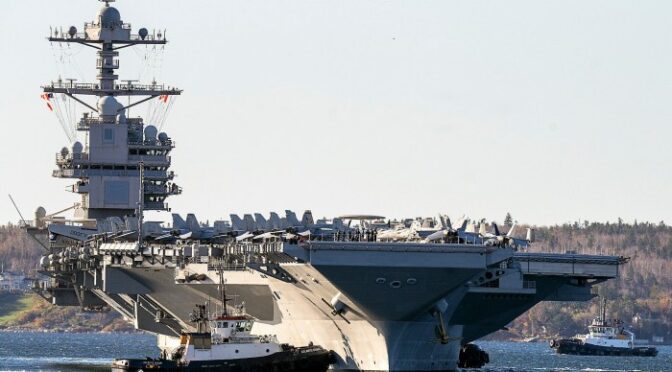
The deployment of a US’s most advanced aircraft carrier to the Caribbean Sea has intensified focus on the simmering tensions with Venezuela. This move, laden with strategic implications, has sparked a flurry of speculation and concern across the region and beyond. Understanding the nuances of this situation requires a deep dive into the geopolitical dynamics at play, the capabilities of the deployed naval assets, and the potential for escalation.
This analysis will explore the historical context of US-Venezuela relations, the motivations behind the carrier deployment, and the reactions of key players. We’ll examine the military and economic factors at stake, potential flashpoints, and the humanitarian implications of a worsening crisis. The goal is to provide a comprehensive overview of the current situation and its potential ramifications.
Geopolitical Context
The deployment of a U.S. Navy aircraft carrier to the Caribbean Sea, amidst heightened tensions with Venezuela, is a significant geopolitical move. It underscores the complex web of relationships and strategic interests at play in a region with a long and often turbulent history. Understanding this context requires examining the current regional climate, historical ties, and the specific strategic goals of the United States.
Current Geopolitical Climate in the Caribbean
The Caribbean region is characterized by a mix of political stability and instability. Several nations are facing economic challenges, and the influence of external actors, including China and Russia, is growing. The presence of significant oil reserves in Venezuela adds another layer of complexity. Furthermore, the rise of transnational criminal organizations involved in drug trafficking and other illicit activities poses a persistent threat to regional security.
The region is also highly susceptible to natural disasters, which can further destabilize already fragile economies and political systems.
Historical Relationship Between the US, Venezuela, and Other Regional Actors
The relationship between the U.S. and Venezuela has been strained for decades. The U.S. has often criticized Venezuela’s government for its authoritarian tendencies and has imposed sanctions on the country. Venezuela, in turn, has frequently accused the U.S.
of interfering in its internal affairs. Other regional actors, such as Cuba, have historically been allies of Venezuela, further complicating the geopolitical landscape. Many Caribbean nations have economic ties with Venezuela through oil and other forms of aid.The historical relationship can be summarized as follows:
- Early 20th Century: U.S. involvement in the Caribbean, including military interventions, aimed at protecting its economic interests and preventing European influence.
- Cold War Era: The U.S. viewed Cuba and its allies as a threat, leading to proxy conflicts and increased military presence.
- Post-Cold War: The U.S. maintained its influence, while also facing challenges from rising powers and evolving regional dynamics.
- 21st Century: Increased tensions with Venezuela, sanctions, and a focus on combating drug trafficking.
Specific Strategic Interests of the US in the Caribbean Sea
The U.S. has several key strategic interests in the Caribbean Sea. These interests include:
- Energy Security: Protecting access to oil and natural gas resources in the region, including those controlled by U.S. companies. Venezuela’s oil reserves are the largest in the world.
- Counter-Narcotics Operations: Combating the flow of illegal drugs through the Caribbean, which is a major transit route for drugs destined for the U.S.
- Regional Stability: Maintaining stability in the region to prevent the rise of hostile powers and ensure the free flow of commerce.
- Protecting U.S. Citizens: Ensuring the safety and security of U.S. citizens residing in or traveling through the Caribbean.
The U.S. views the Caribbean as a strategic backyard, and the presence of a powerful naval asset like an aircraft carrier sends a clear message about its commitment to these interests.
The Aircraft Carrier
The deployment of a U.S. Navy aircraft carrier to the Caribbean Sea is a significant show of force, highlighting the United States’ capacity to project power and respond to potential threats. The presence of such a vessel, equipped with cutting-edge technology and a formidable arsenal, underscores the seriousness of the situation and the U.S.’s commitment to its interests in the region.
Capabilities of the Aircraft Carrier
The aircraft carrier, often referred to as a “floating city,” is a marvel of modern engineering and a symbol of naval power. These vessels are designed to operate in various environments and can sustain operations for extended periods, providing a persistent presence wherever they are deployed. They possess a wide array of capabilities, making them versatile assets in any theater of operations.The carrier’s primary capabilities include:
- Air Superiority: The ability to control the skies through the deployment of advanced fighter jets and airborne early warning systems.
- Strike Warfare: The capacity to launch precision strikes against targets on land and at sea, utilizing a variety of weapons systems.
- Anti-Submarine Warfare: The capability to detect, track, and neutralize submarines, protecting the carrier and other assets.
- Amphibious Operations: The ability to support amphibious landings and provide fire support to ground forces.
Aircraft and Weaponry
Aircraft carriers are equipped with a diverse air wing, consisting of various aircraft types to fulfill different roles. These include fighter jets, attack aircraft, electronic warfare aircraft, and helicopters. The specific composition of the air wing can vary depending on the mission and the operational environment. The weaponry carried by the carrier is equally diverse, providing the capability to engage a wide range of threats.Here’s a breakdown of the typical aircraft and weaponry:
- Fighter Jets: Typically, the carrier’s air wing includes advanced fighter jets like the F/A-18E/F Super Hornet or, increasingly, the F-35C Lightning II. These aircraft are responsible for air-to-air combat, air-to-ground strikes, and reconnaissance missions.
- Attack Aircraft: Attack aircraft, such as the EA-18G Growler, provide electronic warfare capabilities, disrupting enemy communications and radar systems.
- Early Warning Aircraft: Aircraft like the E-2 Hawkeye provide early warning and control, extending the carrier’s reach and providing critical situational awareness.
- Helicopters: Helicopters are used for various purposes, including search and rescue, anti-submarine warfare, and logistical support.
- Weaponry: The carrier carries a vast arsenal of weapons, including air-to-air missiles, air-to-ground missiles, cruise missiles, and close-in weapons systems for self-defense.
Primary Roles and Functions
The aircraft carrier serves multiple roles, each crucial to its overall effectiveness and strategic importance. The carrier’s versatility allows it to adapt to changing circumstances and contribute to a wide range of missions. The following table summarizes the carrier’s primary roles and functions:
| Role | Function | Description | Example |
|---|---|---|---|
| Power Projection | Demonstrating military presence and influence. | The carrier’s mere presence in a region can deter potential adversaries and reassure allies. | Deployment during the 2003 Iraq War. |
| Air Superiority | Establishing and maintaining control of the airspace. | Fighter jets provide air cover, preventing enemy aircraft from operating. | Combat Air Patrols (CAP) over the Persian Gulf. |
| Strike Warfare | Conducting offensive operations against enemy targets. | Aircraft launch precision strikes against ground and maritime targets. | Strikes against ISIS targets in Syria and Iraq. |
| Maritime Security | Protecting sea lanes and ensuring freedom of navigation. | Patrolling strategic waterways and deterring piracy or other threats. | Escorting merchant vessels through the Strait of Hormuz. |
Venezuela’s Perspective
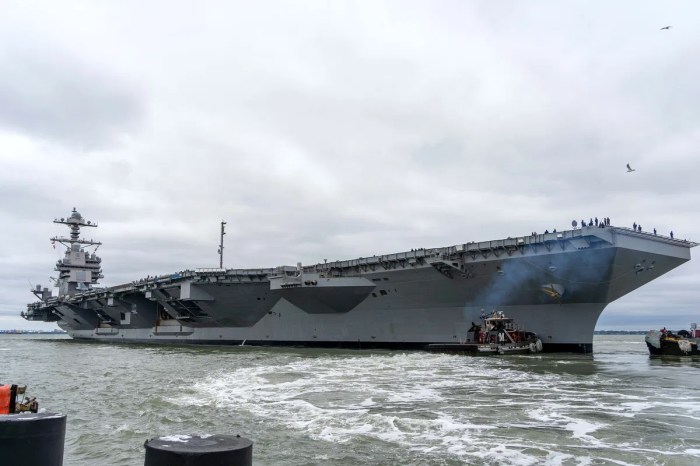
Source: b-cdn.net
The arrival of a US aircraft carrier in the Caribbean has understandably been met with a range of reactions from Venezuela. Given the already strained relations between the two countries, the presence of such a powerful naval asset close to Venezuelan waters is viewed with a mixture of suspicion, concern, and strategic posturing. Venezuela’s response, both official and otherwise, offers insights into its geopolitical calculations and its assessment of the potential risks and opportunities presented by the situation.
Official Responses to the Aircraft Carrier’s Presence
Venezuela’s government has been quick to publicly address the US aircraft carrier’s deployment. The official response has consistently framed the move as a provocative act, highlighting its potential to destabilize the region and threaten Venezuela’s sovereignty. The tone has been firm, often emphasizing Venezuela’s readiness to defend itself and its commitment to maintaining peace in the Caribbean.The government has taken several steps in response to the US naval presence:
- Increased Military Readiness: Reports indicate an increase in military exercises and patrols within Venezuelan territorial waters. This is likely intended to demonstrate Venezuela’s defensive capabilities and deter any potential aggression.
- Diplomatic Outreach: Venezuela has likely reached out to regional allies, such as Cuba, Nicaragua, and Bolivia, to coordinate responses and garner support for its position. This includes sharing intelligence and coordinating public statements.
- Public Statements and Media Campaigns: The government has used its media channels to condemn the US action, portraying it as an act of intimidation and a violation of international law. These campaigns often emphasize Venezuela’s resilience and its commitment to national independence.
The Venezuelan government’s perspective can be summarized by the following statements from key officials:
“The presence of the US aircraft carrier in our waters is a clear provocation and a threat to regional peace. We will not be intimidated. Venezuela is prepared to defend its sovereignty and territorial integrity.”
-*President Nicolás Maduro (paraphrased)*“We view this as a blatant attempt to destabilize our country and undermine our democratic processes. We will work with our allies to counter this aggression.”
-*Foreign Minister Yván Gil (paraphrased)*“Our armed forces are fully prepared to respond to any threat. We are monitoring the situation closely and will take all necessary measures to protect our nation.”
-*Defense Minister Vladimir Padrino López (paraphrased)*
Potential Flashpoints and Scenarios
The deployment of a U.S. aircraft carrier to the Caribbean, coupled with existing geopolitical tensions, significantly raises the stakes in the relationship between the United States and Venezuela. Understanding potential flashpoints and scenarios is crucial for assessing the risks and complexities of this situation. Several factors could trigger escalation, ranging from economic pressures to military incidents.
Potential Scenarios for Escalation
Several scenarios could quickly worsen the already strained relationship between the U.S. and Venezuela. These scenarios involve a mix of economic, political, and military factors.
- Oil Production and Sanctions Enforcement: The U.S. has imposed sanctions on Venezuela’s oil industry, aiming to limit the country’s revenue. Further tightening of these sanctions, particularly if they target specific individuals or sectors, could lead to retaliatory actions from Venezuela. For instance, Venezuela could cease oil shipments to U.S. refineries, potentially impacting energy prices and creating economic instability.
- Disputed Territory and Maritime Incidents: The ongoing dispute over the Essequibo region with Guyana, a U.S. ally, adds another layer of complexity. Any Venezuelan actions perceived as aggressive toward Guyana, such as military exercises or incursions into disputed waters, could provoke a U.S. response. Maritime incidents, such as the seizure of U.S.
flagged vessels or harassment of U.S. naval assets, could also escalate tensions.
- Political Instability and Human Rights: The political situation within Venezuela is volatile. Any significant internal unrest, such as large-scale protests or a disputed election, could be a trigger. The U.S. might increase pressure on the Venezuelan government if it perceives human rights violations or a lack of democratic processes. This could include further sanctions, diplomatic isolation, or even covert actions.
- Cyberattacks and Information Warfare: Cyberattacks against critical infrastructure, financial institutions, or government networks could quickly escalate tensions. If either the U.S. or Venezuela were to be blamed for such an attack, it could lead to retaliatory measures. Furthermore, information warfare campaigns, spreading disinformation and propaganda, could also heighten tensions and mistrust.
Past Incidents that Heightened Tensions
Several past events demonstrate the fragility of the relationship between the U.S. and Venezuela. These incidents highlight how easily diplomatic disagreements can escalate into more serious conflicts.
- The 2018 Arrest of Citgo Executives: In November 2017, six executives of Citgo, the U.S. subsidiary of Venezuela’s state-owned oil company PDVSA, were arrested in Venezuela on corruption charges. The U.S. government condemned the arrests as politically motivated and demanded their release. This incident led to increased sanctions and further strained diplomatic relations.
- The 2019 Coup Attempt: In January 2019, the U.S. recognized Juan Guaidó as the legitimate president of Venezuela, challenging Nicolás Maduro’s leadership. The U.S. imposed sanctions and supported efforts to oust Maduro. This event increased the risk of military intervention and heightened tensions significantly.
- The 2020 Narcotics Trafficking Indictments: In March 2020, the U.S. Department of Justice indicted Nicolás Maduro and other high-ranking Venezuelan officials on charges of drug trafficking and narco-terrorism. The U.S. offered a reward for information leading to their capture. Venezuela condemned the indictments as a violation of its sovereignty and a pretext for intervention.
- The 2023 Essequibo Referendum: Venezuela held a referendum on the disputed Essequibo region, leading to increased tensions with Guyana and raising concerns in the U.S. about potential military action. The U.S. has voiced support for Guyana and has increased military presence in the region.
Possible Triggers for Conflict or Increased Diplomatic Pressure
Several specific events could trigger conflict or increased diplomatic pressure. These triggers range from economic actions to military provocations.
- Major Oil Spill or Environmental Disaster: A significant environmental disaster caused by Venezuelan oil operations, especially if it affects U.S. interests or neighboring countries, could provoke a strong reaction from the U.S. This could include sanctions, environmental investigations, or even military actions to contain the damage.
- Interference in U.S. Elections: Any evidence of Venezuelan interference in U.S. elections, such as cyberattacks, disinformation campaigns, or financial support for specific political groups, would likely trigger a strong response from the U.S. This could include sanctions, diplomatic expulsions, or other punitive measures.
- Military Provocations or Attacks on U.S. Assets: Any military action by Venezuela against U.S. assets, such as the harassment of U.S. naval vessels, attacks on U.S. citizens, or incursions into U.S. territory, would be a major trigger for conflict.
The U.S. would likely respond with military force to protect its interests.
- Collapse of the Venezuelan Government: If the Venezuelan government were to collapse due to internal unrest or a coup, the U.S. might face a complex situation. The U.S. could intervene to protect its interests, support a new government, or try to manage a humanitarian crisis. The exact response would depend on the specific circumstances.
International Reactions and Diplomatic Efforts

Source: taskandpurpose.com
The deployment of a US aircraft carrier to the Caribbean, against the backdrop of heightened tensions with Venezuela, inevitably draws reactions from the international community. Regional and global actors are closely watching the situation, and diplomatic efforts are underway to prevent escalation. These reactions and efforts are crucial in shaping the trajectory of the crisis.
Regional Responses to US Deployment
The presence of a US aircraft carrier in the Caribbean has elicited varied responses from nations in the region. Some countries have expressed concerns, while others have remained relatively silent or cautiously supportive.* Colombia: As a close US ally, Colombia has generally aligned its stance with Washington. Public statements have emphasized the importance of stability and adherence to international law, implicitly supporting the US presence as a deterrent.
Colombia shares a border with Venezuela, making it directly affected by any potential instability.* Brazil: Brazil, under its current administration, has adopted a more neutral approach. While acknowledging the US deployment, Brazilian officials have emphasized the importance of dialogue and peaceful resolution. Brazil’s historical relations with Venezuela and its economic interests in the region influence its cautious approach.* Mexico: Mexico’s government has historically prioritized non-intervention in the internal affairs of other nations.
Mexico is likely to call for dialogue and de-escalation, advocating for a diplomatic solution to the tensions.* Caribbean Community (CARICOM): CARICOM, a regional bloc, typically emphasizes the importance of peaceful resolutions and regional stability. CARICOM is expected to issue statements urging restraint from all parties and advocating for diplomatic channels.
Diplomatic Initiatives for De-escalation
Several diplomatic efforts are underway, or likely to be, aimed at de-escalating tensions. These initiatives involve various actors and focus on facilitating dialogue and finding common ground.* United Nations: The United Nations could play a role, potentially through the Security Council or the Secretary-General’s office. The UN could offer mediation services or issue statements urging restraint and adherence to international law.* Organization of American States (OAS): The OAS could also be involved.
While the OAS has faced criticism in the past, it could potentially facilitate dialogue between the US and Venezuela, or among regional players.* Individual Nations as Mediators: Some nations with established diplomatic ties to both the US and Venezuela, such as Norway, could offer to mediate. Norway has a history of facilitating peace talks in other international conflicts.
Key Players in Diplomatic Processes
The following individuals and entities are likely to be key players in any diplomatic efforts.* US State Department: The US State Department, along with its Special Envoys, will be central to US diplomatic efforts. They would be responsible for communicating with Venezuela and other regional actors.* Venezuelan Foreign Ministry: The Venezuelan Foreign Ministry will be the primary point of contact for diplomatic engagement on the Venezuelan side.
They would be responsible for representing Venezuela’s interests in any negotiations.* UN Secretary-General and Special Envoys: The UN Secretary-General, along with any special envoys appointed, could play a crucial role in mediating or facilitating dialogue.* Regional Representatives: Representatives from regional organizations, such as CARICOM, and individual nations like Brazil, Colombia, and Mexico, will be involved in regional diplomatic efforts.* Third-Party Mediators: Individuals or nations, such as Norway, with experience in mediating international conflicts could be invited to assist in the diplomatic process.
Economic Considerations and Impacts
Increased tensions between the United States and Venezuela carry significant economic implications for both nations, potentially impacting trade, investment, and the overall financial stability of the region. These impacts are further complicated by the crucial role of oil and other natural resources in the economic structures of both countries. The following sections will explore these considerations in detail.
Potential Economic Impacts on the US
The United States, while possessing a diversified economy, could face several economic consequences from escalating tensions with Venezuela.
- Energy Market Fluctuations: Any disruption to Venezuelan oil exports could influence global oil prices. The US, though a significant oil producer, still relies on imports, and price hikes could lead to increased inflation, affecting consumer spending and business costs.
For example, during the 1973 oil crisis, the price of oil quadrupled, leading to a recession in the US.
- Trade Restrictions and Sanctions: The US could impose further sanctions on Venezuela, potentially impacting American companies that conduct business there. These restrictions could affect industries like agriculture, technology, and finance.
- Geopolitical Uncertainty: Heightened tensions can create uncertainty in financial markets, leading to increased volatility and potentially impacting investment decisions. Investors may become hesitant to invest in assets perceived as risky, including those linked to the region.
- Military Spending: The deployment of military assets, such as the aircraft carrier mentioned earlier, carries significant costs. These expenses could strain the US budget, especially if the situation escalates, requiring more personnel and resources.
Potential Economic Impacts on Venezuela
Venezuela’s economy is particularly vulnerable to the effects of increased tensions with the US, given its dependence on oil revenue and existing economic challenges.
- Oil Export Dependence: Venezuela’s economy is heavily reliant on oil exports. Any further sanctions or disruptions to oil production and sales could cripple the economy, leading to a decline in government revenue and impacting essential services.
- Hyperinflation and Economic Instability: Venezuela has already experienced hyperinflation in recent years. Further economic shocks could exacerbate this problem, leading to a devaluation of the currency, increased poverty, and social unrest.
- Limited Access to International Markets: Existing US sanctions already limit Venezuela’s access to international financial markets. Increased tensions could further restrict access, making it difficult for the country to import essential goods, obtain loans, and manage its debt.
- Impact on Investment: Heightened political risk deters foreign investment. This would hinder economic development and make it more difficult for Venezuela to diversify its economy away from oil.
The Role of Oil and Other Resources
Oil is the central element in the economic relationship between the US and Venezuela.
- Venezuela’s Oil Reserves: Venezuela possesses the world’s largest proven oil reserves. This makes it a significant player in the global energy market.
- US Oil Imports: Before sanctions, the US was a significant importer of Venezuelan crude oil. Disruptions to this trade would affect both economies.
- Resource Diversification: Both countries have other natural resources. Venezuela possesses gold, iron ore, and other minerals, while the US has a diversified resource base, including natural gas, coal, and various minerals.
- Sanctions and Oil Trade: US sanctions have aimed to restrict Venezuela’s oil exports, targeting the state-owned oil company, PDVSA. This has significantly impacted Venezuela’s economy.
Comparative Economic Strengths and Vulnerabilities
The following table summarizes the economic strengths and vulnerabilities of both the US and Venezuela, highlighting their contrasting economic positions.
| Feature | United States | Venezuela | Notes |
|---|---|---|---|
| Economic Diversification | Highly diversified, with significant service, manufacturing, and technology sectors. | Heavily reliant on oil exports; limited diversification. | The US economy’s diversity provides resilience. Venezuela’s reliance on oil makes it vulnerable to price fluctuations. |
| GDP and Economic Size | World’s largest economy by GDP. | Smaller economy, significantly impacted by economic crisis and hyperinflation. | The US economy is significantly larger and more robust. |
| Financial Stability | Stable financial system, strong currency, access to international markets. | Highly unstable financial system, hyperinflation, limited access to international finance. | The US has a stable and globally recognized financial system. Venezuela’s system is highly vulnerable. |
| Resource Dependence | Significant oil production, but less reliant on oil exports than Venezuela; diverse resource base. | World’s largest proven oil reserves; highly dependent on oil exports. | The US has greater energy independence. Venezuela is almost entirely dependent on oil revenues. |
Military Exercises and Activities
The presence of the US aircraft carrier in the Caribbean is often coupled with military exercises designed to test readiness, demonstrate capabilities, and signal strategic intent. These exercises can involve various units, including carrier-based aircraft, surface ships, and potentially submarines, operating in a coordinated manner. The objectives of these activities are multifaceted, ranging from improving interoperability with allies to deterring potential adversaries.
The scope and frequency of these exercises can significantly influence the regional security landscape and are closely monitored by all stakeholders.
Objectives of Military Exercises
Military exercises conducted by the US carrier in the Caribbean serve multiple strategic purposes. They primarily aim to enhance the combat readiness of the participating forces, ensuring they are prepared for a range of potential scenarios. Additionally, these exercises provide an opportunity to demonstrate US military capabilities to allies and potential adversaries. Such demonstrations can serve as a deterrent, discouraging aggressive actions.
Exercises also foster interoperability, allowing different military units and partner nations to work together seamlessly in a crisis. The specific objectives often include:
- Enhancing Combat Readiness: Exercises simulate realistic combat scenarios, allowing personnel to practice tactics, techniques, and procedures (TTPs) under pressure. This helps to identify areas for improvement and ensures that the forces are well-prepared for any contingency.
- Demonstrating Capabilities: The exercises showcase the US military’s advanced technology and operational prowess. This can be a powerful deterrent, signaling the high cost of any potential aggression.
- Building Interoperability: Exercises often involve participation from allied nations, allowing them to train alongside US forces. This strengthens relationships and enables seamless coordination in joint operations.
- Deterrence: By conducting exercises in strategic locations, the US military aims to deter potential adversaries from undertaking actions that could destabilize the region. The presence of a powerful force and the demonstration of its capabilities can dissuade aggression.
Observed Military Activities
The military activities associated with the US aircraft carrier in the Caribbean typically encompass a variety of operations, designed to test different aspects of military capabilities. These activities are carefully planned and executed to achieve specific objectives. Observing these activities can provide valuable insights into the carrier’s operational readiness and strategic goals. The types of activities often include:
- Air Operations: This involves the launch and recovery of aircraft from the carrier’s deck. These operations can include simulated combat missions, air-to-air refueling, and strikes against simulated targets.
- Surface Warfare Exercises: Surface ships accompanying the carrier, such as destroyers and cruisers, engage in exercises to practice anti-surface warfare (ASuW) and anti-submarine warfare (ASW) tactics. This might involve simulated missile launches or tracking exercises.
- Anti-Submarine Warfare (ASW) Drills: ASW exercises involve the use of sonar systems and other technologies to detect, track, and potentially engage simulated enemy submarines. These drills are critical for protecting the carrier and other high-value assets.
- Joint Operations with Partner Nations: The US carrier often participates in joint exercises with other countries in the region. These exercises involve coordinating air, sea, and land forces to simulate a range of scenarios, such as disaster relief or combat operations. An example would be a combined exercise with the Colombian Navy.
- Electronic Warfare Exercises: These exercises test the carrier’s ability to defend against electronic attacks and to disrupt enemy communications and radar systems. This includes the use of jamming and other countermeasures.
- Maritime Interdiction Operations (MIO): These exercises involve boarding and searching vessels to enforce maritime laws and regulations, such as counter-narcotics operations.
Humanitarian Considerations and Implications
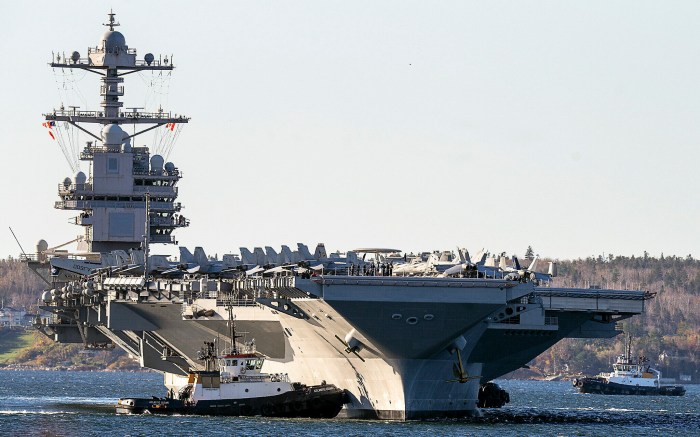
Source: timesofisrael.com
Increased tensions between the United States and Venezuela carry significant humanitarian implications, potentially impacting the civilian population within Venezuela and the broader region. Any escalation of conflict, economic instability, or disruption of essential services could trigger a humanitarian crisis. The following sections will explore these potential impacts in detail.
Impacts on the Civilian Population
The Venezuelan population could face severe consequences if tensions escalate. These impacts could manifest in several ways:
- Food and Water Scarcity: Disruptions to supply chains, due to sanctions, military actions, or internal unrest, could exacerbate existing food and water shortages. This would particularly affect vulnerable populations, including children, the elderly, and those living in poverty. Venezuela has already experienced food insecurity, and any escalation could worsen this.
- Healthcare Crisis: Increased instability could further cripple Venezuela’s already fragile healthcare system. Shortages of medicine, medical supplies, and trained personnel are widespread. An escalation could lead to increased casualties, limited access to medical care, and outbreaks of preventable diseases.
- Displacement and Migration: Increased violence, economic hardship, or political persecution could trigger a new wave of Venezuelan migrants and refugees. Neighboring countries, already hosting significant numbers of Venezuelan migrants, would face additional strain on their resources and infrastructure.
- Human Rights Violations: Increased tensions could lead to a rise in human rights violations, including arbitrary detentions, restrictions on freedom of speech and assembly, and extrajudicial killings. These actions would further destabilize the country and increase the suffering of the civilian population.
- Psychological Trauma: The ongoing crisis and potential for further escalation can cause widespread psychological trauma. The population may suffer from anxiety, depression, and post-traumatic stress disorder, which would be worsened by disruptions to daily life, fear of violence, and the loss of loved ones.
Hypothetical Humanitarian Crisis Illustration
Imagine a bustling, yet impoverished, neighborhood in Caracas. The streets are lined with dilapidated buildings, and the air is thick with the smell of exhaust and cooking food. Suddenly, the sound of gunfire erupts, followed by the panicked cries of children. A group of armed individuals, likely representing a faction involved in the escalating conflict, begins to clash in the narrow streets.
Residents, caught in the crossfire, scramble for safety. A young mother desperately shields her children, while an elderly man collapses on the sidewalk, clutching his chest.The scene then shifts to a makeshift field hospital, established in a community center. Overwhelmed doctors and nurses, working with limited resources, struggle to treat the wounded. The floor is littered with makeshift stretchers, and the air is filled with the groans of the injured and the smell of antiseptic.
Outside, long lines of people wait for food and water, their faces etched with worry and exhaustion. Children huddle together, clutching empty containers, while aid workers try to distribute meager supplies. The scene is a stark representation of the potential for humanitarian disaster, highlighting the fragility of life and the urgent need for intervention. This illustration serves to emphasize the human cost of escalating tensions and the critical need for preventative measures and humanitarian aid.
Wrap-Up
In conclusion, the presence of the US aircraft carrier in the Caribbean represents a significant escalation in the ongoing tensions with Venezuela. The interplay of military posturing, economic considerations, and diplomatic efforts will determine the future trajectory of this complex situation. The potential for conflict, humanitarian crises, and regional instability underscores the critical need for careful navigation and proactive diplomatic solutions to prevent a further deterioration of the situation.
Top FAQs
What is the primary purpose of deploying an aircraft carrier to the Caribbean?
The primary purpose is multifaceted, including demonstrating US power, deterring potential aggression, and safeguarding US interests in the region, such as countering drug trafficking and ensuring energy security.
What specific types of aircraft are typically found on a US aircraft carrier?
A US aircraft carrier typically carries a mix of fighter jets (like the F/A-18 Super Hornet or F-35C), electronic warfare aircraft, early warning aircraft, helicopters for various roles, and support aircraft for logistics and search and rescue.
How does Venezuela typically react to US military deployments near its borders?
Venezuela usually responds with strong rhetoric, increased military exercises, and attempts to strengthen alliances with countries that oppose US influence in the region. They often view such deployments as a provocation.
What role do other countries in the Caribbean play in this situation?
Other Caribbean nations are often caught in the middle, balancing their relationships with both the US and Venezuela. They may offer diplomatic support, or quietly observe the situation, concerned about the potential impact on regional stability and their economies.
Could the deployment lead to a direct military confrontation?
While a direct military confrontation is unlikely, the deployment increases the risk of miscalculation or accidental escalation. Both sides are likely to be cautious, but the potential for an incident remains.