
The words of the Spanish Foreign Minister, “peace will not be achieved in the Mediterranean region unless it is achieved in Palestine,” spark a crucial examination of interconnectedness in international relations. This statement highlights the complex interplay between the Israeli-Palestinian conflict and the broader geopolitical landscape of the Mediterranean. It calls for an investigation into how these seemingly separate regions are actually intertwined, and how achieving peace in one could unlock peace in the other.
This analysis will delve into the history, the current challenges, and potential paths toward a more stable and prosperous future for both Palestine and the Mediterranean.
We’ll explore the historical context of the Israeli-Palestinian conflict, Spain’s role in the region, and the concept of how regional conflicts can influence each other. We will also analyze the obstacles to peace, the potential strategies for resolution, and the role of international actors like the UN and the EU. Furthermore, we will delve into the economic and social dimensions of the conflict, considering the benefits of peace for all parties involved.
Finally, we’ll envision a peaceful future for the Mediterranean, focusing on its cultural, economic, and political aspects.
Contextualizing the Spanish Foreign Minister’s Statement
The Spanish Foreign Minister’s statement directly links the prospects for peace in the Mediterranean region to the resolution of the Israeli-Palestinian conflict. This connection highlights the interconnectedness of geopolitical issues and underscores the importance of addressing the root causes of instability to achieve broader regional stability. Understanding this statement requires an examination of the current geopolitical climate in the Mediterranean, a brief history of the Israeli-Palestinian conflict, and Spain’s role in both arenas.
The Current Geopolitical Climate in the Mediterranean Region
The Mediterranean Sea is a crossroads of civilizations and a region marked by complex geopolitical dynamics. Several factors contribute to its volatility:
- Ongoing Conflicts: The Israeli-Palestinian conflict, the Syrian civil war, and tensions in Libya continue to destabilize the region. These conflicts generate displacement, humanitarian crises, and opportunities for external actors to exert influence.
- Energy Competition: The discovery of significant natural gas reserves in the Eastern Mediterranean has intensified competition among countries like Israel, Cyprus, Greece, and Turkey. This competition can lead to disputes over maritime boundaries and resource exploitation.
- Migration Flows: The Mediterranean Sea is a primary route for migrants and refugees seeking to reach Europe. This creates challenges for border control, humanitarian assistance, and the management of migration flows, straining relations between countries.
- External Influence: Various external actors, including the United States, Russia, the European Union, and China, have strategic interests in the Mediterranean, leading to proxy conflicts, military build-up, and competing geopolitical agendas.
The region is also facing challenges like climate change, which exacerbates existing tensions by contributing to water scarcity, food insecurity, and displacement. These issues underscore the fragility of the Mediterranean’s geopolitical landscape and the need for comprehensive and cooperative solutions.
A Brief History of the Israeli-Palestinian Conflict
The Israeli-Palestinian conflict is a long-standing dispute with deep historical roots. Key events and turning points include:
- The Balfour Declaration (1917): This declaration by the British government promised a “national home for the Jewish people” in Palestine, fueling Zionist aspirations.
- The 1948 Arab-Israeli War: Following the United Nations’ partition plan, which proposed dividing Palestine into Arab and Jewish states, war erupted. Israel declared its independence, and the war resulted in the displacement of hundreds of thousands of Palestinians, creating the Palestinian refugee problem.
- The 1967 Six-Day War: Israel captured the West Bank, East Jerusalem, the Gaza Strip, and the Sinai Peninsula, significantly expanding its territory and initiating the occupation of Palestinian territories.
- The Oslo Accords (1993-1995): These agreements, intended to establish a framework for peace, led to the creation of the Palestinian Authority and limited Palestinian self-governance in parts of the West Bank and Gaza. However, they failed to resolve core issues like the status of Jerusalem, the right of return for Palestinian refugees, and final borders.
- The Second Intifada (2000-2005): This period of increased violence between Israelis and Palestinians saw suicide bombings and Israeli military operations, further eroding trust and hindering peace efforts.
- The Blockade of Gaza (2007-present): Following Hamas’s takeover of Gaza, Israel imposed a blockade, severely restricting the movement of people and goods, leading to a humanitarian crisis.
The conflict is characterized by cycles of violence, failed peace negotiations, and ongoing challenges to a two-state solution.
Spain’s Historical and Present-Day Involvement
Spain has a complex relationship with both the Mediterranean region and the Israeli-Palestinian conflict.
- Historical Ties: Spain has historical and cultural ties to the Mediterranean region, stemming from its geographic location and its past as a major maritime power. It has been involved in regional initiatives, such as the Union for the Mediterranean, aimed at promoting cooperation and stability.
- EU Membership: As a member of the European Union, Spain is part of a collective effort to address the Israeli-Palestinian conflict. The EU supports a two-state solution, condemns violence from all sides, and provides humanitarian aid to Palestinians.
- Diplomatic Efforts: Spain has historically supported the Palestinian cause and recognized the State of Palestine in 2014. It has consistently advocated for a just and lasting peace based on international law and UN resolutions.
- Economic and Cultural Exchange: Spain maintains economic and cultural ties with both Israel and the Palestinian territories, contributing to trade, tourism, and cultural exchange.
- Present-Day Initiatives: Spain is involved in various initiatives aimed at promoting dialogue, reconciliation, and sustainable development in the region. This includes supporting civil society organizations working on peacebuilding and providing humanitarian assistance.
Spain’s stance reflects a commitment to a rules-based international order and a belief that a just resolution of the Israeli-Palestinian conflict is essential for broader regional peace and stability.
Examining the Interdependence of Peace
The Spanish Foreign Minister’s statement highlights a crucial point about international relations: peace is rarely isolated. The interconnectedness of global conflicts, particularly in regions like the Mediterranean, means that instability in one area can easily spill over and affect others. Understanding this interdependence is key to building lasting peace.
The Concept of Interconnectedness in International Relations
International relations operate on a complex web of interactions, where events in one region can have far-reaching consequences. This interconnectedness is driven by various factors, including shared borders, economic ties, cultural exchange, and the flow of people and resources. When a conflict flares up in one area, it can destabilize the surrounding regions through migration, the spread of extremist ideologies, and economic disruption.
This can trigger a cascade effect, exacerbating existing tensions and creating new ones.For instance, the Israeli-Palestinian conflict has, for decades, served as a catalyst for broader regional instability. The unresolved nature of the conflict fuels resentment and extremism, which can be exploited by various actors to advance their own agendas. The situation is further complicated by the involvement of external powers, each with their own interests and strategic goals.
The result is a volatile environment where any single event can trigger a chain reaction.
Impact of the Israeli-Palestinian Conflict on Other Mediterranean Countries
The Israeli-Palestinian conflict has had a demonstrable impact on several countries in the Mediterranean region.
- Lebanon: The ongoing conflict has influenced Lebanon’s political landscape, creating instability. The presence of Palestinian refugees in Lebanon has been a long-standing issue, contributing to social and economic pressures. Border tensions with Israel and the influence of regional actors add complexity to the situation.
- Egypt: Egypt shares a border with Gaza, and the conflict has led to increased security concerns. The Egyptian government has been involved in mediating between Israel and Hamas. Egypt is heavily impacted by the economic implications of the conflict, as tourism and trade can be severely affected.
- Syria: The conflict is linked to the broader regional tensions that fuel the Syrian civil war. The unresolved Palestinian issue has been used as a tool by various groups in the conflict, and regional dynamics are deeply impacted.
- Turkey: Turkey has been a vocal critic of Israeli policies towards Palestinians. This has affected its relationship with Israel and influenced its role in the region. Turkey’s involvement in the Eastern Mediterranean, including its relations with Greece and Cyprus, are also indirectly influenced by the conflict.
These examples demonstrate how the Israeli-Palestinian conflict, despite its localized nature, has contributed to wider regional instability. The conflict’s impact is not limited to immediate neighbors; it can also affect countries further afield through the spread of extremism, the disruption of trade routes, and the exacerbation of existing political tensions.
Mechanisms for Fostering Peace in the Mediterranean
A resolution to the Israeli-Palestinian conflict could create a more stable environment throughout the Mediterranean region.
- Reduced Extremism: A peace agreement could help to de-legitimize extremist groups that thrive on the unresolved conflict. With a two-state solution, the sense of injustice and resentment that fuels radicalization could be significantly reduced.
- Improved Regional Cooperation: A peaceful resolution could open up opportunities for economic cooperation and cultural exchange between Israel, Palestine, and their neighbors. This could lead to increased trade, investment, and tourism, benefiting all countries in the region.
- Strengthened International Relations: A successful peace process could strengthen the credibility of international institutions and diplomatic efforts. It would also create a more favorable environment for resolving other regional conflicts and promoting cooperation on shared challenges, such as climate change and water scarcity.
- Focus on Common Threats: A resolution could shift focus towards addressing common threats. Countries in the Mediterranean could unite in tackling shared challenges such as climate change, terrorism, and economic instability. This cooperation could improve security and stability for all nations in the area.
A peaceful resolution to the Israeli-Palestinian conflict could provide a catalyst for broader regional stability and cooperation, setting a precedent for resolving other conflicts in the Mediterranean and beyond.
Analyzing Potential Obstacles to Peace
The Spanish Foreign Minister’s statement highlights a critical connection: lasting peace in the Mediterranean hinges on resolving the Israeli-Palestinian conflict. This section delves into the significant hurdles that impede progress toward peace, both within the immediate context of the conflict and within the broader regional landscape. Understanding these obstacles is crucial for formulating effective strategies to foster stability and cooperation.
Primary Challenges Hindering a Peaceful Resolution to the Israeli-Palestinian Conflict
The Israeli-Palestinian conflict is a complex issue, and several key challenges obstruct a peaceful resolution. These obstacles have evolved over decades, rooted in historical grievances, political disagreements, and ongoing violence. Addressing these challenges requires a multifaceted approach that acknowledges the concerns of all parties involved.Here are some of the primary challenges:
- Territorial Disputes: The core of the conflict lies in competing claims over land, particularly in the West Bank, East Jerusalem, and the Gaza Strip. The status of settlements, the control of borders, and access to resources remain significant points of contention. The continued expansion of Israeli settlements in the West Bank, considered illegal under international law, fuels Palestinian resentment and undermines the prospects for a two-state solution.
- Security Concerns: Both Israelis and Palestinians have legitimate security concerns. Israelis fear attacks from Palestinian militants, while Palestinians feel insecure due to Israeli military actions, checkpoints, and the ongoing occupation. The cycle of violence, where each side responds to the other’s actions, further exacerbates these concerns and erodes trust.
- Political Divisions: Internal divisions within both Israeli and Palestinian societies hamper progress. In Israel, political fragmentation and the rise of right-wing parties have made it difficult to negotiate concessions. In the Palestinian territories, the split between Fatah, which controls the West Bank, and Hamas, which governs Gaza, complicates efforts to unify the Palestinian position and negotiate effectively.
- The Status of Jerusalem: Jerusalem’s status is one of the most sensitive issues. Both Israelis and Palestinians claim the city as their capital. The division of Jerusalem and the control of holy sites are crucial elements in the conflict.
- Refugee Issue: The Palestinian refugee issue, stemming from the 1948 Arab-Israeli War and subsequent conflicts, remains unresolved. The right of return for Palestinian refugees to their homes in Israel is a key demand, which Israel rejects.
Actors Involved and Their Positions
The Israeli-Palestinian conflict involves various actors, each with distinct positions and interests. Understanding these positions is essential for comprehending the dynamics of the conflict. The following table provides a simplified overview:
| Actor | Position | Key Demands/Concerns | Challenges/Obstacles |
|---|---|---|---|
| Israel | Seeks security and recognition of its right to exist. | Security guarantees, recognition as a Jewish state, control over borders, and settlements in the West Bank. | Palestinian resistance, international criticism of settlement expansion, internal political divisions. |
| Palestinians (Fatah) | Seeks an independent state with East Jerusalem as its capital. | An end to the occupation, a two-state solution based on pre-1967 borders, the right of return for refugees. | Israeli settlement expansion, internal divisions with Hamas, lack of international support. |
| Palestinians (Hamas) | Seeks to liberate Palestine and rejects the legitimacy of the State of Israel. | An end to the occupation, the right of return for refugees. | International isolation, military conflicts with Israel, and internal divisions with Fatah. |
| International Community (UN, EU, US) | Promotes a two-state solution based on international law. | Negotiated peace agreement, humanitarian aid, and support for Palestinian state-building. | Lack of unified international action, US influence in the region, and limited leverage over the parties involved. |
Major Obstacles to Achieving Peace in the Broader Mediterranean Region
Beyond the Israeli-Palestinian conflict, several other factors impede peace and stability in the Mediterranean region. These issues are often interconnected and can exacerbate existing tensions.The following list Artikels major obstacles to achieving peace:
- Geopolitical Rivalries: Competition between regional powers, such as Turkey, Greece, and Egypt, over resources, influence, and strategic positioning, contributes to instability. These rivalries manifest in proxy conflicts, military build-ups, and diplomatic tensions.
- Economic Disparities: Significant economic disparities between countries in the region create social unrest and instability. High unemployment rates, poverty, and inequality fuel migration, radicalization, and political instability. The economic impact of the COVID-19 pandemic has worsened these disparities.
- Migration and Refugee Flows: The Mediterranean Sea is a major route for migration, often driven by conflict, poverty, and political instability. The influx of refugees and migrants puts a strain on resources and can lead to social tensions in host countries.
- Energy Disputes: Disputes over natural gas and oil resources in the Eastern Mediterranean have led to tensions between countries, including Greece, Turkey, Cyprus, and Egypt. These disputes involve competing claims over maritime boundaries and exploitation rights.
- Terrorism and Extremism: The rise of extremist groups, such as ISIS, and the spread of terrorist activities pose a significant threat to regional stability. Terrorism fuels violence, undermines governance, and disrupts economic activity.
- Climate Change: Climate change exacerbates existing challenges, such as water scarcity, food insecurity, and displacement. These effects can lead to social unrest and conflict. The rising sea levels threaten coastal communities.
Exploring Possible Paths to Resolution
The Spanish Foreign Minister’s statement highlights the interconnectedness of peace in the Mediterranean. Achieving a lasting resolution to the Israeli-Palestinian conflict is critical, and requires exploring viable paths forward. These paths must consider the complex realities on the ground, involve all relevant parties, and be supported by robust international cooperation.
Strategies for a Two-State Solution
A two-state solution, where an independent Palestinian state exists alongside Israel, remains the most widely supported framework for resolving the conflict. However, its implementation faces significant challenges. Several strategies could potentially facilitate progress.
- Direct Negotiations: Restarting direct talks between Israeli and Palestinian leaders, mediated by international partners, is crucial. These negotiations must address core issues like borders, settlements, refugees, and the status of Jerusalem. Success depends on both sides demonstrating a genuine commitment to compromise and making difficult concessions.
- Confidence-Building Measures: Implementing measures to build trust and improve the daily lives of Palestinians can create a more conducive environment for negotiations. This includes easing restrictions on movement, facilitating economic development in the West Bank and Gaza, and releasing Palestinian prisoners.
- International Pressure and Incentives: The international community can play a vital role by offering both incentives and disincentives to encourage progress. This could involve financial aid packages contingent on adherence to peace agreements, and diplomatic pressure on both sides to refrain from actions that undermine peace efforts.
- Regional Cooperation: Fostering stronger relationships between Israel and its Arab neighbors can create a more supportive regional context for peace. The Abraham Accords, while not directly addressing the Israeli-Palestinian conflict, demonstrate the potential for normalization and cooperation. This can create a new dynamic.
- Civil Society Engagement: Supporting and amplifying the voices of civil society organizations on both sides of the conflict, as well as those advocating for peace and reconciliation, is essential. These groups can play a vital role in building bridges between communities and promoting a culture of peace.
International Cooperation for Peace
International cooperation is essential for facilitating peace in both Palestine and the broader Mediterranean region. A coordinated approach, involving various actors, can amplify the impact of peace-building efforts.
- Multilateral Diplomacy: The United Nations, the European Union, and other international organizations can provide platforms for dialogue, mediation, and conflict resolution. These organizations can also deploy peacekeeping forces and provide humanitarian assistance.
- Financial Support: International donors can provide financial assistance to support economic development in Palestine, rebuild infrastructure, and fund humanitarian programs. This support can help to alleviate poverty, create jobs, and improve living conditions.
- Security Cooperation: International actors can support security sector reform in Palestine and provide training and assistance to Palestinian security forces. This can help to maintain order and prevent violence.
- Humanitarian Aid: Providing humanitarian aid to Palestinians in need, particularly in Gaza, is crucial. This includes food, medical supplies, and shelter. Such assistance can help to alleviate suffering and promote stability.
- Combating Extremism: International cooperation is vital in countering extremism and terrorism in the region. This involves sharing intelligence, coordinating law enforcement efforts, and addressing the root causes of radicalization.
Examples of Successful Peace-Building Initiatives
While the Israeli-Palestinian conflict remains unresolved, there are examples of successful peace-building initiatives and diplomatic efforts that offer valuable lessons.
- The Oslo Accords (1993): The Oslo Accords, despite ultimately failing to achieve a final peace agreement, demonstrated the potential for direct negotiations and mutual recognition between Israelis and Palestinians. The process created a framework for dialogue and established the Palestinian Authority. The accords also facilitated a period of relative calm and cooperation.
- The Good Friday Agreement (1998): The Good Friday Agreement, which ended decades of conflict in Northern Ireland, provides a useful example of a successful peace process. The agreement involved all relevant parties, addressed core issues, and was supported by international mediation. The agreement’s success shows that complex conflicts can be resolved with persistence and a commitment to compromise.
- The Dayton Accords (1995): The Dayton Accords brought an end to the Bosnian War and established a framework for peace and stability in Bosnia and Herzegovina. The accords involved international mediation and the deployment of a peacekeeping force. The success of the Dayton Accords shows the effectiveness of international cooperation.
- The Community Relations Councils: These councils, operating in various conflict zones, promote dialogue and understanding between different communities. They facilitate cross-cultural events, educational programs, and joint projects, fostering empathy and building trust. These initiatives highlight the importance of grassroots peace-building efforts.
- The International Crisis Group: The International Crisis Group provides research and analysis on conflicts around the world, offering policy recommendations to prevent and resolve them. Their work helps to inform policymakers and promote peaceful solutions. This example shows the importance of independent analysis.
The Role of International Actors
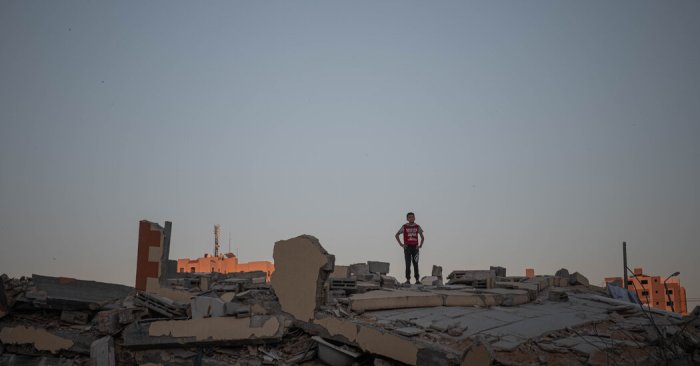
Source: nyt.com
The involvement of international actors is crucial for fostering peace in the Israeli-Palestinian conflict and the broader Mediterranean region. These entities possess varying degrees of influence, resources, and diplomatic leverage, which can either facilitate or hinder progress toward a lasting resolution. Understanding their roles, interests, and contributions is essential to grasping the complexities of the peace process.
The United Nations in the Israeli-Palestinian Conflict and Mediterranean Peace Efforts
The United Nations plays a multifaceted role in the Israeli-Palestinian conflict and the pursuit of peace in the Mediterranean. It acts as a platform for diplomacy, provides humanitarian aid, and attempts to mediate between the parties.
- The UN Security Council: The Security Council is responsible for maintaining international peace and security. It has passed numerous resolutions related to the Israeli-Palestinian conflict, often condemning Israeli settlement activity in the occupied territories and calling for a two-state solution. However, the Security Council’s effectiveness is often hampered by the veto power of its permanent members, particularly the United States.
- The UN General Assembly: The General Assembly provides a forum for broader discussions and resolutions, which, while not legally binding, carry significant political weight. The General Assembly has consistently supported the rights of Palestinians and has repeatedly condemned actions that undermine the peace process.
- United Nations Relief and Works Agency for Palestine Refugees in the Near East (UNRWA): UNRWA provides essential services, including education, healthcare, and social services, to Palestinian refugees. Its work is critical for alleviating suffering and promoting stability in the region. However, UNRWA has faced criticism and funding cuts, often politicized, impacting its ability to deliver services.
- Special Envoys and Mediators: The UN Secretary-General often appoints special envoys to the region to facilitate negotiations and mediate between the parties. These envoys work to build trust, bridge divides, and promote dialogue. Their success depends on their diplomatic skills, the support of the international community, and the willingness of the parties to engage in good faith.
The European Union’s Influence in the Region, Including Spain’s Contributions
The European Union (EU) has a significant role in the Israeli-Palestinian conflict and the broader Mediterranean, using its economic power, diplomatic tools, and political influence. Spain, as a member state, contributes to these efforts.
- Economic Assistance: The EU is a major provider of financial assistance to the Palestinians, supporting projects in areas such as infrastructure, education, and governance. This aid aims to improve living conditions and promote economic development in the occupied territories, which can also contribute to stability.
- Political Dialogue: The EU engages in regular political dialogue with both Israelis and Palestinians, advocating for a two-state solution and supporting efforts to restart negotiations. The EU’s High Representative for Foreign Affairs and Security Policy plays a key role in coordinating the EU’s foreign policy on the issue.
- Trade and Relations: The EU has significant trade relations with both Israel and the Palestinian territories. It has also developed a policy of differentiating between Israeli settlements and the rest of Israel, meaning that products from settlements are not eligible for preferential trade terms.
- Spain’s Contributions: Spain actively participates in the EU’s efforts, supporting the two-state solution and promoting dialogue between the parties. Spain often advocates for a more balanced approach to the conflict and supports initiatives aimed at improving the lives of Palestinians. Spain has also been a strong supporter of recognizing a Palestinian state.
The Potential Impact of the United States and Other Global Powers
The United States, along with other global powers, holds significant influence over the Israeli-Palestinian conflict and the Mediterranean region. Their actions and policies can significantly affect the prospects for peace.
- The United States: The United States has historically played a central role in the peace process, acting as a mediator and providing significant financial and military aid to Israel. The US’s approach has varied depending on the administration, with some administrations prioritizing a two-state solution and others taking a more pro-Israel stance. The US’s stance on issues such as settlements, Jerusalem, and the role of the Palestinians can significantly impact the dynamics of the conflict.
- Other Global Powers: Other global powers, such as Russia, China, and the United Kingdom, also have interests in the region and can influence the conflict. Their involvement can take various forms, including diplomatic initiatives, economic investments, and support for specific parties. The positions of these powers often reflect their broader geopolitical interests and relationships with the involved parties. For example, Russia has historically maintained relationships with both Israelis and Palestinians, while China has increased its economic engagement in the region.
- The Role of International Forums: International forums, such as the Quartet on the Middle East (comprising the UN, EU, US, and Russia), provide a platform for coordinating efforts and promoting a shared vision for peace. However, the effectiveness of these forums depends on the unity of their members and their ability to overcome disagreements.
- Geopolitical Considerations: The broader geopolitical landscape, including the relationships between global powers, regional dynamics, and global security concerns, significantly impacts the conflict. The involvement of various actors, such as Iran and other regional players, further complicates the situation and can affect the prospects for peace.
Economic and Social Dimensions
The economic and social realities in Palestine are starkly different from those in many Mediterranean nations. Understanding these disparities is crucial for grasping the potential benefits of peace and the challenges that must be overcome. The ongoing conflict has a profound impact on all aspects of life, creating a complex web of economic hardship and social instability.
Economic Realities: Palestine vs. Mediterranean Nations
The Palestinian economy, particularly in the West Bank and Gaza Strip, faces significant constraints compared to other Mediterranean countries.
| Factor | Palestine | Other Mediterranean Nations (e.g., Spain, Italy, Greece) |
|---|---|---|
| GDP per capita | Significantly lower, reflecting limited economic opportunities and high unemployment. | Generally higher, indicative of more developed economies and diverse employment sectors. |
| Trade | Restricted access to international markets due to border controls and the ongoing conflict. Dependent on aid. | More open economies with robust trade relationships within the EU and globally. |
| Infrastructure | Underdeveloped due to limitations on construction and movement of goods. | Well-developed infrastructure, including roads, ports, and communication networks. |
| Investment | Discouraged by political instability and security concerns. | Attracts foreign investment due to a more stable environment. |
The economic disparities are evident in areas such as employment rates, access to essential services like healthcare and education, and the overall standard of living. For example, unemployment rates in Gaza have consistently been significantly higher than in other Mediterranean countries. The blockade imposed on Gaza has severely restricted the movement of goods and people, hindering economic growth.
Potential Benefits of Peace
Peace would unlock significant economic and social benefits for both Palestine and the broader Mediterranean region.
- Economic Growth in Palestine: Peace would allow for increased trade, investment, and tourism. The construction industry could flourish with the lifting of restrictions, and agriculture could expand with access to markets. The development of new industries, such as technology and renewable energy, would become feasible.
- Improved Social Conditions: With economic growth, there would be increased resources for social programs, healthcare, and education. Reduced violence and improved security would create a more stable environment for families and communities. The psychological impact of the conflict would be lessened, leading to improved mental health outcomes.
- Regional Economic Cooperation: Peace would foster cooperation between Palestine and neighboring countries, including Israel and other Mediterranean nations. Joint projects in areas such as infrastructure, tourism, and energy could create new economic opportunities for all. The establishment of free trade zones and the removal of trade barriers would boost regional economic integration.
- Enhanced Security and Stability: Peace would reduce the risk of armed conflict and create a more stable security environment. This would benefit all countries in the region by reducing the costs associated with military spending and security measures. It would also promote tourism and investment.
Impact of Conflict on Human Rights and Social Justice
The conflict has a devastating impact on human rights and social justice.
The prolonged conflict in Palestine has resulted in widespread human rights violations, including restrictions on freedom of movement, arbitrary detention, and the destruction of property. These violations undermine the principles of social justice and create a climate of fear and insecurity. The impact on women and children is particularly severe, with increased vulnerability to violence and exploitation. The lack of access to adequate healthcare, education, and other essential services further exacerbates these challenges.
The persistent cycle of violence and the resulting displacement of people create enormous social and economic costs, hindering development and creating lasting damage to the fabric of society.
Imagining a Peaceful Future
Source: alamy.com
The Spanish Foreign Minister’s statement highlights the interconnectedness of peace, particularly emphasizing that lasting stability in the Mediterranean hinges on resolving the Israeli-Palestinian conflict. This section explores a vision of a peaceful Mediterranean region, considering its cultural, economic, and political facets, and Artikels the essential components for realizing this vision.
Description of a Peaceful Mediterranean Region
A peaceful Mediterranean region would be a vibrant tapestry of cultures, economies, and political systems working in harmony. It would be a place where borders are open to trade, people move freely, and shared heritage is celebrated rather than a source of conflict.
- Cultural Harmony: The region would be characterized by a rich exchange of ideas, art, and traditions. Cultural centers would flourish, hosting festivals, exhibitions, and educational programs that celebrate the diverse heritage of the Mediterranean. Imagine a bustling marketplace in a coastal city where vendors from various backgrounds sell their wares, languages intermingle, and the air is filled with the aroma of diverse cuisines.
The promotion of intercultural dialogue and understanding would be central to the region’s identity.
- Economic Prosperity: Economic cooperation would be a cornerstone of the region’s prosperity. Free trade agreements would facilitate the flow of goods and services, creating jobs and fostering economic growth. Tourism would thrive, with visitors drawn to the region’s historical sites, natural beauty, and cultural attractions. Infrastructure projects, such as improved transportation networks and energy grids, would connect communities and boost economic activity.
For example, the creation of a “Mediterranean Common Market” could stimulate economic activity, similar to the European Union’s initial goals.
- Political Stability: A peaceful Mediterranean would be defined by political stability, based on respect for international law, human rights, and democratic principles. Cooperation on issues such as environmental protection, resource management, and combating terrorism would be paramount. Diplomatic channels would be open and effective, allowing for peaceful resolution of disputes. Regional organizations, such as the Union for the Mediterranean, would play a crucial role in fostering dialogue and cooperation.
Visual Representation of a Peaceful Future
The visual representation should capture the essence of a unified and thriving Mediterranean.
- The Scene: The scene depicts a panoramic view of a coastal city at sunset. The sky is ablaze with warm colors, reflecting off the calm sea. The city skyline is a blend of architectural styles, representing the diverse cultures of the region: ancient ruins, modern skyscrapers, and traditional white-washed buildings.
- Key Elements: In the foreground, there is a bustling harbor filled with boats of all sizes – fishing vessels, cargo ships, and pleasure yachts. People of various ethnicities are seen interacting peacefully: children playing together, families enjoying a meal, and traders exchanging goods. The harbor is connected to the city by a pedestrian promenade, lined with cafes, shops, and public art installations.
The art installations would reflect themes of peace, unity, and shared heritage. The overall atmosphere is one of vibrancy, cooperation, and shared prosperity.
- Symbolism: The setting sun symbolizes a new dawn for the region. The diverse architectural styles and the mix of boats represent cultural diversity and economic cooperation. The people interacting harmoniously symbolize the importance of human connection and mutual respect. The calm sea and clear sky suggest peace and stability.
Key Elements for Peace
Several key elements must be in place for a peaceful Mediterranean to become a reality. These are not isolated, but rather interconnected, working together to foster stability and cooperation.
- Resolution of Conflicts: A just and lasting resolution to the Israeli-Palestinian conflict is paramount. This includes a two-state solution based on international law, with secure and recognized borders for both states. Addressing other ongoing conflicts and disputes in the region, such as those related to maritime boundaries and territorial claims, is also crucial.
- Economic Development and Cooperation: Investing in economic development and fostering cooperation across the region is essential. This involves promoting free trade, attracting foreign investment, and supporting sustainable development initiatives. Addressing economic disparities and creating opportunities for all citizens will contribute to stability.
- Good Governance and the Rule of Law: Promoting good governance, the rule of law, and respect for human rights is fundamental. This includes strengthening democratic institutions, combating corruption, and ensuring equal access to justice. Civil society organizations play a crucial role in monitoring human rights and advocating for good governance.
- Intercultural Dialogue and Education: Fostering intercultural dialogue and promoting education about different cultures and perspectives are essential. This involves supporting educational programs that promote tolerance, understanding, and empathy. Cultural exchange programs and initiatives that celebrate the region’s diverse heritage will contribute to building bridges between communities.
- International Cooperation: The involvement of international actors is vital. This includes supporting diplomatic efforts, providing humanitarian assistance, and promoting economic development. The United Nations, the European Union, and other regional and international organizations can play a key role in facilitating dialogue, mediation, and conflict resolution.
Last Word
Source: nova24tv.eu
In conclusion, the Spanish Foreign Minister’s statement serves as a powerful reminder of the interconnectedness of global affairs. The path to peace in the Mediterranean is inextricably linked to the resolution of the Israeli-Palestinian conflict. While significant challenges remain, including deep-seated historical grievances and political complexities, the potential benefits of a peaceful resolution are immense. Through international cooperation, strategic diplomacy, and a commitment to justice, a brighter future for both Palestine and the Mediterranean region is within reach.
The key is to recognize that true, lasting peace requires a holistic approach that addresses the root causes of conflict and promotes the well-being of all.
FAQ Explained
What is the primary obstacle to achieving peace in the Israeli-Palestinian conflict?
A major obstacle is the lack of trust between Israelis and Palestinians, fueled by ongoing violence, displacement, and the unresolved status of key issues like borders, settlements, and the status of Jerusalem.
How does the Israeli-Palestinian conflict impact the Mediterranean region?
The conflict contributes to regional instability, impacting trade, security, and diplomatic relations. It can also fuel extremism and create humanitarian crises, affecting neighboring countries and beyond.
What role can the European Union play in promoting peace?
The EU can provide financial aid, diplomatic support, and promote dialogue. It can also pressure both sides to negotiate in good faith and adhere to international law.
What is a two-state solution?
A two-state solution envisions an independent Palestinian state alongside the state of Israel, living side-by-side in peace and security, based on pre-1967 borders with mutually agreed land swaps.