Welcome to the world of Elder Scrolls Online, a massively multiplayer online role-playing game (MMORPG) that invites you to explore the vast and immersive world of Tamriel. This game lets you forge your own path, whether you’re a seasoned adventurer or new to the Elder Scrolls universe. You can create a unique character, choose your class, and embark on epic quests, all while experiencing the rich lore and engaging gameplay that the series is known for.
From its humble beginnings, Elder Scrolls Online has grown into a thriving online world, offering a wealth of content for players of all types. Whether you prefer battling fearsome creatures, engaging in thrilling PvP combat, mastering the art of crafting, or simply exploring the beautiful landscapes, ESO has something to offer. Dive into this comprehensive guide to discover everything the game has to offer, from character creation and combat to social features and the future of the game.
Overview of Elder Scrolls Online

Source: tasgreensmps.org
The Elder Scrolls Online (ESO) offers a vast and ever-expanding online role-playing experience set within the rich lore of the Elder Scrolls universe. It allows players to explore the world of Tamriel, complete quests, and interact with other players in a persistent online environment. This overview will delve into the game’s history, core gameplay, and the diverse regions of Tamriel.
History and Evolution
ESO’s journey has been marked by significant updates and expansions since its initial release.ESO was initially released on April 4, 2014, for PC and Mac, followed by console releases in June 2015. The game, developed by ZeniMax Online Studios, aimed to bring the Elder Scrolls experience to an online audience. The launch was met with mixed reactions, with criticism directed towards its initial gameplay mechanics and performance.
However, ZeniMax Online Studios has consistently updated and improved the game. This continuous development has been crucial to its success.Over the years, ESO has undergone numerous changes, including:
- “One Tamriel” (2016): This update removed level restrictions, allowing players of all levels to explore any zone in Tamriel, significantly improving player freedom.
- Chapter System: The introduction of “Chapters,” large expansions that added new zones, storylines, and gameplay features, has become a core element of ESO’s content strategy. Examples include Morrowind (2017), Summerset (2018), and Greymoor (2020).
- Regular Updates and Patches: The game receives frequent updates that address bugs, balance gameplay, and introduce new content, such as dungeons, trials, and quality-of-life improvements.
These changes and additions have transformed ESO from its initial release into a robust and engaging MMORPG.
Core Gameplay Loop
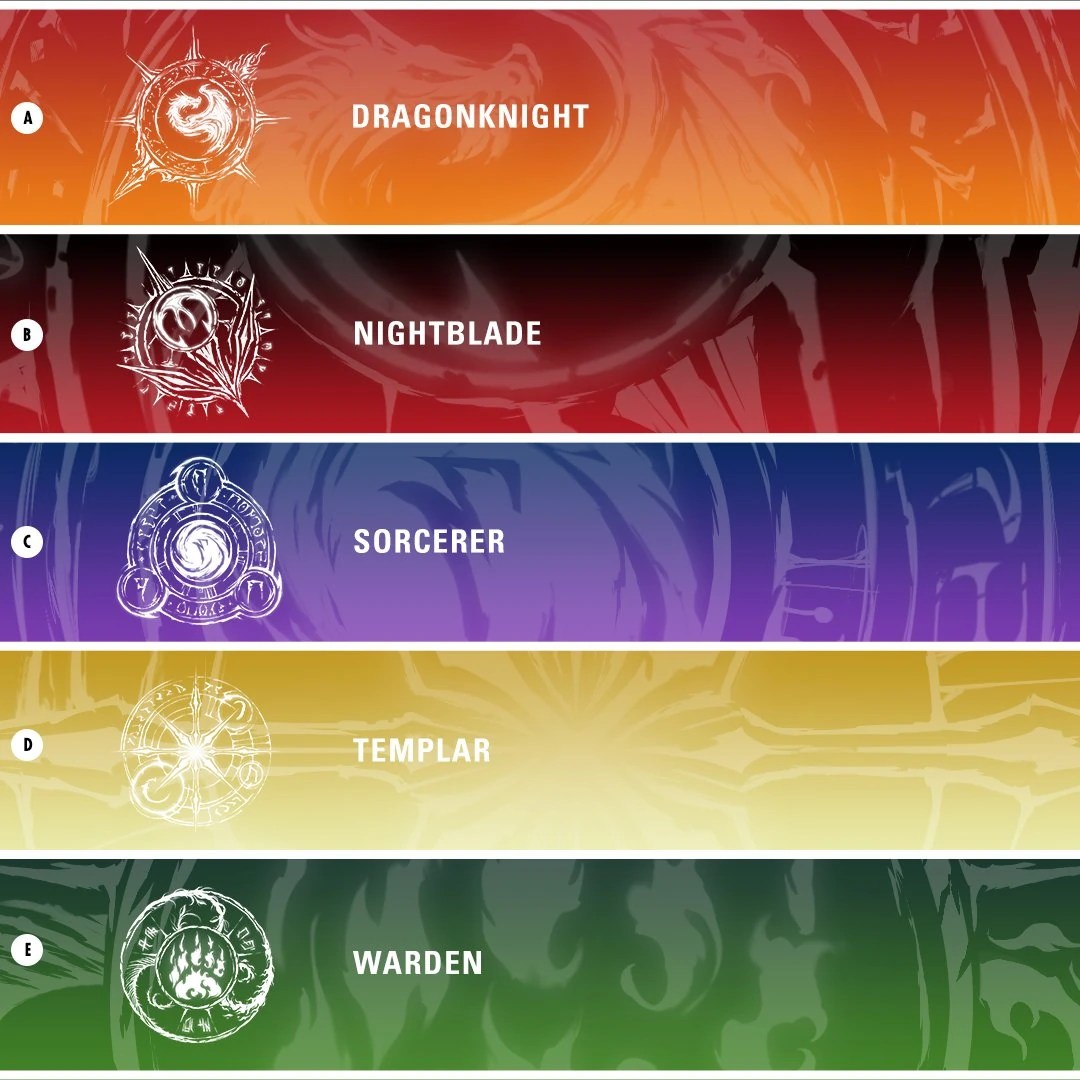
The gameplay loop in ESO is centered around character progression, questing, exploration, and player interaction.Character creation allows players to customize their characters, choosing from various races, classes, and appearances. The game offers ten playable races, each with unique racial passives that influence their stats and abilities. Players can select from six classes: Dragonknight, Sorcerer, Nightblade, Templar, Warden, and Necromancer. Each class offers unique skill lines and playstyles.The core gameplay loop consists of:
- Questing: Players undertake quests that advance the main storyline and explore the game world. Quests range from solo experiences to group-based activities.
- Exploration: Tamriel is vast, and players are encouraged to explore its diverse environments, discover hidden locations, and uncover secrets.
- Combat: ESO features an action combat system where players use light and heavy attacks, abilities, and blocking to defeat enemies. Combat encounters can range from solo fights to large-scale battles.
- Crafting: Players can engage in various crafting professions, such as blacksmithing, woodworking, clothing, enchanting, provisioning, and alchemy, to create items and gear.
- Player Interaction: Players can group up to complete quests, participate in PvP, trade items, and interact with each other through social features.
This combination of activities provides a diverse and engaging experience for players.
The World of Tamriel
Tamriel, the setting of ESO, is a continent rich in history, culture, and diverse environments. It is divided into several regions, each with its own unique characteristics.Here are some of the regions available in the game:
- Cyrodiil: The central province of Tamriel, and the setting for the game’s large-scale PvP (Player versus Player) battles, known as the “Alliance War.” The Imperial City, the capital of the Empire, is also located here.
- Morrowind: A volcanic region with unique architecture and culture. This area is home to the Dark Elves (Dunmer). The chapter Morrowind, added in 2017, allowed players to explore the island of Vvardenfell.
- Summerset: A beautiful island home to the High Elves (Altmer), characterized by its stunning architecture and landscapes. This area was added as a chapter in 2018.
- Blackwood: A region that combines the Black Marsh and the part of Cyrodiil.
- Other Regions: The game continues to expand, adding new zones and regions, such as the regions of High Isle, and others.
Each region offers a unique experience, from the harsh landscapes of Skyrim to the tropical islands of Summerset, contributing to the game’s immersive world.
Character Creation and Classes
Embarking on your adventure in The Elder Scrolls Online begins with crafting your unique character. This process is crucial, shaping your identity and defining your gameplay experience. From selecting your race and customizing your appearance to choosing your class, every decision impacts your abilities, playstyle, and role in the world of Tamriel.
Character Creation Process
The character creation process is comprehensive, offering a high degree of customization. It allows players to personalize their characters extensively, making each one feel unique.The process involves several key steps:
- Race Selection: Choosing your race is a foundational decision, as it influences your starting attributes, skill lines, and racial passives. These passives provide unique bonuses, affecting your character’s combat effectiveness, crafting abilities, and resource management. For example, the High Elf race provides bonuses to Magicka, Magicka Recovery, and experience gain with the Destruction Staff skill line.
- Appearance Customization: This is where you truly bring your character to life. ESO offers a vast array of options to tailor your character’s appearance, including:
- Body Type: Select between different body builds, influencing your character’s physique.
- Facial Features: Fine-tune your character’s face with adjustments to bone structure, eyes, nose, mouth, and ears.
- Hairstyles and Colors: Choose from a diverse selection of hairstyles and customize their colors.
- Tattoos and Markings: Add intricate tattoos and markings to further personalize your character’s appearance.
- Facial Hair: Select and customize facial hair options, if applicable to your chosen race.
- Class Selection: This is a pivotal choice that defines your primary combat role and skill set. Each class offers unique abilities, playstyles, and roles within groups.
- Name Selection: Finally, choose a name for your character. Consider a name that fits your chosen race and class, enhancing your immersion in the game.
Class Overview
ESO features seven distinct classes, each offering a unique approach to combat and roleplaying. Each class has its own skill lines, class-specific weapons, and ultimate abilities.Here’s a breakdown of each class:
- Dragonknight: A master of fire, poison, and earth, the Dragonknight excels in close-range combat and tanking roles. They can breathe fire, summon fiery weapons, and control the battlefield with powerful area-of-effect abilities.
- Strengths: High survivability, strong area-of-effect damage, excellent tanking capabilities.
- Weaknesses: Can be less effective at long-range combat compared to other classes.
- Sorcerer: Wielding the power of lightning and daedric magic, the Sorcerer excels in dealing burst damage and summoning pets. They can call upon powerful bolts of lightning, summon clannfear or twilight tormentors, and manipulate the battlefield with stunning abilities.
- Strengths: High burst damage potential, strong mobility, effective pet-based builds.
- Weaknesses: Can be more vulnerable in melee combat.
- Nightblade: A stealthy assassin, the Nightblade excels in dealing burst damage and controlling enemies. They can vanish into the shadows, poison their blades, and drain the life force of their enemies.
- Strengths: High single-target damage, excellent mobility, strong stealth capabilities.
- Weaknesses: Can be less effective in sustained fights or against multiple enemies.
- Templar: A holy warrior, the Templar excels in healing, support, and dealing radiant damage. They can heal allies, bolster defenses, and unleash powerful beams of holy light.
- Strengths: Exceptional healing abilities, strong support capabilities, decent damage output.
- Weaknesses: Can be less effective in pure damage roles compared to other classes.
- Warden: A nature-based class, the Warden excels in healing, tanking, and dealing frost damage. They can summon animal companions, heal allies with nature’s touch, and manipulate the elements.
- Strengths: Versatile class with strong healing and tanking capabilities, excellent support options.
- Weaknesses: Can be less effective at pure damage output compared to some other classes.
- Necromancer: A master of death and the undead, the Necromancer excels in dealing area-of-effect damage and controlling the battlefield with summons and bone-based abilities. They can raise the dead, unleash bone-shattering attacks, and siphon the life force of their enemies.
- Strengths: Strong area-of-effect damage, excellent crowd control, unique summoning capabilities.
- Weaknesses: Relies heavily on managing corpses to activate certain abilities.
- Arcanist: Wielding the power of the forbidden, the Arcanist excels in manipulating the threads of reality to devastate enemies and protect allies. They can use powerful beams, summon arcane constructs, and manipulate the battlefield with powerful area-of-effect abilities.
- Strengths: High damage output, strong healing capabilities, unique combat mechanics.
- Weaknesses: Relatively new class, so build optimization is still evolving.
Race and Class Synergies
The choice of race significantly impacts your character’s starting attributes and racial passives, which can synergize well with certain classes. While any race can play any class, some combinations offer distinct advantages.Here are some examples of race and class synergies:
- High Elf Sorcerer: High Elves have bonuses to Magicka, Magicka Recovery, and experience gain with the Destruction Staff skill line. This makes them a natural fit for Sorcerers, who rely heavily on Magicka for their abilities and often use Destruction Staves for damage.
- Imperial Dragonknight: Imperials receive bonuses to Health, Stamina, and resource sustain. This makes them excellent tanks and benefits Dragonknights, who can utilize both resources.
- Khajiit Nightblade: Khajiit benefit from increased Critical Chance and Stamina Recovery. This enhances the Nightblade’s stealth and burst-damage capabilities.
- Breton Templar: Bretons have bonuses to Magicka, Magicka Recovery, and spell resistance, making them ideal for Templars, who rely on Magicka for healing and support.
It is important to consider these synergies when creating your character, but ultimately, the best race and class combination depends on your preferred playstyle. The racial passives provide a boost, but skill and build choices are the primary factors determining your character’s effectiveness. For instance, a player could choose a Nord Warden, a race with bonuses to Health and Stamina, for tanking, although other races might be considered more optimal for maximizing damage.
Quests and Storylines
The Elder Scrolls Online (ESO) thrives on its rich tapestry of quests and storylines, offering players a vast and engaging experience. From the main narrative to countless side quests, the game provides a diverse range of activities, ensuring players always have something to do. The storylines are not only integral to the gameplay but also crucial for world-building, character development, and player immersion.
This section will delve into the major questlines, notable side quests, and the impact of expansions on the game’s narrative depth.
Main Storyline Quests and Factions
The core of ESO’s experience revolves around its main storyline, which is intertwined with the faction system. Players begin by choosing one of three alliances, each with its own unique questline and geographical focus. These alliances define the player’s initial experience and shape their understanding of the game’s world. The alliances are: the Ebonheart Pact, the Daggerfall Covenant, and the Aldmeri Dominion.
Each faction offers a distinct narrative arc:
- Ebonheart Pact: This alliance unites the races of Argonians, Dunmer, and Nords. Their questline focuses on the threat posed by Molag Bal and his Daedric forces, as well as internal conflicts within the alliance. The Pact’s journey involves navigating the harsh landscapes of Morrowind, the swamps of Black Marsh, and the icy plains of Skyrim. Players will encounter diverse cultures and deal with political intrigue.
- Daggerfall Covenant: Comprising Bretons, Redguards, and Orcs, the Daggerfall Covenant’s questline centers on the power struggles within the kingdom of High Rock and the looming threat from the Reachmen. Players will explore the medieval castles and rolling hills of High Rock, the deserts of Hammerfell, and engage in political maneuvering and combat.
- Aldmeri Dominion: This alliance, formed by Altmer, Bosmer, and Khajiit, focuses on reclaiming Tamriel for the Elven races. Their questline involves the liberation of Cyrodiil from the forces of the Empire and the defense of the Dominion’s territories. Players journey through the tropical jungles of the Summerset Isles, the dense forests of Valenwood, and the deserts of Elsweyr.
The overarching main quest, regardless of the chosen alliance, involves combating the Daedric Prince Molag Bal, who seeks to merge the mortal realm with his plane of Oblivion. Players must gather allies, uncover ancient secrets, and ultimately confront Molag Bal to save Tamriel.
Memorable Side Quests and Their Impact
Beyond the main storylines, ESO is filled with side quests that add depth and character to the world. These quests range from simple fetch quests to complex narratives with meaningful choices and consequences. The impact of these side quests can be seen in how they shape the world and how they offer insights into the lives of the inhabitants of Tamriel.
Some notable examples include:
- The Thieves Guild and Dark Brotherhood Questlines: These DLC-based questlines offer extensive storylines focused on criminal organizations. Players can join either guild and progress through their ranks by completing various missions. These quests offer unique gameplay mechanics, such as stealth and assassination, and contribute significantly to the player’s experience.
- The Waking Flame and Deadlands Quests: These quests are part of the Gates of Oblivion year-long event. They delve into the schemes of the Daedric Prince Mehrunes Dagon. Players can explore the Deadlands and interact with characters to unravel a complex narrative involving cultists and powerful artifacts.
- The Murkmire Questline: Set in the Black Marsh, this questline allows players to explore the Argonian culture and the mysterious swamps of Murkmire. It involves uncovering ancient secrets and helping the local tribes.
These side quests, and many others, are significant for several reasons. They offer:
- World-Building: They flesh out the cultures, histories, and environments of Tamriel, making the world feel richer and more alive.
- Character Development: They introduce memorable characters and provide opportunities for players to make choices that impact the narrative.
- Gameplay Variety: They offer a break from the main questlines and introduce different gameplay styles and objectives.
DLC and Chapter Expansions and Their Storylines
The release of DLC and Chapter expansions is essential for expanding the game’s narrative and introducing new quest content. These expansions add new zones, storylines, and characters, providing players with fresh content and reasons to return to the game. Chapters are typically larger expansions that introduce significant new features, while DLCs offer smaller, more focused content drops.
Here are some examples of how DLC and Chapter expansions have expanded the game’s quest content:
- Morrowind (Chapter): This Chapter introduced the island of Vvardenfell, allowing players to revisit the iconic setting from The Elder Scrolls III: Morrowind. It featured a new class (the Warden), a new Trial, and a main storyline focused on the Tribunal gods and the impending threat of a Daedric invasion.
- Summerset (Chapter): This Chapter added the Summerset Isles, a new zone filled with the high-elven culture. The main storyline involved uncovering a conspiracy and investigating the mysterious events unfolding within the island. It also introduced the Psijic Order.
- Greymoor (Chapter): This Chapter brought players to Western Skyrim and the region of Blackreach, focusing on a vampire-related threat. It introduced a new system of Antiquities and offered a gothic, atmospheric experience.
- The Blackwood (Chapter): This chapter saw players venturing into Blackwood, which included parts of both Cyrodiil and the Black Marsh. It included the Legacy of Brand and a storyline involving Daedric Princes.
- Imperial City (DLC): This DLC introduced the Imperial City, a PvP zone where players could fight for control of districts. It offered new quests and rewards.
The continuous release of DLCs and Chapters ensures that ESO remains a dynamic and engaging experience. They provide a constant stream of new content, keeping players invested in the game and expanding the world of Tamriel. The consistent addition of new storylines and quests helps maintain the game’s relevance and appeal.
Combat and Gameplay Mechanics
The Elder Scrolls Online features a dynamic combat system that emphasizes action and player agency. Unlike some other MMORPGs, combat in ESO requires active participation, including aiming, blocking, and dodging. Success depends on understanding your character’s abilities, managing resources, and adapting to different enemy types and encounters.
Combat System Overview
ESO’s combat system is real-time, requiring players to react quickly and strategically. It blends elements of action RPGs with traditional MMO mechanics. Key aspects include the use of skills, abilities, and resource management to overcome challenges.Skills and Abilities:
- Skills are unlocked and upgraded through character progression and by using weapons.
- Players can equip a limited number of active skills at a time, allowing for customization and specialization.
- Abilities are often tied to specific classes, weapon types, or skill lines.
Resource Management:
- Combat effectiveness depends on managing resources like Magicka, Stamina, and Ultimate.
- Magicka fuels class-based abilities and spells.
- Stamina powers weapon attacks, blocking, dodging, and certain abilities.
- Ultimate is a powerful resource that builds up through combat and can be used for impactful skills.
Weapon Types and Armor Sets in Combat
Different weapon types and armor sets significantly impact playstyle and combat effectiveness in ESO. Choosing the right combination can greatly influence a character’s role and capabilities.Weapon Types:
- Each weapon type offers a unique set of skills and playstyles.
- Swords and shields provide strong defensive capabilities and are suitable for tanking.
- Dual wield offers high damage output and is often used by damage dealers.
- Two-handed weapons deal significant damage with powerful area-of-effect attacks.
- Staves are used by magic-based characters and offer a variety of offensive and defensive spells.
- Bows excel at ranged combat and provide utility skills.
Armor Sets:
- Armor sets provide bonuses when wearing a certain number of pieces from the same set.
- Light armor enhances Magicka and spellcasting capabilities.
- Medium armor improves Stamina and weapon damage.
- Heavy armor boosts armor and health, making it ideal for tanking.
- Sets offer various bonuses that can augment damage, healing, or survivability.
Combat Roles
Different combat roles in ESO require distinct responsibilities, skills, and gear choices. Understanding these roles is crucial for effective group play.Tank:
- Tanks are responsible for drawing enemy attention (aggro) and mitigating damage.
- They typically wear heavy armor and use skills that increase their survivability.
- Tanks often use a sword and shield to block attacks and protect allies.
- Key skills include taunts to hold enemy attention and abilities that increase armor and health.
Healer:
- Healers focus on keeping allies alive by providing healing and support.
- They often wear light armor to enhance their Magicka and spellcasting abilities.
- Healers typically use staves to cast healing spells.
- Key skills include single-target and area-of-effect heals, buffs, and debuffs.
Damage Dealer (DPS):
- DPS characters are responsible for dealing damage to enemies.
- They can use various armor types and weapon combinations, depending on their build.
- DPS characters often focus on maximizing damage output through skill rotations and gear choices.
- Key skills involve dealing high damage, applying status effects, and utilizing buffs and debuffs.
Player vs. Player (PvP) Content

Source: pikist.com
Elder Scrolls Online offers a robust PvP experience, allowing players to test their skills against each other in large-scale battles. This section delves into the PvP aspects of the game, exploring the key areas, combat mechanics, and popular strategies.
PvP Areas: Cyrodiil and the Imperial City
The primary PvP zones in ESO are Cyrodiil and the Imperial City. Both offer unique gameplay experiences and rewards.Cyrodiil is the largest PvP area, a massive open-world zone where three alliances – the Aldmeri Dominion, the Daggerfall Covenant, and the Ebonheart Pact – clash for control of keeps, resources, and the Emperor’s throne.The Imperial City is a smaller, more concentrated PvP zone located in the heart of Tamriel.
It is a city-based PvP area with a focus on close-quarters combat and strategic objective control.
PvP Combat Mechanics
PvP combat in ESO involves a variety of mechanics, including siege warfare, capture points, and alliance ranking. Understanding these mechanics is crucial for success.Siege Warfare: Players can utilize siege weapons such as ballistas, catapults, and trebuchets to attack enemy keeps and defenses. Defending players can use their own siege weapons and repair walls.Capture Points: Capturing keeps, resources, and strategic locations is the primary objective in Cyrodiil.
Holding these points provides benefits to the controlling alliance, such as resource gathering and access to vendors.Alliance Ranking: Players earn alliance points (AP) by participating in PvP activities. These points contribute to their alliance rank, which determines their position on the leaderboards and unlocks various rewards. The higher the rank, the better the rewards.
Popular PvP Builds and Strategies
Different classes and builds excel in PvP, each offering unique strengths and weaknesses. Players often adapt their builds based on the current meta and their preferred playstyle.Below are some popular build archetypes and strategic considerations:
- Magicka Builds: These builds rely on abilities that scale with maximum magicka. They often focus on burst damage and ranged combat.
- Examples: Magicka Sorcerer, Magicka Templar, Magicka Nightblade.
- Stamina Builds: Stamina builds emphasize melee combat and sustained damage output.
- Examples: Stamina Dragonknight, Stamina Warden, Stamina Nightblade.
- Tank Builds: Tank builds prioritize survivability and crowd control, often acting as the frontline in group fights.
- Examples: Tank Dragonknight, Tank Templar, Tank Warden.
- Healer Builds: Healer builds focus on supporting their allies with healing and buffs.
- Examples: Healer Templar, Healer Warden, Healer Nightblade.
Strategies vary depending on the build and class, but some common approaches include:
- Group Play: Coordinating with allies is essential for success in Cyrodiil. Groups can focus on capturing keeps, defending resources, or engaging in large-scale battles.
- Solo Play: Some players prefer to play solo, focusing on hit-and-run tactics, scouting, or small-scale skirmishes.
- Siege Warfare: Mastering the use of siege weapons and understanding keep defenses is crucial for taking and defending objectives.
- Resource Management: Managing resources like stamina, magicka, and health is vital for survival and effectiveness in combat.
Player vs. Environment (PvE) Content
Source: nocookie.net
The Elder Scrolls Online offers a vast and engaging Player versus Environment (PvE) experience, providing players with numerous activities to test their skills and earn rewards. From exploring challenging dungeons to battling fearsome world bosses, there’s always something to do for players of all levels and playstyles. This section delves into the diverse PvE content available in ESO.
Available PvE Activities
ESO’s PvE content is designed to provide players with a variety of experiences, from solo adventures to group challenges. Here’s an overview of the main PvE activities:
- Dungeons: These instanced areas are designed for groups of four players. Dungeons offer challenging encounters, intricate mechanics, and valuable rewards, including unique sets of armor and weapons. They are a core part of the PvE experience.
- Trials: Trials are large-scale, 12-player group activities. They represent the most challenging PvE content in ESO, requiring coordination, communication, and optimized builds. Trials reward players with powerful gear, achievements, and titles.
- World Bosses: Scattered throughout the open world, world bosses are challenging enemies that require a small group of players to defeat. They offer a good source of experience, loot, and often contribute to zone completion achievements.
- Delves: These are smaller, solo or small-group instanced areas that often contain a boss at the end. They’re a good way to gain experience, collect skyshards, and find treasure.
- Public Dungeons: Larger than delves, these dungeons are designed for small groups but can be tackled solo. They feature multiple bosses and offer more substantial rewards than delves.
- Questing and Zone Exploration: Exploring the various zones, completing quests, and discovering hidden locations are also important aspects of PvE. Each zone has its own storyline, offering unique experiences and rewards.
Dungeon Example: The Banished Cells
The Banished Cells is a dungeon located in Auridon, accessible from level 10 onwards. It’s designed to introduce players to the concept of dungeon mechanics and group play.
The Banished Cells focuses on a Daedric cult, with the dungeon being a prison where they conduct their rituals. Players will fight through waves of enemies, including Daedric creatures and cultists, while navigating through various chambers and corridors.
The dungeon’s mechanics involve understanding enemy attack patterns, coordinating interrupts, and managing resources. The final boss, the Warden, has several phases and requires players to adapt to changing strategies. A key mechanic involves dealing with summoned atronachs and avoiding their area-of-effect attacks. Additionally, players need to be aware of the Warden’s powerful melee attacks.
Rewards: Completing The Banished Cells offers valuable rewards. Players can earn experience, gold, and equipment. This dungeon also drops the “Twilight Remedy” armor set, known for its healing bonuses, making it a popular choice for healers. The dungeon also rewards the completion of achievements and titles, such as “Banished Cells Conqueror”.
End-Game Content and Challenges
End-game content in ESO focuses on providing the most challenging and rewarding experiences for players who have reached the maximum level and optimized their characters.
Trials are a cornerstone of end-game PvE. These require players to master their classes, understand intricate boss mechanics, and work together effectively. Examples include the “Veteran Sunspire” and “Veteran Cloudrest” trials. The rewards are significant, including powerful gear sets, unique cosmetic items, and titles that signify mastery. For example, a group that successfully completes the “Veteran Cloudrest” trial in a timely manner might earn the “Cloudrest Victor” title.
Veteran Dungeons offer a step up in difficulty compared to normal dungeons. They introduce more complex mechanics, require higher levels of gear, and offer better rewards. Completing these often unlocks specific achievements, and provides access to rare set pieces.
Veteran Arenas, like the “Maelstrom Arena” and “Vateshran Hollows,” provide solo or group challenges. These arenas test players’ ability to handle multiple waves of enemies with escalating difficulty, often requiring specific build strategies and knowledge of the arena’s mechanics. Completing these arenas grants unique weapons and cosmetic rewards.
Challenges within end-game content frequently involve time trials, no-death runs, and other specific objectives. These challenges require high levels of skill and coordination, rewarding players with exclusive titles, achievements, and cosmetic items. For instance, a group completing a trial within a specific time frame might earn a special title and a unique mount. A no-death run rewards the players with a sense of accomplishment and often grants exclusive cosmetic rewards.
Crafting and Economy
Crafting and the in-game economy are integral aspects ofThe Elder Scrolls Online*, offering players a wide array of activities beyond combat and questing. Mastering these systems provides significant advantages, from creating powerful gear to generating income. This section explores the intricacies of crafting and the economic landscape of Tamriel.
Crafting Skills
Crafting in ESO is a diverse system, encompassing six distinct skills, each offering unique benefits and crafting opportunities.
- Blacksmithing: This skill allows players to craft heavy armor, swords, axes, maces, and shields. Blacksmithing is crucial for creating durable and protective gear for tank characters and melee DPS.
- Clothing: Clothing focuses on crafting light and medium armor. This is essential for magic users (light armor) and stamina-based characters (medium armor).
- Woodworking: Woodworking is used to craft staves for magic users, bows for ranged DPS, and shields.
- Alchemy: Alchemists create potions and poisons. These consumables provide buffs, healing, and debuffs, offering significant advantages in combat.
- Enchanting: Enchanters create glyphs that can be applied to weapons, armor, and jewelry, providing various stat boosts and effects.
- Provisioning: Provisioners cook food and drinks. These consumables provide buffs to stats like health, stamina, and magicka, and can also provide bonus effects like increased experience gain.
Gathering Resources and Crafting Efficiency
Efficient resource gathering and crafting are essential for maximizing your crafting potential.
- Resource Gathering: Resources are found throughout the world.
- Blacksmithing: Ore veins (iron, steel, etc.) are mined.
- Clothing: Cloth plants (jute, flax, etc.) are harvested.
- Woodworking: Wood (maple, oak, etc.) is gathered from trees.
- Alchemy: Plants (columbine, corn flower, etc.) are gathered.
- Enchanting: Runestones are found in specific locations.
- Provisioning: Ingredients are found throughout the world and from vendors.
- Deconstruction: Deconstructing items provides crafting experience and resources. It’s a good way to level up your crafting skills and obtain materials.
- Research: Researching traits on items is essential for crafting powerful sets. This process takes time, so starting early is recommended.
- Trait Material Refinement: Refining crafting materials increases their quality.
- Crafting Stations: Using crafting stations provides access to specific crafting options. For example, a blacksmithing station is required to craft armor and weapons.
- Skill Points: Investing skill points in the crafting skill lines is crucial for unlocking advanced crafting abilities, like being able to craft better quality gear or using more efficient crafting methods.
In-Game Economy
The in-game economy of ESO is driven by player trading, item prices, and the influence of guilds.
- Trading: Players can trade items directly with each other or use guild stores.
- Guild Stores: Guilds have their own stores where members can sell items to other players. Accessing guild stores is a primary way to buy and sell goods.
- Item Prices: Item prices fluctuate based on supply and demand. Rare materials, crafted sets, and high-quality items typically command higher prices.
- Guilds and the Economy: Guilds play a significant role in the economy. Trading guilds facilitate large-scale trading, while crafting guilds provide access to crafting services and resources.
- Trading Guilds: These guilds often have their own guild stores in major cities and provide access to a wider market.
- Crafting Guilds: These guilds help members share resources, provide crafting services, and learn from each other.
- Market Fluctuations: The prices of items can change dramatically based on events, new content releases, and changes in the meta. For instance, the price of materials needed for a newly released set will likely increase as players seek to acquire it.
- Example: During the release of a new DLC or Chapter, the demand for new crafting materials is very high, causing prices to increase significantly. As players gather more resources and the initial hype fades, prices gradually stabilize.
Housing and Customization
The Elder Scrolls Online offers extensive customization options, allowing players to personalize their characters and homes. This system provides a significant degree of self-expression within the game, fostering a sense of ownership and individuality. This section details the housing system and the various customization choices available.
Housing System Overview
ESO’s housing system allows players to own and decorate homes across Tamriel. There’s a wide range of properties available, from small apartments to grand estates.
- Different Types of Homes: Homes are categorized by size and location, each with unique features and costs. They range from small apartments, perfect for starting players, to expansive manors with multiple rooms and outdoor areas. Some examples include:
- Apartments: Typically located within cities, these are the most affordable option.
- Houses: Standard-sized homes with varying layouts and locations.
- Large Houses: More spacious homes with more rooms and customization options.
- Grand Houses: The largest homes, often featuring multiple buildings and extensive outdoor areas.
- Features of Homes: Each home comes with its own set of features. These can include:
- Storage: Allows players to store items.
- Crafting Stations: Allow players to craft items within their home.
- Target Dummies: Allow players to test combat builds.
- Gardens: Some homes feature outdoor areas for gardening.
Acquiring and Customizing a Home
Players can acquire homes through various methods, and the customization options are vast.
- Acquiring a Home: Homes can be purchased using in-game gold or Crowns (the game’s premium currency). The availability of homes can vary, with some being available for gold and others only through the Crown Store.
- Purchasing with Gold: Homes purchased with gold typically require completing specific quests or achievements.
- Purchasing with Crowns: Homes available in the Crown Store can be purchased directly using Crowns.
- Customizing a Home: Players can decorate their homes with furniture and decorations.
- Furniture and Decorations: These items can be acquired through crafting, purchasing from vendors, completing quests, or purchasing from the Crown Store.
- Placement and Customization: Players can freely place and rotate furniture within their homes, allowing for a high degree of personalization.
- Housing Editor: A dedicated in-game editor allows players to easily manage and customize their homes.
Character Customization Options
Beyond housing, ESO offers extensive character customization.
- Outfits: Players can customize their character’s appearance through outfits.
- Outfit Styles: Various outfit styles are available, representing different cultures and factions within the game.
- Outfit Stations: Players can use outfit stations to apply styles to their armor and weapons.
- Transmutation: The Transmute system allows players to change the traits of their weapons and armor.
- Mounts: Players can choose from a variety of mounts.
- Mount Types: Include horses, guar, senche-tigers, and more.
- Mount Customization: Mounts can be customized with different skins, and their stats (speed, stamina, and carrying capacity) can be improved.
- Mount Acquisition: Mounts can be acquired through quests, achievements, or purchased from the Crown Store.
- Pets: Players can have pets that follow them around.
- Pet Types: Include various creatures, from loyal dogs to exotic companions.
- Pet Acquisition: Pets are acquired through quests, achievements, or the Crown Store.
Social Features and Community
The Elder Scrolls Online thrives on its social aspects, fostering a vibrant community where players connect, collaborate, and share experiences. The game offers various features to facilitate social interaction, from joining guilds to participating in events and engaging on external platforms. This section explores the key social features that make ESO a compelling online experience.
Guild System in ESO
The guild system is a cornerstone of the social experience in The Elder Scrolls Online. Guilds provide a framework for players to connect, organize activities, and build a sense of community.Guilds in ESO offer a variety of benefits to their members:
- Organized Activities: Guilds frequently organize group activities such as dungeons, trials, PvP events, and questing sessions. This makes it easier for players to find groups and participate in content they might not otherwise experience.
- Communication and Support: Guilds often have their own communication channels, such as in-game chat, Discord servers, or forums, where members can communicate, ask for help, and share information. New players, in particular, benefit from the support and guidance of more experienced guildmates.
- Trading and Economy: Many guilds have a dedicated trading aspect, allowing members to buy and sell items amongst themselves or through a guild store. This simplifies the process of acquiring desired items and can provide access to better prices.
- Guild Banks and Resources: Larger guilds often have access to guild banks where members can store items for shared use. They might also control crafting stations or housing, providing further advantages to their members.
- Social Interaction: Guilds are primarily social organizations. They provide a space for players to make friends, share experiences, and enjoy the game together. This social aspect is crucial for player retention and enjoyment.
Guilds can be of various types, ranging from casual social guilds to hardcore raiding guilds or trading empires. Players can join up to five guilds at once, allowing them to participate in different communities and activities. The guild system is a powerful tool for building a strong social network and enhancing the overall ESO experience.
Interacting with Other Players
Interacting with other players is fundamental to the Elder Scrolls Online experience. The game provides several ways for players to connect, collaborate, and build relationships.Players can interact with each other in numerous ways:
- Grouping for Content: Grouping is essential for tackling dungeons, trials, and some quests. Players can use the Group Finder tool to easily find groups for various activities. They can also manually form groups by inviting players directly or using the in-game chat to find others interested in the same content.
- Trading and Bartering: Players can trade items directly with each other, using the in-game trading interface. They can also use guild stores to buy and sell items, contributing to the game’s economy.
- Chat and Communication: ESO offers several chat channels, including zone chat, guild chat, and private messaging, to facilitate communication. Players can use these channels to ask for help, coordinate activities, or simply socialize.
- Emotes and Social Actions: The game includes a variety of emotes that players can use to express themselves and interact with others. These emotes can be used to greet other players, celebrate victories, or show appreciation.
- Player Housing Interactions: Players can visit each other’s player homes, providing a space for social gatherings and showcasing their decorating skills. This feature enhances social interaction and allows players to build connections outside of combat.
The game encourages players to interact, whether it is for completing quests, participating in group content, or simply enjoying the world together. The availability of diverse interactions reinforces the cooperative spirit and adds significant value to the overall gaming experience.
The Role of the Community in ESO
The Elder Scrolls Online community plays a significant role in the game’s overall success and player experience. The community extends beyond the in-game interactions, encompassing forums, social media, and player-run events.The ESO community is a dynamic entity, actively contributing to the game’s longevity:
- Forums and Online Resources: The official ESO forums and numerous fan-made websites and forums provide a space for players to discuss the game, share information, ask questions, and offer feedback to the developers. These resources are invaluable for new and experienced players alike.
- Social Media: Platforms such as Twitter, Facebook, and Reddit are used by the community to share news, discuss strategies, organize events, and create content related to ESO. The developers also use social media to communicate with the community and announce updates.
- Player-Run Events: The ESO community organizes a wide range of player-run events, including roleplaying sessions, PvP tournaments, and charity drives. These events enhance the social experience and provide opportunities for players to connect and have fun.
- Content Creation: The ESO community is very active in content creation, with players producing videos, guides, and other resources to help others. This user-generated content is an important aspect of the game’s popularity and provides players with valuable information and entertainment.
- Feedback and Bug Reporting: Players actively provide feedback to the developers on various issues, including bugs, balance concerns, and suggestions for improvement. This feedback is critical for the ongoing development and refinement of the game.
The ESO community is essential for providing support, creating engaging content, and driving the game’s evolution. It promotes a sense of belonging and contributes significantly to the long-term success of The Elder Scrolls Online.
Future of Elder Scrolls Online
Elder Scrolls Online (ESO) continues to evolve, with ZeniMax Online Studios consistently delivering new content and features. This section explores the ongoing development of ESO, detailing its past updates, community expectations, and the impact of these changes on the player base.
Game Updates and Expansions
ESO’s content strategy revolves around quarterly updates and annual expansions. These updates introduce new zones, stories, gameplay mechanics, and quality-of-life improvements. The frequency and scope of these releases are crucial for maintaining player engagement and attracting new players.
- Recent Releases: Recent expansions, like “Necrom” and “Gold Road”, have expanded the game world with new zones, stories, and classes. “Necrom” focused on the Telvanni Peninsula and Apocrypha, introducing the Arcanist class. “Gold Road” explored the West Weald and added the Scribing system, allowing players to customize their skills. These expansions are typically accompanied by a major update, introducing new features and bug fixes for the whole game.
- Upcoming Content: ZeniMax has typically announced future content well in advance, usually during their annual “ESO Live” streams or other promotional events. Players can anticipate new chapters, dungeons, and other content that will continue to expand the game world and provide fresh experiences. The specific details of upcoming releases are usually revealed with the release of each new chapter.
Community Expectations for Future Updates
The ESO community is vocal about its desires for future content. Player feedback influences the direction of the game, with developers often incorporating suggestions and addressing concerns. Community expectations include a variety of features and improvements.
- New Classes and Races: Players often express interest in new classes and races to diversify gameplay options. The introduction of the Arcanist in “Necrom” demonstrated ZeniMax’s willingness to add new classes, raising hopes for future additions.
- Improved Performance and Stability: Performance issues and bugs are a constant concern for players. Community feedback often prioritizes performance optimizations, bug fixes, and improvements to server stability.
- Quality of Life Improvements: Players want enhancements to existing features. Examples include improvements to the User Interface (UI), inventory management, and crafting systems.
- Expanded Housing and Customization: The housing system is popular, and players often desire more customization options, larger homes, and more diverse furnishings.
Impact of Updates on the Player Base
Updates and expansions significantly impact the player base, affecting player retention, acquisition, and overall game health. The success of each update is measured by metrics like player activity, revenue, and community sentiment.
- Player Retention: Successful updates encourage existing players to remain engaged with the game. New content, bug fixes, and quality-of-life improvements help retain players and reduce churn. For example, the introduction of a new class can reinvigorate interest from veteran players looking for a fresh experience.
- Player Acquisition: Major expansions and updates can attract new players. Marketing campaigns and positive reviews often accompany new content releases, boosting player numbers.
- Economic Impact: New content, like crafting materials, items, and housing options, affects the in-game economy. Updates can introduce new markets and influence the value of existing goods.
- Community Engagement: Updates can generate buzz and excitement within the community. Active communication from ZeniMax, including patch notes, developer diaries, and community events, contributes to a positive player experience.
Last Point
In conclusion, Elder Scrolls Online is a dynamic and evolving MMORPG that continues to captivate players with its expansive world, engaging gameplay, and strong community. From its compelling storylines and diverse character classes to its intricate crafting system and exciting PvP content, ESO offers a truly immersive experience. Whether you’re a veteran player or just starting your journey, the world of Tamriel awaits, promising endless adventures and unforgettable experiences.
So gather your allies, sharpen your blade, and prepare to explore the Elder Scrolls Online!
Helpful Answers
Is Elder Scrolls Online free to play?
No, Elder Scrolls Online requires a one-time purchase of the base game. However, there’s also an optional subscription service called ESO Plus that offers various benefits, including access to all DLCs, a crafting bag for unlimited storage, and bonus experience and gold.
Can I play Elder Scrolls Online solo?
Yes, absolutely! While ESO is an MMORPG, a significant portion of the game can be enjoyed solo. The main questlines, many side quests, and exploration can be completed without grouping with other players. However, some content, like dungeons and trials, is designed for group play.
What platforms is Elder Scrolls Online available on?
Elder Scrolls Online is available on PC, PlayStation 4 and 5, and Xbox One and Series X/S. Cross-platform play is not available, but you can transfer your character from PC to console.
How often does Elder Scrolls Online receive updates?
ESO receives regular updates throughout the year. These updates typically include new content like DLCs (Downloadable Content), which add new zones, quests, and features. There are also smaller patches for bug fixes and balance changes.
Is there a level cap in Elder Scrolls Online?
Yes, the level cap in Elder Scrolls Online is Champion Point (CP) level. The level cap is constantly increasing with each update, so players will always have something to strive for.