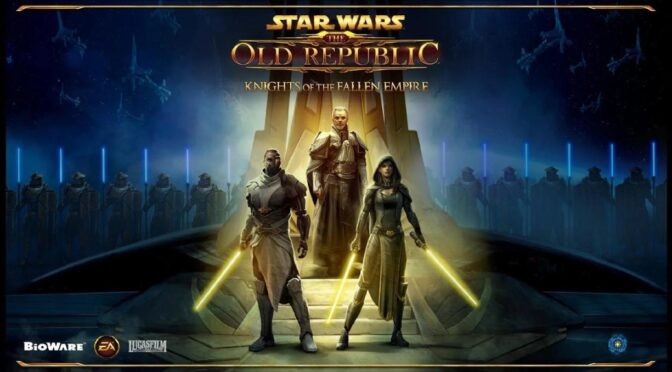
Welcome to the galaxy of Star Wars: The Old Republic (SWTOR), a massively multiplayer online role-playing game (MMORPG) that lets you live out your Star Wars fantasies. Whether you dream of wielding a lightsaber as a Jedi Knight or commanding the battlefield as a Sith Lord, SWTOR offers a rich and engaging experience for players of all levels. From its compelling storylines and diverse classes to its vast array of planets and exciting gameplay, SWTOR provides an immersive journey into a time long before the events of the original trilogy.
This exploration will delve into the core mechanics, from the combat system and character progression to the intricacies of player-versus-player (PvP) combat and endgame activities. We’ll also examine the game’s business model, community aspects, and what the future holds for this enduring Star Wars adventure. Prepare to uncover the secrets of the Old Republic and embark on your own epic saga.
Game Overview of SWTOR
Star Wars: The Old Republic (SWTOR) is a massively multiplayer online role-playing game (MMORPG) set in the Star Wars universe, thousands of years before the events of the films. Players choose a class, join a faction, and embark on a story-driven adventure filled with combat, exploration, and player choice. The game emphasizes narrative and character development, offering a unique experience within the established Star Wars lore.
Core Gameplay Loop
The core gameplay loop of SWTOR revolves around a cycle of questing, combat, character progression, and social interaction. Players advance through the game by completing quests, which involve a combination of exploration, interacting with non-player characters (NPCs), and engaging in combat encounters. This gameplay loop is designed to keep players engaged and immersed in the Star Wars universe.
- Questing: Players receive quests from NPCs, which guide them through the game’s story and environments. Quests often involve a combination of exploring areas, talking to NPCs, and completing combat objectives.
- Combat: SWTOR features a real-time combat system where players use abilities and attacks to defeat enemies. Combat can be solo, in small groups (e.g., Flashpoints, which are instanced dungeons), or in large-scale operations (raids).
- Character Progression: As players complete quests and defeat enemies, they earn experience points (XP) that allow them to level up. Leveling up grants access to new abilities, improves stats, and allows players to equip better gear.
- Social Interaction: Players can group up with others to complete quests, participate in Flashpoints and Operations, or engage in player-versus-player (PvP) combat. They can also join guilds to find a community.
Classes and Specializations
Players choose a class at the beginning of the game, each offering unique gameplay styles and story perspectives. Each class has two to four advanced specializations that further define their role in combat and the skills they have access to. These specializations allow players to customize their characters to fit their preferred playstyle.
- Republic Classes:
- Jedi Knight: Focuses on melee combat and lightsaber skills. Specializations include:
- Guardian: Tank or DPS (Damage Per Second)
- Sentinel: DPS
- Jedi Consular: Utilizes the Force for healing and support. Specializations include:
- Sage: Healer or DPS
- Shadow: Tank or DPS
- Trooper: A versatile class with a focus on ranged combat and military tactics. Specializations include:
- Vanguard: Tank or DPS
- Commando: Healer or DPS
- Smuggler: A cunning class focused on ranged combat and deception. Specializations include:
- Gunslinger: DPS
- Scoundrel: Healer or DPS
- Jedi Knight: Focuses on melee combat and lightsaber skills. Specializations include:
- Empire Classes:
- Sith Warrior: A powerful melee combatant wielding a lightsaber. Specializations include:
- Juggernaut: Tank or DPS
- Marauder: DPS
- Sith Inquisitor: Uses the Force for damage and support. Specializations include:
- Sorcerer: Healer or DPS
- Assassin: Tank or DPS
- Bounty Hunter: A ranged combat class specializing in explosives and heavy weaponry. Specializations include:
- Powertech: Tank or DPS
- Mercenary: Healer or DPS
- Imperial Agent: A ranged combat class focusing on stealth and espionage. Specializations include:
- Operative: Healer or DPS
- Sniper: DPS
- Sith Warrior: A powerful melee combatant wielding a lightsaber. Specializations include:
Factions and Objectives
SWTOR features two main factions: the Galactic Republic and the Sith Empire. Each faction has its own objectives, ideologies, and goals, leading to conflict and cooperation within the game.
- Galactic Republic: Represents the forces of good and order. Their primary objectives are to maintain peace, uphold justice, and protect the galaxy from the Sith Empire. The Republic values democracy, freedom, and the Jedi Order.
- Sith Empire: Represents the forces of darkness and tyranny. Their primary objectives are to conquer the galaxy, enforce their will, and establish Sith dominance. The Empire values power, strength, and the Sith Code.
Player Choice and Storyline Impact
Player choice is a significant element in SWTOR, influencing the storyline, character relationships, and the overall narrative. Choices made during conversations and quests can have lasting consequences, impacting the player’s alignment, the fate of NPCs, and the outcome of major events.
- Dialogue Choices: Players are presented with dialogue choices that shape their character’s personality and the story’s direction. Choices range from benevolent to ruthless, impacting the player’s alignment (Light Side or Dark Side) and relationships with other characters.
- Quest Decisions: Certain quests offer choices that determine the outcome of events. These choices can influence which NPCs survive, which factions gain power, and the overall trajectory of the story.
- Alignment System: The Light Side/Dark Side alignment system tracks the player’s choices, influencing their appearance, abilities, and access to certain items and quests. Players can choose to embrace the Light Side, the Dark Side, or remain neutral.
Story and Lore in SWTOR
The Old Republic era in Star Wars provides a rich tapestry of history, conflict, and character development, setting the stage for the events of the films and beyond. Star Wars: The Old Republic (SWTOR) delves deep into this era, offering players a chance to experience its epic scale and participate in its defining moments.
Significance of the “Old Republic” Era
The Old Republic is a pivotal period in the Star Wars universe, a time of grand empires, powerful Force users, and galactic conflict. It’s a foundational setting, predating the events of the Skywalker Saga by thousands of years. This era is significant for several reasons:
- Foundation of the Jedi and Sith: The Old Republic is where the Jedi Order and the Sith Empire, as we know them, were forged. The conflict between these two factions shapes the moral and philosophical landscape of the entire Star Wars universe.
- Epic Scale and Scope: The conflicts of the Old Republic are galactic in scope, involving vast armies, powerful technologies, and diverse alien species. The scale allows for grand storytelling and exploration of various planets and cultures.
- Origins of Key Concepts: Many core concepts and technologies seen throughout the Star Wars saga have their roots in the Old Republic. This includes lightsabers, Force abilities, and even some of the iconic starships and weapons.
- Moral Complexity: The Old Republic explores complex moral themes, with the Jedi and Sith often portrayed in shades of grey. This allows for a more nuanced understanding of the Force and its influence.
Key Characters and Their Roles
SWTOR features a vast cast of characters, both original and those drawn from the expanded universe, each playing a crucial role in shaping the narrative. Here are some examples:
- The Player Characters: Players create their own characters, choosing from eight distinct classes, each with its own unique story and role in the conflict. These characters become central figures in the game’s overarching narrative.
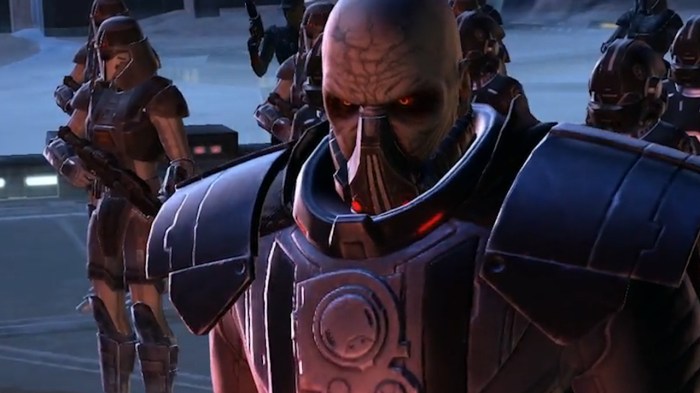
- Darth Malgus: A powerful Sith Lord, Darth Malgus serves as a major antagonist in the early storylines. He embodies the ruthless ambition and military might of the Sith Empire.
- Satele Shan: A prominent Jedi Master, Satele Shan represents the ideals of the Jedi Order and serves as a mentor and guide for many players. She is a descendant of the legendary Revan.
- Various Class Companions: Each class has a unique set of companions who join the player’s journey, offering support, companionship, and their own perspectives on the unfolding events. Examples include the Jedi Knight’s T7-O1 droid, or the Sith Warrior’s Vette.
Major Story Arcs
SWTOR offers a rich and diverse narrative experience, with multiple story arcs that allow players to experience the conflict from different perspectives. These stories are broadly divided by class, with expansions adding further content. Some of the most significant story arcs include:
- Class Stories: Each of the eight classes has its own unique storyline, which follows their journey from humble beginnings to becoming key players in the galactic conflict. This allows players to experience the war from multiple angles.
- Rise of the Hutt Cartel: This expansion introduces the Hutt Cartel as a major faction, focusing on criminal activity and the struggle for control of Nar Shaddaa.
- Shadow of Revan: This expansion sees the return of Revan, a legendary figure from the Old Republic era, and the fight against his plans.
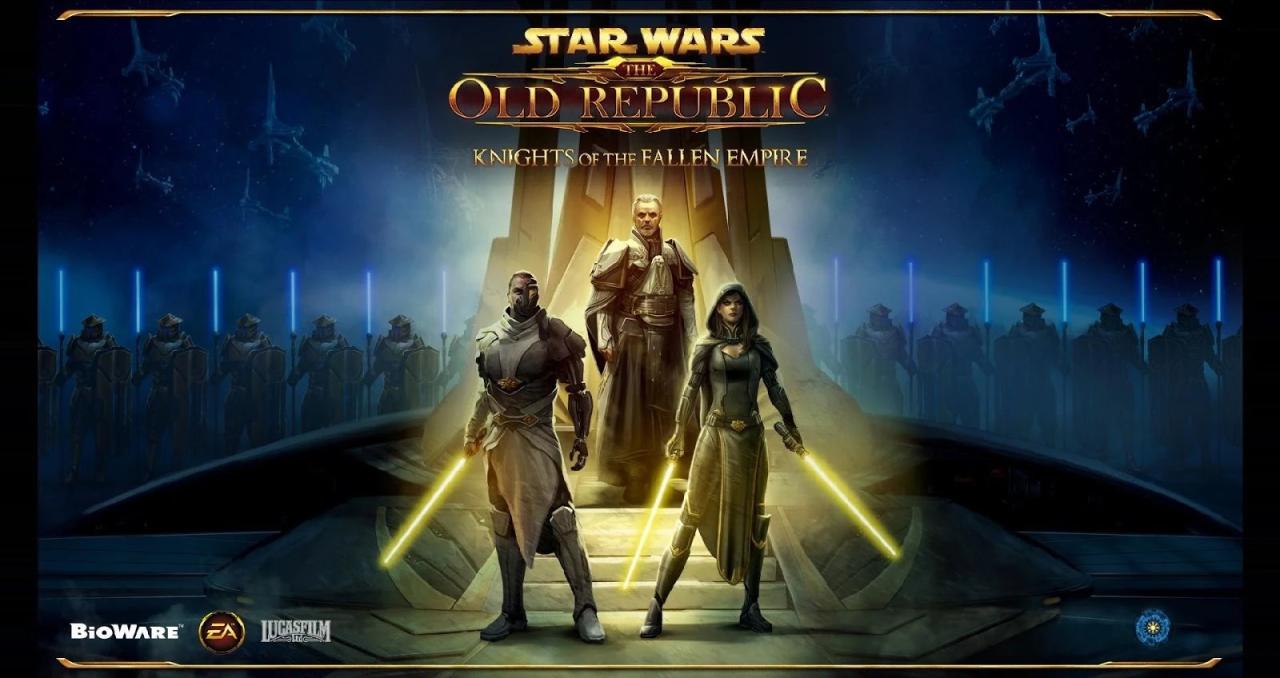
- Knights of the Fallen Empire / Eternal Throne: These expansions focus on the rise of the Eternal Empire and the player’s role in the fight against its tyrannical rule.
Concise Timeline of Significant Events
The timeline of SWTOR spans centuries, with key events that define the game’s history. This timeline provides a simplified overview:
- The Great Hyperspace War (approx. 25,793 BBY): The Sith Empire, led by Exar Kun and Ulic Qel-Droma, wages war against the Republic.
- The Mandalorian Wars (approx. 3,963 BBY): The Republic faces a devastating war against the Mandalorian clans, led by Mandalore the Ultimate.
- The Jedi Civil War (approx. 3,959 BBY): Darth Revan and Darth Malak, formerly Jedi Knights, turn against the Republic, leading to a galaxy-wide conflict.
- The Cold War (approx. 3,643 BBY): A period of relative peace is broken by a renewed conflict between the Republic and the Sith Empire. The events of the game begin around this time.
- The Galactic War (approx. 3,637 BBY – ongoing): The Republic and the Sith Empire are locked in a large-scale war, impacting the galaxy.
- The Rise of the Eternal Empire (approx. 3,630 BBY): The Eternal Empire, led by Emperor Valkorion, emerges as a major power.
Gameplay Mechanics of SWTOR
The gameplay mechanics of Star Wars: The Old Republic are central to the player experience, encompassing combat, crafting, group activities, and character progression. Understanding these systems is crucial for enjoying the game and progressing effectively. This section provides a detailed overview of these mechanics.
Combat System
The combat system in SWTOR is a tab-targeting system with a focus on ability rotations and resource management. Players select targets and use abilities to deal damage, heal allies, or control enemies. Tactical positioning and understanding your class’s role are key to success.* Abilities: Each class has a unique set of abilities, divided into different categories:
- Basic Attacks: These are typically auto-attacks that generate resources.
- Advanced Abilities: These abilities consume resources to deal damage, heal, or provide utility.
- Cooldown Abilities: These abilities have a longer cooldown and are often used for powerful effects or burst damage/healing.
- Defensive Abilities: These abilities are used to mitigate damage or provide buffs.
The specific abilities and their effects depend on the player’s class and chosen advanced class (subclass).* Resources: Managing resources is a critical aspect of combat.
- Force/Energy: Force users (Jedi and Sith) use Force, while Bounty Hunters and Troopers use Energy. These resources are used to activate many abilities.
- Heat/Ammo: Bounty Hunters generate Heat, and Troopers use Ammo. Managing these resources prevents overheating or running out of ammo, which would limit ability usage.
- Other Resources: Some classes have unique resources, such as Adrenaline (for Powertechs) or Rage (for Marauders).
Effective resource management involves balancing resource generation with ability usage to maintain a steady flow of attacks or heals.* Tactical Considerations: Successful combat in SWTOR involves several tactical elements.
- Target Selection: Prioritizing targets is essential. Focusing on the most dangerous enemies first, or interrupting enemy casts, can significantly impact the outcome of a fight.
- Positioning: Staying out of area-of-effect (AoE) attacks and utilizing cover are important, especially for ranged classes. Melee classes need to position themselves to effectively attack their targets.
- Ability Rotations: Mastering your class’s ability rotation is crucial for maximizing damage or healing output. This involves using abilities in a specific order to optimize resource management and damage/healing-per-second (DPS/HPS).
- Teamwork: In group content, communication and coordination are essential. Understanding your role (tank, healer, or DPS) and working together to achieve objectives is key to success.
Crafting and Resource Gathering
Crafting and resource gathering in SWTOR allow players to create useful items, such as gear, consumables, and modifications. These systems also provide a source of income and a way to customize your character.* Step-by-Step Guide to Crafting: Crafting involves several steps:
- Gathering Resources: Acquire the necessary materials through gathering skills, such as:
- Archaeology: Used to find artifacts and components for crafting.
- Bioanalysis: Used to harvest biological samples from creatures.
- Scavenging: Used to salvage materials from mechanical objects.
- Underworld Trading: Used to find resources from missions.
- Acquiring Crafting Skills: Choose a crafting skill, such as:
- Armormech: Creates armor.
- Armstech: Creates weapons.
- Synthweaving: Creates armor.
- Cybertech: Creates earpieces and modifications.
- Biochem: Creates consumables (medpacs, stims, and adrenals).
- Artifice: Creates lightsabers and hilts.
- Learning Schematics: Obtain schematics (recipes) for the items you want to craft. Schematics can be purchased, earned through missions, or discovered.
- Crafting Items: Use the crafting interface to create items. This typically involves selecting a schematic, providing the required resources, and initiating the crafting process. The crafted item’s quality is sometimes dependent on the crafter’s skill level.
* Step-by-Step Guide to Resource Gathering: Resource gathering involves the following steps:
- Choosing Gathering Skills: Select gathering skills to complement your chosen crafting skills. Each skill allows you to gather specific types of resources.
- Finding Resource Nodes: Locate resource nodes in the game world. These nodes are usually marked on the mini-map.
- Interacting with Nodes: Interact with the resource nodes to begin the gathering process. The gathering time varies depending on the node type and your gathering skill level.
- Processing Gathered Resources: The gathered resources are then used in crafting.
Flashpoints (Dungeons) and Operations (Raids) Strategies
Flashpoints and Operations are group activities that provide challenging content and valuable rewards. Successful completion requires teamwork, coordination, and a solid understanding of the encounters.* Strategies for Completing Flashpoints: Flashpoints are smaller-scale group activities (typically for 4 players).
- Role Assignments: Assign roles: a tank to absorb damage, a healer to keep the group alive, and damage dealers (DPS) to defeat enemies.
- Enemy Awareness: Pay attention to enemy abilities and avoid area-of-effect attacks.
- Communication: Communicate with your teammates to coordinate attacks, call out important events, and share information.
- Following Instructions: Many Flashpoints have specific mechanics that players need to understand and follow. Read guides or listen to experienced players.
- Tanking Strategies: The tank should maintain threat on enemies and position them strategically.
- Healing Strategies: Healers should prioritize healing the tank and other players in need, while managing their resources.
- DPS Strategies: DPS players should focus on dealing damage to the correct targets and using their abilities efficiently.
* Strategies for Completing Operations: Operations are larger-scale group activities (typically for 8 or 16 players).
- Team Composition: A well-balanced team composition is essential. This includes having the right number of tanks, healers, and DPS players.
- Knowledge of Encounters: Learn the mechanics of each boss fight. This involves understanding the boss’s abilities, phases, and any special requirements.
- Role Assignments: Assign roles to each player and make sure everyone understands their responsibilities.
- Communication: Clear and concise communication is critical. Use voice chat to coordinate attacks, call out important events, and provide feedback.
- Positioning: Proper positioning is crucial for avoiding damage and maximizing DPS/HPS.
- Coordination: Coordinate attacks, healing, and other actions to ensure success.
- Learning from Mistakes: Analyze mistakes and adjust your strategy accordingly.
Gear and Character Progression
Gear plays a significant role in character progression in SWTOR, impacting a character’s stats and combat effectiveness.* The Role of Gear: Gear provides various stats that enhance a character’s abilities:
- Endurance: Increases maximum health.
- Aim/Cunning/Willpower/Strength: These are the primary stats that increase damage output, healing output, and other combat-related statistics.
- Defense: Reduces the chance of being hit by attacks.
- Shield Chance: The percentage chance of activating a shield.
- Absorb: The percentage of damage absorbed by a shield.
- Critical Chance: The percentage chance of dealing critical hits.
- Critical Damage: The percentage increase in damage from critical hits.
- Accuracy: Increases the chance of hitting the target.
- Alacrity: Increases the speed of ability casting and the regeneration of resources.
- Mastery: Increases all other stats.
Higher-level gear generally provides higher stats, allowing players to tackle more challenging content.* Impact on Character Progression: Gear directly impacts a character’s effectiveness in combat.
- Increased Damage Output: Better gear increases damage output, allowing players to defeat enemies faster.
- Increased Survivability: Better gear increases health, defense, and other defensive stats, making players more resistant to damage.
- Access to Content: High-level gear is often required to participate in higher-level Flashpoints and Operations.
- Character Customization: Gear can be customized with different modifications and appearances, allowing players to personalize their characters.
Acquiring better gear is a key aspect of character progression, allowing players to overcome challenges and achieve their goals.
Planetary Exploration and Environments in SWTOR
Exploring the galaxy in Star Wars: The Old Republic is a core part of the game experience, offering players a vast array of diverse planets to discover. Each planet provides unique environments, quests, and activities, contributing to the rich and immersive storytelling of the game. From the lush jungles to the desolate wastelands, the visual variety is a significant aspect of the game’s appeal.
Planetary Diversity
The game features a wide variety of planets, each with its own distinct characteristics and atmosphere. These planets serve as hubs for quests, story progression, and player interaction.
- Ord Mantell: A war-torn planet with rugged terrain and a focus on early Republic faction quests. The environment is characterized by volcanic activity and urban decay.
- Coruscant: The capital world of the Republic, a sprawling cityscape filled with towering skyscrapers and bustling streets. It offers a glimpse into the heart of Republic power.
- Dromund Kaas: The capital world of the Sith Empire, a dark and imposing planet with a perpetually overcast sky. The architecture reflects the Sith’s dominance and power.
- Tatooine: A desert planet, a classic Star Wars location. Players navigate vast sand dunes and encounter various creatures and settlements.
- Hoth: An icy planet covered in snow and ice, offering a harsh and unforgiving environment. Players battle the elements and engage in conflicts amidst blizzards.
- Balmorra: A planet with both industrial zones and jungle areas. Players experience both the technological and natural sides of the planet.
- Nar Shaddaa: A space station moon with a vibrant and dangerous underbelly, filled with smugglers, criminals, and entertainment.
Planetary Activities and Quests
Each planet offers a range of quests and activities, providing players with diverse gameplay experiences. These activities are tailored to the planet’s environment and story.
- Story Quests: These are central to the game’s narrative, guiding players through the main storyline of their chosen class and faction.
- Side Quests: These offer additional content, character development, and exploration opportunities. They often involve helping local inhabitants or uncovering hidden secrets.
- Heroic Missions: Challenging group-based missions that reward players with valuable items and experience.
- Flashpoints: Instance-based missions that offer a more structured and cooperative experience, often involving specific storylines and objectives.
- World Bosses: Powerful creatures that require coordinated efforts from multiple players to defeat.
- Exploration: Players are encouraged to explore the planets to discover hidden areas, datacrons (which grant stat bonuses), and other points of interest.
Transportation Methods
Efficient transportation is essential for navigating the vast distances between planets and within them.
- Personal Starships: Each player receives a starship that serves as their personal base of operations and a means of interstellar travel.
- Quick Travel: This allows players to instantly travel to previously visited locations on a planet, saving time and effort.
- Taxi/Shuttle: Designated transport vehicles that allow players to travel between specific locations on a planet.
- Speeders: Ground-based vehicles that provide faster travel across the planet’s surface. These are especially useful for covering large distances.
- Space Travel: Traveling to and from different planets using the player’s personal starship. This is often initiated through the Galaxy Map.
Visual Representation of Hoth
Hoth, a planet introduced in
Star Wars
The Empire Strikes Back*, offers a visually striking and memorable environment. The landscape is dominated by ice and snow, with towering glaciers and vast, open plains.
Imagine a wide, desolate expanse. The ground is a uniform white, a seemingly endless field of snow and ice. The sky is a perpetual grey, heavy with the threat of an imminent blizzard.
Visibility is often limited due to the swirling snow, creating an atmosphere of isolation and danger. Scattered across the landscape are massive ice formations, some towering like colossal crystal sculptures, others carved by the relentless wind into jagged peaks and treacherous crevasses. The wind howls constantly, a low, mournful sound that seems to permeate everything. Occasionally, a snowspeeder can be seen, its silhouette barely visible against the blinding white, a small beacon of hope against the harsh environment.
The air is frigid, and the only signs of life are the occasional wampa or the hidden entrances to Echo Base, carved into the icy terrain. The overall effect is one of extreme cold, isolation, and the constant struggle for survival.
Player vs. Player (PvP) in SWTOR
Source: gamespot.com
Player versus Player (PvP) combat in Star Wars: The Old Republic offers a thrilling and competitive experience, allowing players to test their skills against each other in various game modes. Whether you prefer ground-based skirmishes or space battles, SWTOR provides diverse PvP options with rewarding progression systems. Engaging in PvP is a significant aspect of the endgame for many players, offering a constant stream of challenges and opportunities for advancement.
PvP Modes Available
SWTOR features several distinct PvP modes catering to different player preferences. Each mode offers unique objectives and gameplay styles.
- Warzones: These are the primary ground-based PvP arenas, offering objective-based combat. Players fight in teams of eight (4v4) or twelve (6v6) to capture points, defend bases, or eliminate the opposing team. Warzones are a core part of the PvP experience, providing fast-paced action and strategic depth.
- Deathmatch (Voidstar): Teams compete to destroy the enemy’s ship by destroying doors and turrets. Victory is achieved by either destroying the enemy’s ship or by having the most points when the timer runs out.
- Capture (Ancient Hypergate): Teams battle to control three objective points on the map. Holding these points generates points for the team. The first team to reach the score limit, or the team with the most points when time runs out, wins.
- Resource Control (Huttball): A chaotic and fast-paced mode where two teams compete to score by throwing the Huttball into the opposing team’s endzone. Players can use abilities to knock opponents away or disrupt their movements.
- Team Deathmatch (Novare Coast): Two teams battle to eliminate each other. The team with the most kills at the end of the time limit wins.
- Galactic Starfighter: This mode allows players to engage in space combat, piloting various starfighters in team-based battles. Two teams of twelve players compete to complete objectives, such as destroying the enemy flagship or controlling strategic points on the map. This mode provides a different perspective on the PvP experience, with unique gameplay mechanics and strategies.
Strategies for Success in PvP Combat
Mastering PvP in SWTOR requires a combination of individual skill, team coordination, and knowledge of the game’s mechanics. Developing effective strategies can significantly improve a player’s performance.
- Class Understanding: Knowing your class’s strengths and weaknesses, as well as those of other classes, is fundamental. Understanding the roles of each class (e.g., tank, healer, damage dealer) allows players to effectively build a team composition and counter enemy strategies.
- Teamwork and Communication: Effective communication is crucial, especially in Warzones and Galactic Starfighter. Players should communicate their targets, call out enemy positions, and coordinate attacks. This can be facilitated through in-game voice chat or text chat.
- Objective Awareness: Paying attention to the objective of the specific PvP mode is essential. Whether it is capturing points, defending a base, or eliminating the enemy, focusing on the objective leads to victory.
- Resource Management: Managing resources, such as energy, cooldowns, and health, is crucial for survival and sustained combat effectiveness. Using abilities at the right time and knowing when to retreat and heal can make a significant difference.
- Gear and Build Optimization: Optimizing your gear and build for PvP is vital. Players should focus on stats that improve their survivability and damage output, such as critical chance, accuracy, and endurance.
Rewards and Ranking Systems in PvP
SWTOR’s PvP system provides rewards and a ranking structure to encourage participation and progression.
- Warzone Commendations: These are earned by participating in Warzones. They can be used to purchase PvP gear and other items from vendors. The amount earned is dependent on the player’s performance and whether their team wins or loses.
- Galactic Starfighter Requisition: This is a currency earned by participating in Galactic Starfighter matches. It is used to purchase ship upgrades, cosmetics, and other items. The amount earned is dependent on the player’s performance and whether their team wins or loses.
- Season Rewards: Each PvP season features a ranked ladder, and players earn rewards based on their ranking at the end of the season. These rewards often include exclusive titles, cosmetic items, and other perks.
- Ranked PvP: Players can participate in Ranked Warzones and Galactic Starfighter to compete for higher rankings. These matches offer more challenging gameplay and provide the best rewards for competitive players.
Types of PvP Gear Available and How to Acquire Them
PvP gear provides significant stat bonuses and is crucial for competing effectively in PvP combat. The gear available varies based on the player’s level and the current PvP season.
- Vendors: PvP gear can be purchased from vendors located in the fleet. These vendors accept Warzone Commendations or Galactic Starfighter Requisition as currency.
- Ranked Rewards: Higher-tier PvP gear can be obtained by participating in Ranked PvP and achieving higher ranks. These gear pieces often provide the best stats and set bonuses.
- Crafting: Some PvP gear can be crafted using materials gathered through various activities. Crafting allows players to customize their gear and obtain specific stats that suit their playstyle.
- Gear Progression: Players typically progress through several tiers of PvP gear as they improve their performance and participate in PvP activities. Each tier offers improved stats and set bonuses, enhancing the player’s combat capabilities.
Endgame Content and Activities in SWTOR
The endgame in Star Wars: The Old Republic provides players with a variety of challenging activities and opportunities to acquire powerful gear, cosmetics, and other rewards. This phase of the game is designed to keep players engaged long after they’ve completed the main story arcs. It encourages teamwork, strategic thinking, and a commitment to character progression. Endgame content is a crucial aspect of the game, providing a consistent stream of new goals and challenges for players to overcome.
Operations and Daily Quests
Operations are the core of the endgame experience in SWTOR, offering challenging group content that requires coordination and communication. Daily quests provide a more accessible way to earn rewards and progress characters.Operations:
- Operations are instanced raids designed for groups of eight or sixteen players. They feature challenging encounters with complex mechanics, requiring players to work together strategically. Success in Operations relies on proper class composition, gear optimization, and skillful execution of tactics. The difficulty of operations varies, with different modes offering progressively greater challenges and rewards.
- Operations offer various modes: Story Mode, Veteran Mode, and Master Mode. Each mode presents different levels of difficulty and rewards.
- The rewards for completing operations include powerful gear sets, cosmetic items, and crafting materials. Gear sets are crucial for character progression, providing significant stat bonuses and abilities. Cosmetic items allow players to customize their character’s appearance, showcasing their accomplishments.
Daily Quests:
- Daily quests are repeatable missions available on various planets and space stations. These quests are designed for solo or small-group play and offer a more accessible way to earn rewards and experience.
- Daily quests provide players with a steady stream of credits, experience, and reputation points. They also offer opportunities to obtain crafting materials and other useful items.
- The daily quest system is designed to provide players with a sense of progression and offer a variety of gameplay options. Daily quest areas often have a theme, such as fighting against a specific faction or completing tasks related to a particular profession.
Rewards for Endgame Content
Endgame activities offer various rewards that contribute to character progression and customization. These rewards incentivize players to continue participating in endgame content.Gear:
- Gear is the most significant reward from endgame activities. High-level operations and other challenging content offer the best gear, improving a character’s stats and abilities. Gear comes in different item levels, with higher item levels indicating greater power.
- Sets of gear often provide set bonuses, granting additional benefits when multiple pieces of the same set are equipped. These bonuses can significantly enhance a character’s performance in combat.
Cosmetics:
- Cosmetic items are a popular reward for endgame activities, allowing players to customize their character’s appearance. These items include armor sets, weapons, and other visual customizations.
- Cosmetics provide a way for players to express their individuality and showcase their achievements. Rare and unique cosmetic items are often highly sought after, as they demonstrate a player’s dedication to the game.
Other Rewards:
- Endgame activities also provide a variety of other rewards, such as credits, crafting materials, and reputation points.
- Credits are used to purchase items from vendors, repair gear, and fund other activities. Crafting materials are used to create gear, consumables, and other useful items. Reputation points are earned with various factions, unlocking access to new vendors, items, and rewards.
Role of Guilds and Their Impact on the Endgame Experience
Guilds play a crucial role in the endgame experience, providing a supportive community and facilitating access to group content. They are vital for players looking to participate in operations and other challenging activities.Community and Support:
- Guilds provide a sense of community and support, allowing players to connect with like-minded individuals. Members can assist each other with quests, offer advice, and share their experiences.
- Guilds often have voice communication channels, which facilitate communication and coordination during group activities. They also provide a social environment where players can chat, make friends, and build lasting relationships.
Access to Group Content:
- Guilds facilitate access to group content, such as operations and flashpoints. They provide a ready-made group of players, making it easier to organize and complete these activities.
- Guilds often have scheduled operation nights, where members work together to complete specific objectives. This allows players to experience endgame content regularly and progress their characters.
Guild Benefits:
- Guilds can offer various benefits to their members, such as access to a guild bank, guild ship, and other resources.
- The guild bank provides a shared storage space for items, allowing members to share resources and help each other. The guild ship serves as a central hub for guild activities, providing access to vendors, crafting stations, and other amenities.
List of Endgame Activities
Here is a list of endgame activities in SWTOR, along with a brief description of each:
- Operations: Group raids for 8 or 16 players, offering challenging encounters and high-level rewards.
- Flashpoints: Group instances for 4 players, providing a more accessible form of group content.
- Daily Areas: Planets or space stations with daily quests, offering a consistent source of credits, experience, and reputation.
- Warzones: Player-versus-player (PvP) battlegrounds, offering rewards based on performance and participation.
- Galactic Starfighter: PvP space combat, offering a different form of PvP experience.
- Master Mode Operations: The most difficult mode of operations, providing the most challenging encounters and best rewards.
- Renown System: A system that rewards players with experience, credits, and cosmetic rewards as they level up and participate in activities.
Free-to-Play, Subscriber, and Cartel Market in SWTOR

Source: fanpop.com
Star Wars: The Old Republic utilizes a hybrid business model, offering players several ways to experience the game. This system includes free-to-play, preferred status, and subscription options, each providing a different level of access and benefits. Alongside these, the Cartel Market offers cosmetic and convenience items for purchase. Understanding these distinctions is crucial for maximizing your enjoyment of the game.
Free-to-Play, Preferred, and Subscriber Models
The three primary access tiers in SWTOR offer varying degrees of content access and in-game benefits. The Free-to-Play (F2P) model allows players to experience a significant portion of the game without spending any money. Preferred Status is granted to players who have spent money on the game at some point, even if they no longer subscribe. Subscribers receive the most benefits.
- Free-to-Play: F2P players have access to all eight original class stories and can play up to level 60. They are subject to various restrictions, such as limited character slots, reduced inventory space, and restrictions on endgame content. They also have a credit cap, limiting the amount of in-game currency they can hold. Access to some content is also restricted, such as Operations and certain Flashpoints.
- Preferred Status: Preferred players are those who have previously subscribed or have purchased Cartel Coins. They receive some benefits over F2P players, including more character slots, increased inventory space, and the removal of some restrictions. They also receive a higher credit cap. Preferred status offers a more comfortable experience compared to F2P, but it still has limitations compared to subscribers.
- Subscriber: Subscribers have the most comprehensive access to the game. They receive unlimited access to all content, including all expansions and story content, access to Operations, no credit cap, and a monthly allowance of Cartel Coins. They also benefit from various convenience features and reduced restrictions. Subscribers have the most flexible and complete experience of SWTOR.
The Cartel Market
The Cartel Market is the in-game store where players can purchase cosmetic items, convenience items, and other goods using Cartel Coins. Cartel Coins can be earned through subscribing, purchased with real-world money, or occasionally earned through in-game activities.
The Cartel Market offers a wide array of items, including:
- Cosmetic Items: Armor sets, weapons, and customization options for characters. For example, a player could purchase a full set of Mandalorian armor or a lightsaber with a unique color.
- Convenience Items: Items that enhance gameplay, such as experience boosts, inventory expansions, and legacy unlocks. An example would be a speeder that provides faster travel or an item that unlocks the ability to equip a specific type of weapon.
- Utility Items: Items like Rocket Boost, medpacs, and other consumable items that enhance gameplay.
- Stronghold Decorations: Items to customize and decorate player strongholds and guilds.
- Unlocks: Items that unlock various account-wide features.
Advantages of Subscribing to SWTOR
Subscribing to SWTOR provides a multitude of benefits, making it the most advantageous way to play the game. These advantages enhance the overall experience and remove many of the restrictions imposed on F2P and Preferred players.
- Full Content Access: Subscribers gain access to all story expansions, including the latest content. This ensures they can experience the complete narrative of SWTOR.
- Unlimited Access to Operations and Flashpoints: Subscribers can participate in endgame content without restrictions. This is a crucial element for enjoying the game’s cooperative content.
- No Credit Cap: Subscribers can accumulate as many credits as they want, providing them with greater financial flexibility in the game.
- Monthly Cartel Coins: Subscribers receive a monthly allowance of Cartel Coins, which they can use to purchase items from the Cartel Market. This offers a steady supply of cosmetic and convenience items.
- Increased Character Slots: Subscribers have a higher number of character slots, allowing them to explore more classes and playstyles.
- Other Benefits: Subscribers enjoy faster experience gains, access to priority queue for instances, and other quality-of-life improvements.
Restrictions Placed on Free-to-Play Players
Free-to-Play players encounter several restrictions that limit their experience compared to subscribers. These restrictions are in place to encourage players to subscribe and support the game.
- Credit Cap: F2P players have a limited amount of credits they can hold. This can restrict their ability to purchase items from the Galactic Trade Network or other vendors.
- Limited Inventory Space: F2P players have smaller inventory and cargo hold sizes, making it more challenging to manage items and resources.
- Character Slot Restrictions: F2P players are limited in the number of characters they can create. This limits the player’s ability to experience different classes and stories.
- Access to Operations and Flashpoints: F2P players have limited access to endgame group content, which can hinder their ability to experience certain content.
- Restrictions on Communication: F2P players might face restrictions on in-game chat features, which can affect their ability to interact with other players.
- Experience Rate: F2P players experience slower experience gain compared to subscribers. This can extend the time it takes to level up characters.
Community and Social Aspects of SWTOR
Star Wars: The Old Republic thrives on its community. Beyond the epic storylines and engaging gameplay, the social interactions and player connections are a core part of the experience. The game offers various features designed to facilitate interaction, fostering a vibrant and supportive environment for players of all levels. From casual conversations to organized group activities, the community plays a vital role in making SWTOR a truly immersive and enjoyable experience.
Guilds and Their Role
Guilds are essential to the social fabric of SWTOR. They provide a structured environment for players to connect, coordinate activities, and build lasting friendships. Joining a guild significantly enhances the overall gameplay experience.Guilds provide several benefits:
- Organized Group Content: Guilds frequently organize operations (raids), flashpoints (dungeons), and PvP events, making it easier to find groups and tackle challenging content.
- Social Interaction: Guild chat provides a constant stream of conversation, advice, and camaraderie. This is a place to share experiences, discuss strategies, and simply hang out with like-minded players.
- Knowledge Sharing: Experienced guild members often mentor newer players, offering guidance on character builds, class mechanics, and game strategies.
- Shared Resources: Guilds often pool resources, such as crafting materials and credits, to benefit all members. Some guilds have dedicated crafting facilities, allowing members to access high-level crafting options.
- A Sense of Belonging: Being part of a guild fosters a sense of community and belonging, which can make the game more enjoyable and help players stay engaged.
Finding and Joining a Guild
Finding the right guild is crucial. Consider your play style and goals when searching. Several methods exist to locate a guild that suits your needs.Here are some ways to find a guild:
- In-Game Guild Finder: The in-game guild finder allows you to browse guilds based on various criteria, such as activity times, play style, and focus (PvE, PvP, crafting, etc.).
- Global Chat: Keep an eye on the general chat channels. Guilds often advertise recruitment there.
- Server Forums and Websites: Many servers have dedicated forums or websites where guilds post recruitment advertisements.
- Ask Around: Talk to other players in-game. They may be able to recommend a guild or introduce you to a recruiter.
- Trial Runs: Some guilds offer trial periods to allow potential members to experience the guild before fully committing.
When joining a guild, it is important to understand the guild’s rules and expectations. Active participation and respect for other members are essential for a positive guild experience.
Social Features
SWTOR incorporates a variety of social features designed to facilitate interaction and collaboration between players. These features enhance the sense of community and make it easier to connect with others.These features include:
- Chat Channels: The game offers various chat channels, including general, trade, and guild chat. This allows players to communicate with each other, share information, and coordinate activities.
- Group Finder: The group finder tool simplifies the process of finding groups for flashpoints, operations, and other group content. Players can specify their role and desired activity, and the group finder will automatically match them with other players.
- Friends List: Players can add other players to their friends list, allowing them to easily stay in contact, invite them to groups, and see their online status.
- Legacy System: The legacy system allows players to create a family of characters across multiple classes and factions. This enhances the social aspect by allowing players to share achievements and resources between their characters.
- Mail System: Players can send messages and items to each other through the in-game mail system. This is useful for trading, sharing information, and coordinating activities.
Player Testimonials
Player testimonials offer insights into the impact of the SWTOR community. These quotes illustrate the positive experiences and strong bonds formed within the game.
“I joined my guild a few years ago, and it’s been the best decision I’ve made in the game. They’ve helped me learn the game, complete challenging content, and have become some of my closest friends. We even have regular voice chats outside of the game!”
*Player Name
AnyaSkywalker*
“The group finder is a lifesaver. I’ve met so many great people through it, and it makes it easy to find groups for flashpoints and operations, even when I’m playing solo.”
*Player Name
DarthVaderFan*
“The guild I’m in has a very active crafting community. I’ve learned so much about crafting, and it’s great to have access to high-quality gear and resources thanks to the guild’s collective efforts.”
*Player Name
JediMasterLuke*
Future of SWTOR
Source: nocookie.net
The future of Star Wars: The Old Republic is a topic of ongoing discussion and anticipation within the game’s community. With a long history and a dedicated player base, the game’s development team, currently at Broadsword Online Games, continues to release content and updates, striving to keep the experience fresh and engaging. This section explores recent developments, upcoming plans, player expectations, and recent changes impacting the game.
Recent Updates and Expansions
SWTOR has seen several expansions and updates since its launch, each adding new stories, planets, and gameplay features. These updates are crucial for maintaining player interest and ensuring the game’s longevity.
- Legacy of the Sith (2022): This expansion introduced a new storyline focused on the Sith Lord Darth Malgus, new combat styles, and a revamped character creation experience. It also included a level cap increase and new Flashpoints and Operations. This expansion was a significant step in the game’s evolution, offering substantial content and gameplay adjustments.
- Rogue Elements (Game Update 7.3): Released in 2023, this update focused on new story content, including the continuation of the story from Legacy of the Sith, and new cosmetic items. The update aimed to refine the existing gameplay experience, addressing player feedback and implementing quality-of-life improvements.
- Ongoing Content Updates: Broadsword Online Games has consistently released smaller updates and patches, addressing bugs, introducing new items, and adjusting game balance. These regular updates demonstrate the team’s commitment to maintaining and improving the game.
Upcoming Content and Updates
The development team has Artikeld plans for future content releases, aiming to provide players with new experiences and features. This is critical for keeping the game relevant and attracting new players.
- Continued Story Progression: The developers plan to continue the storyline from recent expansions, introducing new chapters and story arcs. These narrative expansions are essential for driving player engagement and providing a sense of progression.
- New Flashpoints and Operations: New group content is always a welcome addition, offering players opportunities to team up and tackle challenging encounters. These additions also contribute to the endgame content and provide a reason for players to keep playing.
- Gameplay Improvements and Balance Adjustments: The team is committed to making continuous improvements to the gameplay experience. This includes balancing classes, improving the user interface, and refining existing mechanics based on player feedback.
- Cosmetic and Quality-of-Life Updates: Regular updates to cosmetic items, such as new armor sets, weapons, and customization options, and improvements to the user interface and overall game experience are planned. These are essential for maintaining player satisfaction.
Player Expectations for Future Developments
The SWTOR community has a strong voice in shaping the game’s future. Player expectations are centered around the desire for a compelling storyline, balanced gameplay, and continued support from the developers.
- Expanded Storytelling: Players want compelling narratives that delve deeper into the Star Wars universe. This includes original stories and storylines that allow them to engage with the world in meaningful ways.
- Class Balance and Combat Refinement: Players want the game to be balanced and that all classes are viable. This involves regular adjustments to combat mechanics and class abilities to maintain fairness and enjoyment.
- Enhanced Social Features: Players seek improvements to social aspects, such as guild systems, group finders, and communication tools. This is a crucial element in fostering a sense of community within the game.
- New Planets and Environments: The addition of new planets and environments for exploration provides a sense of wonder and novelty, keeping the game fresh.
Most Recent Changes in the Game
Recent changes have been implemented to address player feedback, improve gameplay, and enhance the overall experience. These changes are vital to the game’s ongoing health and player satisfaction.
- Bug Fixes and Performance Improvements: The development team has been working to resolve bugs and optimize the game’s performance.
- Class Balance Adjustments: The game has seen updates to class abilities and combat mechanics to address imbalances and enhance the player experience.
- Cosmetic Item Additions: The introduction of new cosmetic items, such as armor sets, weapons, and customization options, has been ongoing.
- User Interface Improvements: The team has been refining the user interface and improving the overall user experience.
Last Point
In conclusion, SWTOR remains a vibrant and captivating MMORPG that continues to draw players into its expansive universe. With its engaging storyline, diverse gameplay options, and a thriving community, SWTOR offers something for everyone, whether you’re a seasoned MMO veteran or a newcomer to the Star Wars galaxy. From the thrilling PvP battles to the strategic depth of Operations, SWTOR provides a unique and memorable experience.
The Old Republic awaits, so gather your allies, choose your path, and prepare to forge your destiny among the stars.
FAQ Insights
What’s the best class to start with in SWTOR?
There’s no single “best” class, as it depends on your playstyle. Jedi Knights and Sith Warriors are popular for their strong stories and melee combat. If you prefer ranged combat, consider a Jedi Consular or Sith Inquisitor. For a more supportive role, try a Smuggler or Imperial Agent.
How long does it take to level up in SWTOR?
The time to level up can vary. It depends on your experience, whether you’re a subscriber, and how much you focus on side quests and activities. Generally, it can take anywhere from a few weeks to several months to reach the level cap.
Is SWTOR free to play?
Yes, SWTOR offers a free-to-play option. However, free-to-play players have some restrictions, such as limited character slots, slower experience gain, and access to some content. Subscribers get the full experience with all content unlocked.
How do I find a good guild in SWTOR?
Look for guilds that align with your playstyle and goals. Check the in-game guild finder, browse the official forums, or ask in general chat. Consider guilds that focus on the activities you enjoy, like PvE, PvP, or roleplaying.
What are Flashpoints and Operations?
Flashpoints are instanced group content for 1-4 players, offering a story-driven experience and challenging encounters. Operations are larger-scale instanced content for 8 or 16 players, requiring coordination and strategy to complete.