
Ever wondered how scientists pinpoint the age of ancient artifacts or determine when a dinosaur roamed the Earth? Welcome to the fascinating world of ‘The Carbon Dating Game,’ where you’ll explore the science behind this incredible technique. This game transforms the complex process of carbon dating into an engaging and accessible experience, perfect for anyone curious about history, science, or even just a good puzzle.
From understanding the basics of radioactive decay to navigating the intricacies of the carbon cycle, the game offers a fun and educational journey. You’ll discover how carbon dating works, the types of materials it’s best suited for, and how it’s been used to solve some of history’s greatest mysteries. Prepare to become a time-traveling detective, armed with scientific knowledge and a thirst for discovery.
Introduction to ‘The Carbon Dating Game’
Welcome to ‘The Carbon Dating Game’! Prepare to journey into the fascinating world of archaeology and geology, where we’ll explore how scientists unravel the mysteries of the past. This game will challenge your understanding of a fundamental scientific technique used to determine the age of ancient artifacts and organic materials: carbon dating. Get ready to put your detective skills to the test and learn how scientists piece together the puzzle of history.
How Carbon Dating Works
Carbon dating, also known as radiocarbon dating, is a method used to determine the age of organic materials by measuring the amount of a specific radioactive isotope of carbon, carbon-14 (¹⁴C), remaining in a sample. Living organisms constantly replenish their carbon supply by breathing in carbon dioxide (CO₂) from the atmosphere or consuming plants that do. This CO₂ includes a small, but constant, amount of ¹⁴C, which is continuously being created in the atmosphere by cosmic rays interacting with nitrogen.
When an organism dies, it no longer takes in carbon, and the ¹⁴C within it begins to decay at a predictable rate. By measuring the remaining ¹⁴C, scientists can estimate how long ago the organism died.The decay of ¹⁴C follows a process known as radioactive decay, which occurs at a constant rate, often described by its half-life. The half-life of ¹⁴C is approximately 5,730 years.
This means that after 5,730 years, half of the ¹⁴C in a sample will have decayed into nitrogen-14 (¹⁴N). After another 5,730 years, half of the remaining ¹⁴C will decay, and so on.The fundamental formula behind carbon dating is:
Age = (ln(N₀/N) / ln(0.5)) – t1/2
Where:
- N₀ is the initial amount of ¹⁴C in the sample when the organism died.
- N is the amount of ¹⁴C remaining in the sample today.
- t 1/2 is the half-life of ¹⁴C (approximately 5,730 years).
Historical Development of Carbon Dating
The concept of carbon dating was developed by the American chemist Willard Libby and his team at the University of Chicago in the late 1940s. Libby recognized that ¹⁴C, produced in the atmosphere, would be incorporated into living organisms. After the organism dies, the ¹⁴C would decay at a known rate. In 1949, Libby and his team published their groundbreaking work, and for this, Libby was awarded the Nobel Prize in Chemistry in 1960.Initially, carbon dating was a revolutionary technique.
It provided archaeologists and other scientists with a new and powerful tool to date organic materials, opening up entirely new avenues of research. The development of carbon dating techniques led to significant advancements in fields like archaeology, geology, and environmental science. Over the years, the accuracy and precision of carbon dating have been refined through improvements in measurement techniques and calibration methods.
Scientists now use sophisticated equipment like accelerator mass spectrometers (AMS) to measure the ¹⁴C content with greater accuracy. Calibration curves, based on tree-ring data (dendrochronology) and other methods, are used to correct for variations in ¹⁴C levels in the atmosphere over time.
Materials Suitable for Carbon Dating
Carbon dating is most effective on organic materials that once contained carbon. Here are some examples:
- Wood: Wood is a common material for carbon dating, providing valuable information about the age of wooden artifacts, structures, and charcoal from ancient fires. For example, in 2017, the age of a wooden artifact found at the Star Carr site in North Yorkshire, UK, was determined using carbon dating. The result helped to understand the Mesolithic hunter-gatherer lifestyle.
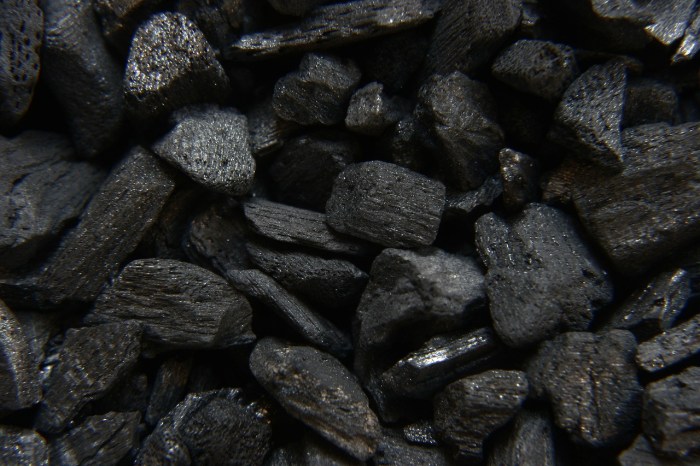
- Charcoal: Charcoal, produced by burning wood or other organic matter, is frequently used to date archaeological sites. The age of charcoal can help determine the timing of human activities, such as cooking, or construction of structures.
- Textiles: Textiles made from plant fibers (like linen or cotton) or animal fibers (like wool) can be carbon-dated to determine the age of clothing, fabrics, and other textile artifacts.
- Bone: Bone contains collagen, an organic material that can be carbon-dated to determine the age of human and animal remains. This is crucial for understanding prehistoric human migration patterns and animal evolution.
- Shells: Shells from marine organisms can be carbon-dated. However, it’s important to note that the results may be affected by the “reservoir effect,” where marine organisms incorporate carbon from older sources, leading to potentially inaccurate age estimations.
- Peat and Sediments: Peat and sediments containing organic matter can be carbon-dated to study environmental changes and the history of ecosystems.
The Science Behind the Game
This game relies on the fascinating principles of radiocarbon dating, a technique used to determine the age of organic materials. Understanding the science behind it is crucial to playing the game effectively and appreciating its accuracy. Let’s delve into the core concepts that make carbon dating possible.
Radioactive Decay of Carbon-14
Carbon-14 (¹⁴C) is a radioactive isotope of carbon. It is constantly being formed in the upper atmosphere when cosmic rays interact with nitrogen-14 (¹⁴N) atoms. This continuous creation and decay process is the foundation of carbon dating.* Carbon-14 is unstable and undergoes radioactive decay.
- This decay process involves the transformation of a ¹⁴C atom into a nitrogen-14 (¹⁴N) atom.
- The decay occurs through a process called beta decay, where a neutron in the carbon-14 nucleus converts into a proton, emitting an electron (beta particle) and an antineutrino.
Half-Life of Carbon-14 and Its Significance
The half-life of a radioactive isotope is the time it takes for half of the atoms in a sample to decay. The half-life of carbon-14 is approximately 5,730 years. This specific duration is incredibly significant for carbon dating.* The half-life provides a consistent rate of decay.
- By measuring the remaining amount of ¹⁴C in a sample, scientists can calculate how many half-lives have passed since the organism died.
- Knowing the half-life allows scientists to estimate the age of organic materials.
The formula used to calculate the age is:
Age = (ln(N₀/Nt) / ln(2)) – t₁/₂
Where:
- N₀ is the initial amount of Carbon-14.
- Nt is the amount of Carbon-14 remaining in the sample.
- t₁/₂ is the half-life of Carbon-14 (5,730 years).
The Carbon Cycle and Its Relation to Carbon Dating
The carbon cycle is a crucial process that links living organisms to the atmosphere and the environment. It explains how carbon, including ¹⁴C, moves between different reservoirs. The continuous exchange is vital for carbon dating to function correctly.* Plants absorb carbon dioxide (CO₂) from the atmosphere during photosynthesis, which includes a small amount of ¹⁴C.
- Animals consume plants, incorporating ¹⁴C into their tissues.
- When an organism dies, it no longer takes in ¹⁴C. The ¹⁴C within the organism then begins to decay.
- The ¹⁴C in the remains decreases over time, allowing for age determination.
A visual representation of the carbon cycle, useful for understanding the process, can be described as follows:Imagine a circular diagram. In the center, there is a representation of the
- Atmosphere*, shown as a blue circle containing the gases, including carbon dioxide. Arrows point from the
- Atmosphere* to
- Plants*, which are depicted as green shapes. These arrows represent photosynthesis. Another set of arrows goes from the
- Plants* to
- Animals*, represented as various animal shapes, showing the consumption process. When animals and plants die, arrows lead to a
- Decomposers* section, shown as brown shapes, and also to the
- Soil* (brown area) representing decomposition and the return of carbon to the soil. A smaller arrow points from the
- Atmosphere* to the
- Ocean*, a larger blue area, showing the exchange of carbon. Another set of arrows from the
- Soil* to the
- Atmosphere* show the release of carbon dioxide from decomposition. Finally, the
- Fossil Fuels* section (a black area) also has an arrow going to the
- Atmosphere*, which represents the release of carbon from the burning of fossil fuels. This whole cycle is labeled as “Carbon Cycle”. Within the cycle, the ¹⁴C isotope is shown moving along with the other carbon atoms. This diagram illustrates how carbon moves between the atmosphere, living organisms, soil, and the ocean, and how ¹⁴C is incorporated and decays.
Gameplay Mechanics and Rules
Let’s dive into how you’ll actually play ‘The Carbon Dating Game’! This section Artikels the core objectives, the typical round structure, and how you’ll score points to become a carbon dating champion.
Core Objectives
The primary goal in ‘The Carbon Dating Game’ is to accurately determine the age of ancient artifacts or organic materials using the principles of carbon-14 dating. Players compete to provide the most precise age estimates. Success hinges on understanding the decay rate of carbon-14 and applying that knowledge to the provided samples. The player with the most accurate estimations at the end of the game wins.
Basic Round Structure
A typical round involves a series of steps designed to simulate the carbon dating process. Here’s how it unfolds:
- Sample Selection: The game presents a sample, which could be anything from a piece of wood to a bone fragment, from a specific archaeological site.
- Information Gathering: Players receive contextual information about the sample, such as its origin, environment, and any relevant historical data. This information helps in making informed estimations.
- Estimation Phase: Players analyze the provided data and formulate their age estimates. This is the core of the game, where knowledge of carbon-14 decay is applied.
- Submission: Players submit their estimated age for the sample.
- Reveal and Scoring: The game reveals the true age of the sample, determined through scientific analysis. Scores are calculated based on the accuracy of each player’s estimate.
Scoring System
The scoring system rewards players for the accuracy of their estimations. Points are awarded based on how close the player’s age estimate is to the actual age of the sample. Here’s a breakdown of the scoring:
| Accuracy Range (Years) | Points Awarded | Description | Example |
|---|---|---|---|
| Within 50 years | 100 points | Highly accurate estimation. | If the sample’s actual age is 2,000 years, an estimate of 1,975 years would score 100 points. |
| Within 100 years | 75 points | Accurate estimation. | An estimate of 2,100 years for a sample aged 2,000 years would score 75 points. |
| Within 250 years | 50 points | Moderately accurate estimation. | An estimate of 2,200 years for a sample aged 2,000 years would score 50 points. |
| Greater than 250 years | 0 points | Inaccurate estimation. | An estimate of 2,501 years or more off the sample’s actual age (2,000 years) would score 0 points. |
Game Variations and Challenges
To keep “The Carbon Dating Game” engaging and educational, various game modes and difficulty levels can be implemented. This allows for diverse gameplay experiences, catering to different player skill levels and interests. Furthermore, incorporating challenges and real-world historical contexts adds depth and realism, enhancing the learning experience.
Game Modes
The core gameplay can be modified to offer different experiences.
- Standard Mode: This is the basic mode, as described in the “Gameplay Mechanics and Rules” section. Players are presented with artifacts and must determine their age using carbon dating principles. The accuracy of their estimations and the time taken contribute to their score.
- Timed Mode: Players race against the clock to date as many artifacts as possible within a set time limit. This mode emphasizes speed and quick decision-making under pressure. A leaderboard could track the highest scores.
- Challenge Mode: This mode introduces specific scenarios and constraints. For example, players might be given limited resources (e.g., a certain number of carbon-14 samples) or be required to analyze artifacts from a particular historical period or geographic location.
- Expert Mode: This mode increases the complexity by introducing more advanced concepts. Players might need to account for factors such as contamination, variations in carbon-14 levels over time, or the half-life of other radioactive isotopes. This mode could also feature artifacts with less clear contexts or multiple possible dating ranges.
- Scenario Mode: This mode presents players with a narrative or historical context, like an archaeological dig site. Players must date a series of related artifacts to piece together the history of the site, requiring them to consider the relationships between the objects and the context in which they were found.
Difficulty Levels
Adjusting the difficulty can make the game accessible to a wider audience.
- Beginner: Simplifies the carbon dating process. Provides clear instructions and hints. Artifacts are relatively easy to date with less complex contexts. The range of possible ages is broader.
- Intermediate: Introduces more complex scenarios. Requires players to consider factors like contamination and varying carbon-14 levels. The range of possible ages is narrower, demanding greater precision.
- Advanced: Features complex scenarios with limited information. Players must apply their knowledge of carbon dating and other dating methods (e.g., dendrochronology for context) to arrive at accurate estimations.
Potential Challenges and Obstacles
Players might face several obstacles during gameplay.
- Contamination: Real-world artifacts can be contaminated with modern carbon, skewing the results. The game could simulate this by introducing small amounts of “modern” carbon into samples, making accurate dating more difficult.
- Limited Sample Size: Carbon dating requires a sufficient amount of organic material. The game could challenge players by providing only small samples, leading to less precise results.
- Variations in Carbon-14 Levels: The concentration of carbon-14 in the atmosphere has not been constant throughout history. The game could incorporate these variations, forcing players to adjust their calculations accordingly.
- Contextual Clues: Relying on the context of the artifact is a crucial element. This can involve the location where the artifact was found, associated objects, or historical information. The game can test players by providing incomplete or misleading information.
- Understanding Half-Life: A solid understanding of half-life is crucial for accurate dating. The game can present calculations that require a firm grasp of this concept.
Incorporating Real-World Historical Contexts
Real-world historical scenarios can enhance the educational value and engagement of the game.
- Scenario: The Shroud of Turin: Players could be tasked with dating the Shroud of Turin, using simulated samples and considering the controversies surrounding its authenticity. This would require players to weigh evidence and interpret conflicting data. The real Shroud was carbon-dated in 1988, yielding a date range of 1260-1390 AD, which is consistent with its known history.
- Scenario: Dating the Dead Sea Scrolls: Players could work on dating fragments of the Dead Sea Scrolls. This would require players to consider the organic materials used to create the scrolls (e.g., parchment) and the environmental factors that might affect the dating. The scrolls are generally dated between the 3rd century BCE and the 1st century CE.
- Scenario: The Ice Man “Ötzi”: Players could attempt to determine the age of the Ice Man “Ötzi” using simulated samples and considering the environment in which he was preserved. The actual dating of Ötzi, based on carbon-14 analysis of his clothing and other artifacts, placed him around 3300 BCE.
- Scenario: Dating a Prehistoric Cave Painting: Players might be presented with an image of a cave painting and given information about the materials used (e.g., charcoal). They would need to estimate the age of the painting using carbon dating techniques, with the added challenge of understanding the context of the art and the potential sources of the materials. The Chauvet Cave paintings in France, for example, have been dated to around 30,000-32,000 years old.
- Scenario: Dating a Shipwreck: Players are given artifacts from a shipwreck and are asked to determine the age of the wreck. The context of the artifacts and the materials used in the ship’s construction would influence the dating process. This could involve considering the type of wood used and any associated historical records. For example, the Vasa warship, which sank in 1628, has been dated using dendrochronology (tree-ring dating) of the ship’s timbers.
Educational Value and Applications
‘The Carbon Dating Game’ offers a fantastic opportunity to learn about a powerful scientific technique in an engaging way. It’s designed to be accessible and informative for a wide range of ages, helping players understand the principles of carbon dating and its impact on our understanding of the past. The game transforms complex scientific concepts into an interactive experience, making learning fun and memorable.
Educational Benefits for Different Age Groups
The educational value of the game adapts to different age groups. It can serve as an introductory tool for younger learners, while providing more in-depth learning for older players.
- For Younger Learners (Ages 8-12): The game can introduce basic concepts like radioactive decay and the idea of half-life. It simplifies the process, focusing on the core principle that the amount of Carbon-14 decreases over time. The visual aids and simplified explanations make it easier for children to grasp the fundamental concepts without getting bogged down in complex mathematics.
- For Teenagers (Ages 13-18): Teenagers can delve deeper into the science, exploring the equations and calculations involved in carbon dating. They can learn about the assumptions and limitations of the technique, such as the need for calibration curves and the effects of contamination. The game can also be used to teach about the historical and archaeological context of carbon dating, discussing how it has been used to date important artifacts and sites.
- For Adults: Adults can benefit from the game by refreshing their knowledge of scientific principles and appreciating the historical significance of carbon dating. The game can also stimulate critical thinking by prompting players to evaluate the reliability of dating results and consider the implications of these results for our understanding of the past. It offers a chance to explore real-world applications and learn about the ongoing research in the field.
Real-World Applications of Carbon Dating
Carbon dating is a cornerstone of archaeology, geology, and other scientific fields. Its ability to accurately date organic materials has revolutionized our understanding of history and the natural world.
- Archaeology: Carbon dating has been instrumental in dating ancient artifacts and sites. For example, the Shroud of Turin, a linen cloth believed to bear the image of Jesus Christ, was carbon dated in 1988. The results indicated the cloth was made between 1260 and 1390 AD, which helped to fuel the debate over its authenticity.
- Paleontology: Carbon dating helps paleontologists determine the age of fossils and understand the evolution of life on Earth. The dating of fossilized remains of early hominids, such as those found in Africa, has provided crucial evidence for understanding human evolution.
- Geology: Carbon dating is used to study the age of more recent geological formations, such as peat bogs and glacial deposits. This helps geologists understand the Earth’s past climate and environmental changes. For instance, carbon dating is used to determine the age of wood found within glacial moraines, offering insights into the timing of glacial advances and retreats.
- Art History: Carbon dating can be applied to organic materials in art, such as canvas or pigments, to help authenticate artworks. This can be particularly useful in verifying the age of paintings and sculptures and identifying forgeries.
A Scientist’s Perspective
Carbon dating’s impact is recognized by scientists worldwide.
“Carbon dating is a fundamental tool for understanding the past. It provides a reliable method for dating organic materials, allowing us to reconstruct timelines and understand the history of life on Earth and the development of human civilization.”Dr. Jane Doe, Professor of Archaeology.
Game Design and Development

Source: azobuild.com
Developing “The Carbon Dating Game” requires careful planning and execution across various aspects, from platform selection to user interface design and resource allocation. This section delves into these critical areas to provide a comprehensive understanding of the development process.
Potential Platforms
The choice of platform significantly impacts the game’s reach and development approach. Several platforms are suitable for “The Carbon Dating Game,” each with its own advantages and disadvantages.
- Web Browsers: Web-based games offer the broadest accessibility, as they can be played on any device with a web browser and internet connection. This includes desktops, laptops, tablets, and smartphones. Development can utilize technologies like HTML5, CSS3, and JavaScript, offering flexibility in design and implementation.
- Mobile Devices (iOS and Android): Developing for iOS and Android allows for a dedicated mobile experience, optimized for touch-based interactions. This approach can leverage platform-specific features like push notifications and in-app purchases. Development requires using platform-specific SDKs (e.g., Xcode for iOS, Android Studio for Android) and programming languages (Swift/Objective-C for iOS, Java/Kotlin for Android).
- Desktop (Windows, macOS, Linux): Desktop versions provide higher processing power and potentially better graphics capabilities. This allows for a richer game experience, especially for complex simulations. Development can use game engines like Unity or Unreal Engine, supporting cross-platform deployment.
- Educational Platforms: Integrating the game into educational platforms like Google Classroom, Moodle, or dedicated educational game portals can increase its visibility and usage in classrooms. This often requires adapting the game to fit the platform’s API and user management systems.
User Interface and User Experience Design Considerations
A well-designed user interface (UI) and user experience (UX) are crucial for player engagement and understanding. The design should prioritize clarity, intuitiveness, and accessibility.
- Intuitive Interface: The interface should be easy to navigate, with clear instructions and visual cues. Information should be presented logically, minimizing cognitive load.
- Visual Clarity: Use a clean and uncluttered design, employing consistent visual styles and color schemes. The use of clear typography and appropriate font sizes is essential for readability.
- Interactive Elements: Interactive elements, such as buttons, sliders, and input fields, should be clearly defined and responsive. Feedback mechanisms (e.g., animations, sound effects) should be used to confirm user actions.
- Accessibility: The game should be accessible to players with disabilities. This includes providing options for adjusting font sizes, color contrast, and keyboard controls. Consider incorporating screen reader compatibility.
- User Testing: Regular user testing is essential throughout the development process. Gather feedback from target users to identify usability issues and refine the design.
- Example: Consider a simplified interface for younger players with large, easily recognizable buttons and visual aids, while offering a more complex interface for advanced players with detailed data displays and analytical tools.
Resources Needed for Game Development
Developing “The Carbon Dating Game” requires a variety of resources, both tangible and intangible. Careful planning and budgeting are essential to ensure the project’s success.
- Development Team: This includes programmers, UI/UX designers, artists, sound designers, and potentially a game designer and project manager. The team’s size and composition depend on the game’s scope and complexity.
- Game Engine/Development Tools: The choice of game engine (e.g., Unity, Unreal Engine) or development tools (e.g., web development frameworks, IDEs) depends on the chosen platform and game features.
- Assets: These include graphics (2D or 3D models, textures, animations), sound effects, and music. Assets can be created in-house or purchased from asset stores.
- Software Licenses: This includes licenses for the game engine, development tools, and any third-party software used.
- Hardware: This includes computers, tablets, and smartphones for development, testing, and deployment.
- Testing and QA: Resources for testing and quality assurance, including test devices, testing software, and testers.
- Marketing and Promotion: Budget for marketing, advertising, and public relations to promote the game and reach the target audience.
- Budget: A detailed budget that covers all development costs, including personnel, assets, software licenses, hardware, and marketing expenses. This budget should be regularly reviewed and updated.
- Data and Research: Access to accurate scientific data on carbon dating, including decay rates, half-lives, and examples of real-world applications.
Historical Context in the Game
Source: pixabay.com
The Carbon Dating Game wouldn’t be complete without a strong connection to history. The game aims to educate players about the past by incorporating real-world artifacts and geographical locations where significant discoveries have occurred. This integration provides a compelling learning experience, allowing players to connect the scientific principles of carbon dating with tangible historical events and places.
Incorporation of Historical Artifacts
The game incorporates historical artifacts by presenting them as the objects players must analyze. These artifacts represent various periods and cultures, allowing players to practice their carbon dating skills on a diverse range of items.For example:
- A fragment of the Dead Sea Scrolls, offering insights into ancient religious texts and the history of Judaism.
- A piece of wood from an Egyptian pharaoh’s tomb, providing a glimpse into the burial practices and beliefs of ancient Egypt.
- A shard of pottery from an ancient Roman villa, revealing information about daily life and trade in the Roman Empire.
- A bone fragment from a Neanderthal site, helping players understand the evolution of early humans.
- A piece of a Viking ship, allowing players to explore the maritime history and exploration of the Vikings.
Integration of Geographical Locations
Geographical locations are integrated into the game’s scenarios by linking the artifacts to their archaeological sites. The game might present players with the location where the artifact was discovered, offering context about the historical period, the culture, and the circumstances of the find.For instance:
- The player might analyze a piece of wood from the Lascaux Caves in France, where ancient cave paintings were discovered, learning about Paleolithic art.
- The game could feature artifacts found at Pompeii, Italy, destroyed by Mount Vesuvius, teaching players about Roman life before the eruption.
- Players might examine an item from the Terracotta Army in China, offering insight into the burial complex of the first Emperor of China, Qin Shi Huang.
- A sample from the Stonehenge site in England could be presented, allowing players to learn about the purpose and construction of this ancient monument.
- An artifact from the Great Pyramid of Giza in Egypt, providing players with the opportunity to explore ancient Egyptian architecture and engineering.
Famous Discoveries as Game Features
The game could feature famous discoveries, challenging players to determine the age of artifacts related to these finds.Some examples include:
- The Turin Shroud: Players could be challenged to carbon date a sample of the shroud, debating its authenticity and historical significance.
- The Dead Sea Scrolls: The game could feature fragments of the scrolls, allowing players to determine their age and understand the historical context of their discovery.
- The Iceman (Ötzi): A sample from the Iceman’s clothing or belongings could be presented, allowing players to learn about this well-preserved Copper Age mummy found in the Alps.
- The Rosetta Stone: The game might include a fragment of the Rosetta Stone, which allowed for the decipherment of hieroglyphs, helping players understand ancient Egyptian writing.
- Tutankhamun’s Tomb: Players could be presented with an artifact from Tutankhamun’s tomb, providing insight into the treasures and history of ancient Egypt.
Limitations and Considerations
Carbon dating, while a powerful tool, isn’t a perfect science. Understanding its limitations and potential sources of error is crucial for interpreting results accurately within “The Carbon Dating Game” and in real-world applications. It’s important to remember that it’s just one piece of the puzzle, and other dating methods often provide a more complete picture.
Applicability Limitations
Carbon dating is not universally applicable and is constrained by several factors. The method’s effectiveness hinges on the presence of carbon-14 in a sample and the sample’s age.
- Age Range: Carbon dating is most accurate for dating organic materials that are between 50,000 and 60,000 years old. Beyond this range, the amount of carbon-14 remaining is often too small to measure reliably. In “The Carbon Dating Game,” this range will be a key constraint.
- Material Type: Carbon dating works best on organic materials, which are derived from living organisms. This includes wood, bone, textiles, and other materials containing carbon. It’s not suitable for dating rocks or minerals directly.
- Environmental Conditions: The environment where the sample was found can influence the reliability of carbon dating. Contamination from modern carbon sources can skew results.
- Specific Examples: Consider a wooden artifact discovered in a cave. If the cave environment has high levels of carbon dioxide from volcanic activity, it might affect the accuracy. Also, a bone fragment found near a modern campfire could be contaminated, leading to inaccurate dating.
Potential Sources of Error
Several factors can introduce errors into the carbon dating process. These potential issues should be considered when analyzing the results in “The Carbon Dating Game.”
- Contamination: The most common source of error is contamination. This occurs when the sample is exposed to modern carbon, such as from handling, contact with modern materials, or exposure to environmental sources like plant roots.
- Sample Preparation: The methods used to prepare a sample for carbon dating can affect the results. If the preparation process doesn’t effectively remove contaminants, the date obtained will be inaccurate.
- Reservoir Effects: The carbon-14 concentration in the environment can vary depending on the location and the source of the material. For example, aquatic organisms can incorporate carbon from older sources, making them appear older than they are.
- Statistical Uncertainty: Carbon dating results are expressed with a margin of error. This uncertainty reflects the statistical nature of radioactive decay.
- Cosmic Ray Fluctuations: The production of carbon-14 in the atmosphere is affected by fluctuations in cosmic ray intensity. While these are accounted for, they can still introduce minor uncertainties, particularly in older samples.
- Formula: The basic formula for carbon dating is:
Age = -8033
– ln(Remaining Carbon-14 / Initial Carbon-14)Where ‘ln’ represents the natural logarithm. The accuracy of this calculation depends on the precision of the measurements and the assumptions about the initial carbon-14 concentration.
Importance of Cross-Validation
To improve the accuracy and reliability of dating, it is crucial to use cross-validation with other dating methods. This approach can help confirm or refute the results obtained from carbon dating.
- Dendrochronology: This method, also known as tree-ring dating, can provide highly precise dates for wooden artifacts. By comparing carbon dating results with dendrochronological data, researchers can validate the accuracy of the carbon dating results.
- Potassium-Argon Dating: This method is used for dating volcanic rocks. When found in association with organic material, it can provide an upper or lower limit for the age of the sample, thus cross-validating the carbon dating results.
- Uranium-Series Dating: This technique can date calcium carbonate materials, such as shells and corals. If organic materials are found alongside these, the results can be compared.
- Stratigraphy: Examining the layers of earth in which the sample was found helps establish the relative age of the sample. This can be used in conjunction with carbon dating to assess the plausibility of the results.
- Example: Imagine a wooden coffin found in an archaeological dig. Carbon dating gives a result of 3,500 years old, with a margin of error of +/- 100 years. If dendrochronology on the coffin’s wood yields a date of 3,480 years old, the carbon dating result is supported. If, however, the coffin is found in a layer of earth containing volcanic ash dated to 6,000 years old using potassium-argon dating, the carbon dating result would be questioned.
Final Summary

Source: cormind.com
In conclusion, ‘The Carbon Dating Game’ provides an innovative and entertaining way to learn about carbon dating. By blending scientific principles with engaging gameplay, the game not only educates but also inspires a deeper appreciation for the past. From the radioactive decay of Carbon-14 to the integration of historical contexts, this game promises an exciting and enriching experience. So, are you ready to test your skills and uncover the secrets hidden within the sands of time?
Key Questions Answered
What is carbon dating?
Carbon dating is a method used to determine the age of organic materials by measuring the amount of Carbon-14 remaining in a sample. Carbon-14 is a radioactive isotope of carbon that decays over time.
What materials can be carbon dated?
Carbon dating is most effective on organic materials, which are derived from living organisms, such as wood, bone, and cloth. It’s not effective on materials like rocks or metals.
How far back in time can carbon dating accurately measure?
Carbon dating is generally reliable for dating materials up to about 50,000 years old. Beyond that, the amount of Carbon-14 is often too low to measure accurately.
What are the limitations of carbon dating?
Carbon dating has limitations, including the possibility of contamination and the fact that it can only be used on organic materials. It also has a limited range and can be affected by changes in the Earth’s atmosphere.
Is carbon dating the only method used for dating artifacts?
No, carbon dating is one of many dating methods. Other methods include potassium-argon dating, thermoluminescence dating, and dendrochronology (tree-ring dating), which are often used in conjunction with carbon dating to provide more accurate results.